



Galvanized Steel
Why Choose Us
We Are 100% Factory
We are a professional manufacturer with many years of experience, offering a one-stop packaging solution from design and production to shipping.
Professional Service
We accept factory and goods inspections at any time. We also offer technical discussions, research and development of new products, and comprehensive after-sales service.
Our Products
Our main products include shipbuilding steel plates, wear-resistant steel plates, corten steel plates, pressure vessel steel plates, alloy steel plates, and low alloy steel plates.
Quality Assurance
We utilize state-of-the-art equipment, experienced designers, and skilled workers. Our advanced production management experience and strict quality management standards ensure high quality. OEM and ODM services are available, and we can provide samples upon request.
What Is Galvanized Steel?
Galvanized steel is standard steel that is coated in zinc to provide enhanced corrosion resistance. The galvanized protective coating protects the iron steel substrate from corrosion due to moisture, saturated environmental conditions, or ambient humidity. The galvanization process produces a sacrificial layer between the zinc protective layer and the steel, allowing for maximum protection from rust inducing elements.


What Are the Methods of Galvanizing Steel?
Galvannealing
Galvannealing is the combination of hot-dip galvanizing and annealing processes to produce a specialized coating on steel sheets. The finished product is a zinc-iron alloy product, with a dull matte surface finish that is ideally suited for paint adhesion. This process works by hot-dipping the base metal, and then heating it in an annealing oven at a temperature of roughly 565 ºC to induce alloying between the steel and molten zinc coating. Examples of galvannealing include: welding operations, marine applications, and any high-tensile stress applications.
Hot-Dip Galvanizing
Hot-dip galvanizing is a form of zinc coating applied to steel sheets (or manufactured steel items). This occurs by passing the steel objects through a bath of molten zinc and then cooling them. The zinc bonds to the iron within the steel. Hot-dip galvanizing works by forming a protective layer on either side of the metal to protect the finished product from corrosion. Galvanized steel does not require any secondary or additional coating or painting. Examples of hot-dip galvanizing include: industrial flooring, motorway guardrails, brackets, and fixings.
Electrogalvanizing
Electrogalvanization is a process in which steel is galvanized with a zinc coating using electroplating. Steel is submerged in a zinc salt solution and an electrical current is applied to create electrogalvanized steel. The current creates a reaction between the zinc salt and the surface of the steel, leaving behind a thin layer of zinc. This zinc laver is much thinner than the hot dipping method. Electrogalvanized steel is used in: acoustic ceiling tiles, door frames, and switchboards.
Pre-Galvanizing
The pre-galvanizing process, also referred to as mill galvanization, is performed at the very initial stages of production on metals which are likely to have a limited number of processes after pre-galvanization. This is because carrying out any process on galvanized steel will result in the exposure of bare metal to the atmosphere increasing the risk of oxidation. Components that are pre-galvanized are usually steel plates and bars. This method enables galvanizing to be done quickly and efficiently on a larger scale than is possible with traditional hot-dipping. This process works by rolling the sheet metal (or other shaped steel stock) in a cleaning agent to prepare the material to be passed through the molten zinc, which is then rapidly recoiled. Pre-galvanizing is primarily used for materials that already have a specific shape before being cut.
What Are the Advantages of Galvanized Steels?
Lowest first cost. Galvanizing is lower in first cost than many other commonly specified protective coatings for steel. (The application cost of labour intensive coatings such as painting has risen far more than the cost of factory operations such as galvanizing.)
Less maintenance/Lowest long term cost. Even in cases where the initial cost of galvanizing is higher than alternative coatings, galvanizing is almost invariably cheapest in the long term (because it lasts longer and needs less maintenance). And, maintenance causes problems and adds to costs when structures are located in remote areas, and when plant shutdown or disruption to production is involved.
Long life. The life expectancy of galvanized coatings on typical structural members is far in excess of 50 years in most rural environments, and 20 to 25 years plus, even in severe urban and coastal exposure.
Reliability. Galvanizing is carried out to Australian / New Zealand Standard 4680, and standard, minimum coating thicknesses are applied. Coating life and performance are reliable and predictable.
Toughest coating. A galvanized coating has a unique metallurgical structure which gives outstanding resistance to mechanical damage in transport, erection and service.
Automatic protection for damaged areas. Galvanized coatings corrode preferentially to steel, providing cathodic or sacrificial protection to small areas of steel exposed through damage. Unlike organic coatings, small damaged areas need no touch up.
Complete protection. Every part of a galvanized article is protected, even recesses, sharp corners and inaccessible areas. No coating applied to a structure or fabrication after completion can provide the same protection.
Ease of inspection. Galvanized coatings are assessed readily by eye, and simple non-destructive thickness testing methods can be used. The galvanizing process is such that if coatings appear sound and continuous, they are sound and continuous.
Faster erection time. As galvanized steel members are received they are ready for use. No time is lost on-site in surface preparation, painting and inspection. When assembly of the structure is complete, it is immediately ready for use, or for the next construction stage.
A full protective coating can be applied in minutes; The galvanizing process is not dependent on weather conditions.
Wind & solar industries
Solar projects must have a continuous workflow once installed and any repairs/maintenance results in disruption to service (a.k.a. revenue loss). This means that hot-dipped galvanized steels are popular in solar projects for their corrosion protection. It is also popular for its ‘environmental’ friendliness because it does not produce emissions and ensures decades without maintenance. For example, it is often utilized in the agriculture industry because the equipment is susceptible to being easily corroded, creating a demand for tougher, more resilient equipment. Hot-dip galvanized steel provides corrosion protection that can often last for decades, even when exposed to the harsh environment of farming.
Automotive industry
Though only used on luxury models up until the 1980s, the use of zinc-coated bodies for automobiles is now the norm in auto manufacturing. The ‘body-in-white’ of a car makes up about 80% of the body, all using galvanized steel. The rust -resistance of galvanized steel is also a good marketing tool for the automotive industry because it can provide ‘anti-rust warranties’ to customers.
Construction industry
Whether for residential or commercial, the durability of galvanized steel has made it popular for over a century in the construction industry. It is also selected for construction because of its aesthetics; The ‘shine’ that galvanized steel provides gives it a contemporary feel and is popular in modern architectural designs. Also, it isn’t just used for large structural pieces but things like fencing, gutters, rails, tubing, poles, and much more.
Telecommunication industry
Phone lines are not an easy maintenance job, they are tall and often difficult to reach. Hot-galvanized steel can be used on phone wiring and equipment boxes which decreases the risk of damage and need for maintenance at all.

Properties of Galvanized Steel
Corrosion resistance
The covering of the surface of the steel is with a zinc layer. It has a certain level of thickness and a dense structure that prevents the blocking and contacting of corrosive solution and steel. Therefore it is the process of controlling the steel from being damaged and corrupted by the answer.
Abrasion resistance
The zinc-iron has good and sustainable abrasion resistance that helps keep the bond strong and with mutual dissolution.
Formability
The zinc coating helps the layer of allow have good durability and is firmly associated with the steel substrate. It is the process used more in forming industrial production, and the possibility of any damage is not seen with zinc coating.
Durability
For any steel structure parts, there is a need to have long-term durability of the product, and it is possible only when they are dipped in a hot-dip galvanization solution. Considering this property is helpful and effectively works to help a beneficial turning stage of the steel structural parts.
Excellent surface appearance
The overall appearance and look of the steel plate should look good and bright. Hence the undertaking of galvanization is a must. However, considering this will help the sheet look more colourful and more beautiful, that will not harm the product from its use.
Weldability
Developing galvanized products demands to weld; the step must be practical and adequately coated to make the welding process easier and faster.
Paintability
Although there is no firm requirement to get the steel painted, to a certain extent, the team demands to get it painted, which will deliver an accurate view and precision. Therefore, consider having painted for automobiles, furniture manufacturing, and other products requiring galvanized steel.
Recyclable
Due to the galvanizing process, the life of the steel is extended. Therefore, zinc and steel can be recycled without damaging the chemical and physical properties.
Proper storage and transportation
During transportation and storage, galvanized steel should be handled with care to avoid breakage, scratches, or surface damage. In particular, avoid contact with chemicals and strong mechanical impacts that can damage the zinc coating and reduce the corrosion resistance of the steel.
Product quality check
Before use, thoroughly inspect the galvanized steel to ensure its technical properties and durability. Check the surface of the steel for any defects, scratches, or abnormalities. If any issues are found, promptly inform the supplier or manufacturer to receive support and address the issue.
Proper installation and connections
When installing galvanized steel, use proper installation methods and ensure that the connections, screws, and fasteners used are made of materials compatible with galvanized steel. Using stainless steel screws and accessories will reduce the risk of electrochemical corrosion and corrosion.
Follow standards and guidelines
Adhere to the technical standards and guidelines provided by the manufacturer or relevant government agencies when using galvanized steel. These guidelines include regulations on thickness, installation methods, preservation, and maintenance of the product.
Regular maintenance
To maintain the corrosion resistance and lifespan of galvanized steel, perform regular maintenance. This includes checking and cleaning the galvanized steel surface, repainting scratched areas, and replacing damaged or aged parts.
Prevent electrochemical interaction
When using galvanized steel alongside other metals, avoid direct contact between different metals, especially when they are wet or in a moist environment. Electrochemical interaction between different metals can cause corrosion and damage the zinc coating.
Customize warranty policies
If you plan to use galvanized steel in special applications or have specific requirements, customize the warranty policies with the supplier or manufacturer.
Our Factory

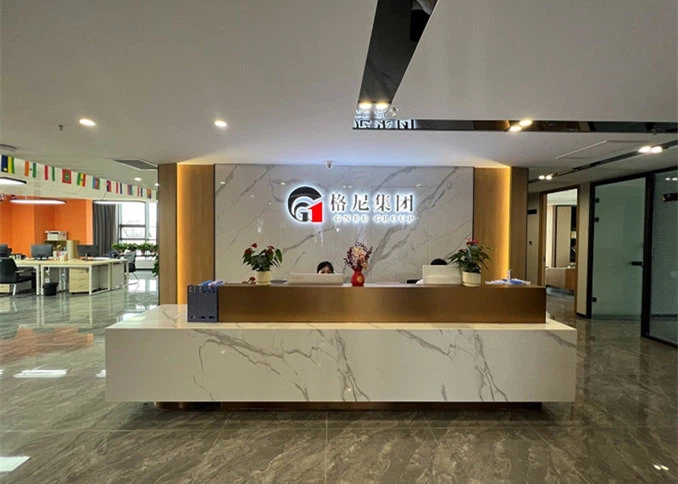
We have established long-term cooperative relationships with dozens of factories in China to ensure that our products are manufactured using high-quality materials and in sync with various international standards, with an annual export volume of more than 80,000 tons. Gnee Group is committed to becoming the world's most internationally competitive supply chain group, meeting the different needs of different customers, and truly realizing: one-stop service, making choice easier.
FAQ