



Molybdenum Alloy
Our goal is to become your true partner in the field of molybdenum alloy in China. Gnee Steel Group is committed to becoming the world's most internationally competitive supply chain group, meeting the different needs of different customers. We have a skilled engineering team dedicated to refining every stage, from product development and process improvement to production oversight, ensuring every product delivered meets rigorous quality and performance standards. The price is competitive and the product is quality-assured, which is a good choice for your long-term cooperation.


Our services:
In the pre-sales stage, our team of experts will recommend the most suitable products according to the needs of customers and provide detailed technical consultation. During the sales period, we ensure timely delivery and provide installation guidance. For after-sales, we provide long-term technical support, warranty services and spare parts to help customers maximize the use of products and get reliable maintenance during use.
Our certification:
Our company has obtained SGS certification. We have also passed ISO9001 and ISO14001 environmental management system certification.
Our capacity:
We have established long-term cooperative relationships with dozens of factories to ensure the production of our products, and our annual export volume exceeds 80,000 tons.
Quality control:
All our products are made of the highest quality materials and are subject to factory inspection, cargo inspection at any time.
Advantages of Molybdenum Alloy
Strength-to-weight ratio:
One of the most remarkable attributes of molybdenum alloys is their strength-to-weight ratio. As a matter of fact, molybdenum is used in the structural components of aircrafts, with the idea of maintaining a lower weight of the craft while still keeping up its structural integrity.
Temperature resistant:
It should probably go without saying that extreme temperatures are frequently encountered in the aerospace industry, especially in parts of the aircraft such as the engines and the propulsion motors.


Resilient against corrosion:
The various components of an aircraft can be highly susceptible to corrosion due to the harsh conditions that they tend to go through, which more often than not can include increase in moisture as well as exposure to various chemicals.
Insulation from radiation:
Molybdenum is an essential component of radiation shielding materials used in space travel, where astronauts are subjected to cosmic radiation. It helps in shielding astronauts as well as their equipment from this potentially dangerous radiation, ensuring their safety during space flights.
Types of Molybdenum Alloy
Molybdenum-Tungsten Alloy (Mo-W): Molybdenum tungsten alloy combines the strength and heat resistance of molybdenum with the hardness of tungsten. It's ideal for cutting tools and high-performance machinery because it is very durable.
Molybdenum-Rhenium Alloy (Mo-Re): Known for its exceptional high-temperature strength and creep resistance, molybdenum rhenium alloy is ideal for rocket nozzles, turbine blades, and nuclear reactor components, where it withstands extreme heat and radiation.
Molybdenum-Copper Alloy (Mo-Cu): Molybdenum copper alloy has great thermal and electrical conductivity, making it suitable for electronic and electrical applications where efficient heat and electricity transfer are needed.
TZM Alloy (Titanium-Zirconium-Molybdenum): TZM alloy includes titanium and zirconium with molybdenum. It is known for its high-temperature strength and resistance to deformation, making it useful in aerospace, high-temperature furnaces, and extrusion dies.
Molybdenum-Hafnium Carbon (MHC) Alloy: MHC alloy is designed to enhance performance in high-temperature environments. It combines molybdenum with hafnium and carbon to provide superior strength and thermal stability. This alloy is particularly useful in applications requiring high heat resistance, such as in aerospace and nuclear industries.
Specification of Molybdenum Alloy
|
Product |
Molybdenum alloy |
|
Dimensions |
Out Diameter: 1.0-400mm Wall Thickness: 0.2-30.0mm Length: 200-6000mm |
|
Material |
Pure Molybdenum (Type 361), Molybdenum TZM (Type 364), Mo-Lanthanoxid (ML) |
|
Purity |
99.95%, 99.99% |
The Manufacturing Process Of Molybdenum Alloy
Liquid phase sintering method:
Tungsten-copper or molybdenum-copper mixed powders are pressed and formed, followed by liquid phase sintering at 1300-1500°C. Materials produced by this method exhibit poor uniformity, numerous closed pores, and a density typically below 98%. However, the addition of a small amount of nickel through activated sintering, mechanical alloying, or oxide reduction methods to prepare ultrafine or nanometer powders can improve sintering activity, thus enhancing the density of tungsten-copper and molybdenum-copper alloys.
Tungsten or molybdenum skeleton infiltration method:
Tungsten or molybdenum powders are pressed and formed, sintered to form a porous tungsten or molybdenum skeleton, followed by copper infiltration. This method is suitable for tungsten-copper and molybdenum-copper products with low copper content. Compared to molybdenum-copper, tungsten-copper has advantages such as lighter weight, easier processing, comparable linear expansion coefficient, thermal conductivity, and some key mechanical properties. Although its heat resistance is inferior to tungsten-copper, it still outperforms some current heat-resistant materials, making it promising for applications.
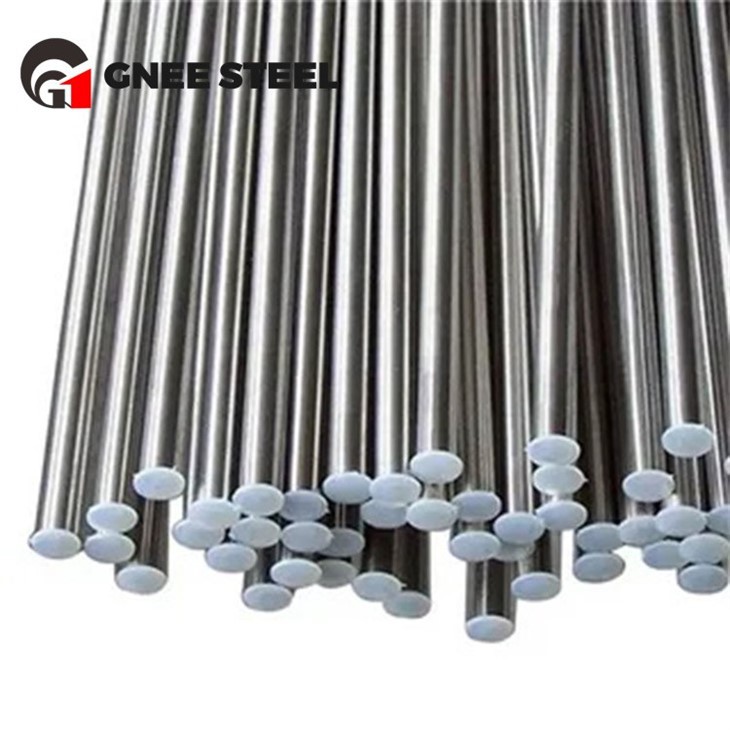
Packing and Shipping of Molybdenum Alloy
|
Packing |
Standard export packing (inside:water proof paper,outside:steel covered with strips and pallets) |
|
Shipping |
Shipped by road, sea, rail |
Application of Molybdenum Alloy
For hot working die:
The aeronautics and astronautics sector mainly uses molybdenum alloys to make molds and high temperature forged engine components. Its application materials are mainly active metal carbides, strengthening molybdenum, selective element strengthening molybdenum and mechanical dispersive two-phase strengthening molybdenum alloys.
For molten metal processing:
The hot cracking of the processed materials by molybdenum in the cast aluminum plant is usually used as tzm alloy (ti – zr – mo) core and mandrel in the hot cracking part of the processed material, and the thermal cracking of the material can be avoided.
For thermal spraying:
The piston ring is thermally sprayed with molybdenum. The method is to mix molybdenum powder with the binder containing nickel (ni) and chromium (cr), and then spray the mixture on the piston with plasma.
For chemical treatment:
Molybdenum is used as electrode material in glass melting process, and the processing capacity of the traditional melting furnace can also be improved. Molybdenum is suitable for high-temperature furnace because of its high-temperature strength and thermal stability.
Other Service of Molybdenum Alloy
|
Delivery time |
7 to 15 working days |
|
Payment terms |
30%TT for deposit, 70% balance before shipment or LC at sight |
|
Supply ablitity |
10000 Ton/ per Month |
FAQ