



Transformer
Our goal is to become your true partner in the field of transformer in China. Gnee Steel Group is committed to becoming the world's most internationally competitive supply chain group, meeting the different needs of different customers. We have a skilled engineering team dedicated to refining every stage, from product development and process improvement to production oversight, ensuring every product delivered meets rigorous quality and performance standards. The price is competitive and the product is quality-assured, which is a good choice for your long-term cooperation.




Our services:
In the pre-sales stage, our team of experts will recommend the most suitable products according to the needs of customers and provide detailed technical consultation. During the sales period, we ensure timely delivery and provide installation guidance. For after-sales, we provide long-term technical support, warranty services and spare parts to help customers maximize the use of products and get reliable maintenance during use.
Our certification:
Our company has obtained SGS certification. We have also passed ISO9001 and ISO14001 environmental management system certification.
Our capacity:
We have established long-term cooperative relationships with dozens of factories to ensure the production of our products, and our annual export volume exceeds 80,000 tons.
Quality control:
All our products are made of the highest quality materials and are subject to factory inspection, cargo inspection at any time.
Advantages of Transformer
Efficient power transfer:
Transformers enable efficient transmission and distribution of electricity across long distances by adjusting voltage levels.
Energy conservation:
Transformers minimize energy losses, making power transmission more economical.

Voltage regulation:
They ensure stable voltage output, protecting electrical equipment from fluctuations.
Flexibility in power distribution:
They allow different voltage levels to cater to diverse industrial, commercial, and residential needs.
Specification of Transformer
|
Model |
YBP-34.5/0.48-6900 |
|
Rated Capacity |
3000 kVA |
|
Rated Voltage(HV/LV) |
34.5/0.48 kV |
|
Frequency |
50 Hz |
|
Winding Material |
Copper |
|
Core Materials |
Silicon Steel |
|
Insulation Level |
As Per IEC Standard |
|
Class of Protective Enclosure |
IP44/IP54 |
|
IP CODE(T/H/L) |
IP54/IP54/IP54 |
|
Lightning Impulse Withstand Voltage |
As Per IEC Standard |
Types of Transformer
Autotransformers: Utilized for both step-up and step-down applications, autotransformers contain only one winding, with a portion of the coil serving as both the primary and secondary winding. Available in three-phase and single-phase models, autotransformers are typically used in low-voltage situations of 600 volts or less.
Industrial control transformers/Industrial power transformers: Industrial control transformers change supply voltages for electromagnetic devices such as contractors, solenoids, relays and timers. Upon start up, most electromagnetic devices require anywhere from 3 to 10 times their normal operating current for 30 to 50 milliseconds.
Isolation/insulation transformers: An isolation transformer is a transformer with a separation/barrier between the primary and secondary windings. The physical separation of the primary and secondary windings allows an AC signal to be taken from one device and fed into the other, without having the two circuits electrically connected.
Medium voltage control transformers: Medium voltage control transformers are single-phase transformers designed and constructed to address industrial control application demands. Medium voltage is typically defined as containing a power supply rating anywhere from 5 kV to 35 kV and medium voltage control transformers are utilized for stepping down medium voltage to a lower voltage.
Military transformers : Built to meet stringent military standards, military transformers change supply voltages for operating components in airborne, space, missile, shipboard and other military applications.
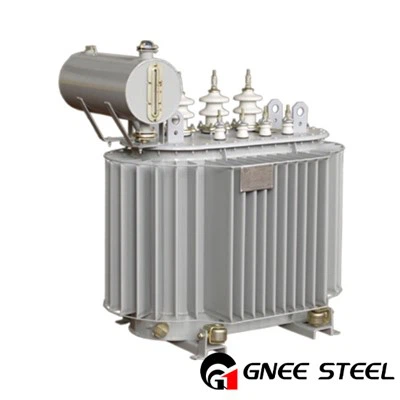
Power transformers: A power transformer equates to a transformer that is powering up an application, rather than powering down or stepping the voltage down. Available as single-phase and three-phase transformers, power transformers are step-up transformers utilized for applications that require a voltage that’s higher than the incoming voltage.

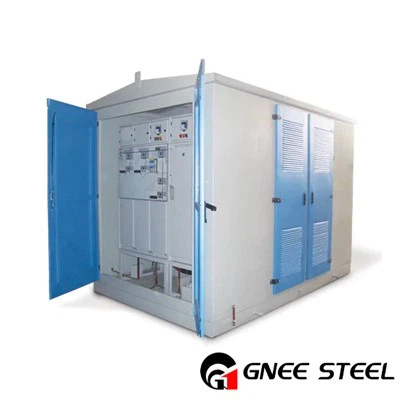
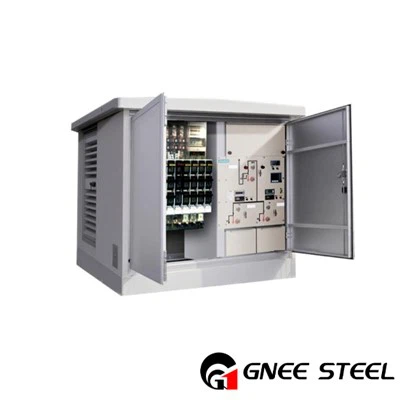
The product adopts a closed design as a whole, the shell can be grounded, and no insulation distance is required, which fully guarantees personal safety.
The transformer room can be equipped with a protective net to prevent accidental entry into the transformer room. Excellent temperature rise and heat dissipation design. The shell adopts a special ventilation structure, and the optimized design makes the product have a stronger heat dissipation capacity. The temperature rise level of the shell meets the requirements of the highest level of 10K specified by the national GB standard and the international IEC standard.
Provide a variety of shells for users to choose, including ordinary steel plate shell, composite plate shell, stainless steel plate, etc.
Application of Transformer
Voltage transformation: Transformers are primarily used to step up or step down voltages in ac circuits. Step-up transformers increase voltage for transmission over long distances, while step-down transformers reduce voltage for distribution to end-users.
Power distribution: In power distribution systems, transformers are used to reduce high transmission voltages to lower values suitable for consumer use.
Electrical isolation: Isolation transformers provide electrical isolation between the input and output circuits, which is crucial for safety and preventing ground loops.
Impedance matching: Transformers are used to match the impedance between different parts of a circuit, ensuring maximum power transfer.
Signal coupling: In audio amplifiers and telecommunications systems, transformers are used for coupling signals between different stages of a circuit while providing electrical isolation.
Voltage regulation: Auto-transformers can be used to regulate voltage by adjusting the tapping point on the winding.
Power supplies: Transformers are used in power supplies to convert ac voltage to dc voltage using rectification and filtering circuits.
Induction heating: High-frequency transformers are used in induction heating applications to heat metals without direct contact.
Instrument transformers: Current transformers and potential transformers are used in metering and protection systems to measure high currents and voltages safely.
Audio transformers: In audio equipment, transformers are used for impedance matching and to eliminate ground loops, improving sound quality.
The Manufacturing Process Of Transformer
Core production: Core production is the first process in the production of transformers. We use fully automatic equipment to produce cores, with a high degree of automation of 95%, which not only improves efficiency but also ensures product consistency and accuracy.
Raw material testing: In the transformer manufacturing process, raw material testing is a key link to ensure product quality and performance. Raw material testing includes testing copper foil, copper wire, insulating cardboard, porcelain bottles, conductive rods, tap switches, etc.
Insulation production: The quality and performance of transformer insulation are crucial to the safe operation of the transformer. The insulation material is cut into the required shape and size according to the design.
Winding: We actively introduce cutting-edge automatic winding technology to make the winding process more accurate and efficient.
Suiting process: During the suiting process, we use a paper tube of a certain thickness to protect the iron core to avoid damage to the coil during the suiting process.
Welding process: We use advanced automated welding equipment to weld high and low voltage leads. These equipment can accurately control the temperature and time during the welding process to ensure that the welding points are firm and reliable.
Vacuum drying: This step ensures that the insulation material and coil are thoroughly dried to ensure the safety and durability of the transformer.
Vacuum oil filling: The vacuum oil filling technology we use ensures that there are no air bubbles inside the transformer, improving the durability and quality of the product. The transformer oil used by TSTY is transparent, free of suspended matter and mechanical impurities, and meets national standards.
Packing and Shipping of Transformer
|
Packing |
Standard export packing (inside:water proof paper,outside:steel covered with strips and pallets) |
|
Shipping |
Shipped by road, sea, rail |
Other Service of Transformer
|
Delivery time |
7 to 15 working days |
|
Payment terms |
30%TT for deposit, 70% balance before shipment or LC at sight |
|
Supply ablitity |
10000 Ton/ per Month |
FAQ