



Wear Resistant Steel Plate
Why Choose Us
Professional Wear-Resistant Steel Supplier & Stable Supply Chain
Long-term cooperation with Baosteel, WISCO, Shougang, Anshan Iron & Steel and Anyang Iron & Steel, adopting direct factory supply to cut intermediate costs. We support sufficient spot inventory and customized processing, providing cost-effective one-stop procurement solutions for wear-resistant steel plates.
Core Product Advantages
We supply full-series NM360 to NM600 wear-resistant steel plates. With precise alloy proportion and standardized heat treatment, our steel plates feature high hardness, outstanding wear resistance and good toughness. Its wear resistance is 4-8 times higher than ordinary carbon steel. It effectively resists friction, scouring and heavy impact in mining, cement, port and engineering scenarios, anti-crack and anti-deform, greatly extending equipment service life.
Customized & Professional Service
We provide full-process personalized services including fixed-size cutting, bending, punching and deep processing for different working conditions. We support product inspection, technical consultation and working condition matching guidance. OEM/ODM services, official product samples and complete inspection reports are available on request.
Reliable Quality & On-Time Delivery
All products are sourced from qualified large-scale steel mills with complete official certificates. We implement strict incoming quality inspection on hardness, wear resistance and flatness to guarantee qualified products. We support bulk supply and urgent order delivery, with thoughtful after-sales service to solve your problems efficiently.
What Is Wear Resistant Steel Plate?
Wear-resistant steel plate—often called abrasion-resistant (AR) steel plate—is a special high-carbon and alloyed steel engineered with a hard martensitic microstructure to survive severe friction, scratching, and sliding impacts. Unlike standard structural steel, it is graded by surface hardness (using the Brinell Hardness Number, typically ranging from 400 to 600 BHN) rather than minimum yield strength, making it ideal for high-wear environments rather than structural building support.


Advantages of Wear Resistant Steel Plate
Homogeneous Through-Hardened Structure with Superior Abrasion Resistance
Produced via quenching and tempering (Q&T) process, the steel forms a uniform martensitic structure throughout the full thickness, with no layered interface or risk of surface peeling.
The through-thickness hardness typically ranges from 400 HBW to 550 HBW, delivering 3–5 times higher abrasive wear resistance than ordinary carbon steel, and greatly extending the service life of wear-prone components.
Balanced High Hardness and Excellent Impact Toughness
While maintaining high surface and internal hardness, the wear resistant steel retains good impact toughness, effectively absorbing heavy impact loads without cracking or fracturing under severe working conditions.
It is ideally suited for scenarios where both impact and abrasion exist, such as excavator buckets, crusher liners and mining dump truck beds.
Outstanding Fabrication Versatility
Good weldability: Compatible with conventional welding methods, enabling reliable joining with other structural steel components without complicated pre/post-heat treatment in most cases.
Flexible processing: Supports multiple cutting methods including flame cutting, plasma cutting and laser cutting, and can be formed by cold bending, punching and machining to meet customized component designs.
Stable Performance Under Elevated Temperatures
The hardened microstructure maintains stable hardness and wear resistance at moderate operating temperatures. Standard grades perform reliably under continuous service temperatures up to 250 °C, and special high-temperature grades can adapt to hotter working environments.
Suitable for high-temperature material handling in cement plants, steel mills and power generation facilities.
Uniform Material Properties and Reliable Quality Consistency
The integrated rolling and heat treatment process ensures consistent mechanical properties across the full plate width and thickness, with no interface failure issues common to clad wear plates.
Stable batch-to-batch quality supports standardized mass production and spare part replacement, reducing matching and installation risks.
Remarkable Total Cost of Ownership Reduction
By significantly prolonging the service life of equipment parts, it reduces the frequency of shutdown maintenance and spare part replacement, cuts long-term operation and maintenance costs, and improves overall production efficiency.
Common Applications Of Wear Resistant Steel Plate

Construction And Mining Industry
Construction and mining industries use equipment subjected to wear and tear, so the required equipment must be sturdy and long-lasting. Wear-resistant steel plates can be used in various mining and construction equipment, such as wear liners, rock breakers, bulldozers and excavator bucket liners. They are ideal for this industry because they have high strength, which means they can withstand heavy impacts. The use of wear-resistant plates helps increase the lifespan of the equipment while maintaining its efficiency.
Transportation and Automotive Industry
Wear-resistant steel plates also find their use in the transportation industry. Many parts of vehicles, such as bulldozers, lorries, trailers, and dump trucks, are exposed to harsh conditions, requiring frequent repairs. Wear resistant plate can significantly reduce maintenance costs in the transportation and automotive industry.


Agriculture and Farming Industry
The agricultural industry involves heavy machinery and equipment that is regularly used. Wear-resistant steel plate can be utilized in machinery parts such as crop harvester blades and chutes that receive heavy impact, soil tilling equipment and plowshares that experience high resistance levels. These plates help prolong the lifespan of machinery parts, and thus, they benefit the agriculture and farming industry by keeping the cost of maintenance low.
Energy and Power Generation Industry
The energy and power generation industry also benefits from using wear-resistant plate. Regular wear and tear of the machinery are the main concerns of this industry. The parts, such as boiler blades, turbines and hoppers, can experience corrosion and wear due to constant use. The use of wear-resistant plate helps reduce downtime, increases the lifespan of equipment, increases productivity, and keeps maintenance costs low.


Steel and Cement Industry
The steel and cement industry works with high temperatures, heavy machines, and heavy materials, hence the need for high-strength wear-resistant plates that withstand such pressures. These steel plates are used in cement and steel mills’ liners, buckets, hoppers, and chutes. They help reduce downtime and repairs and increase the lifespan of machinery and equipment.
Properties Of Wear Resistant Steel Plate
High Hardness
Through quenching and tempering, the plate achieves uniform through-thickness hardness of 360–550 HBW across standard grades: 360–440 HBW for NM400/AR400, 480–550 HBW for NM500/AR500, with hardness deviation within ±30 HBW for stable abrasive resistance.
Excellent Wear Resistance
With a fine martensitic matrix and dispersed alloy carbides, its relative wear resistance is 3–6 times that of ordinary mild steel (A36/Q235); the NM500 grade delivers 5–6 times the service life in heavy abrasion scenarios, greatly extending part replacement cycles.
Good Toughness
With a fine martensitic matrix and dispersed alloy carbides, its relative wear resistance is 3–6 times that of ordinary mild steel (A36/Q235); the NM500 grade delivers 5–6 times the service life in heavy abrasion scenarios, greatly extending part replacement cycles.
Weldability
Controlled carbon equivalent ensures good compatibility with SMAW, GMAW, SAW and other conventional welding methods. Matched low-hydrogen consumables achieve ≥ 90% joint strength of base metal; 100–150 °C preheating is recommended for plates over 20 mm, with no mandatory post-weld heat treatment for general applications.
|
GB/T 24186 NM Wear Resistant Steel Plates Chemical Composition(%) max. |
|||||||||
|
Grade |
C |
Si |
Mn |
P |
S |
Cr |
Ni |
Mo |
Ti |
|
NM300 |
0.23 |
0.70 |
1.60 |
0.025 |
0.015 |
0.70 |
0.50 |
0.40 |
0.050 |
|
NM360 |
0.25 |
0.70 |
1.60 |
0.025 |
0.015 |
0.80 |
0.50 |
0.50 |
0.050 |
|
NM400 |
0.30 |
0.70 |
1.60 |
0.025 |
0.010 |
1.00 |
0.70 |
0.50 |
0.050 |
|
NM450 |
0.35 |
0.70 |
1.70 |
0.025 |
0.010 |
1.10 |
0.80 |
0.55 |
0.050 |
|
NM500 |
0.38 |
0.70 |
1.70 |
0.020 |
0.010 |
1.20 |
1.00 |
0.65 |
0.050 |
|
NM550 |
0.38 |
0.70 |
1.70 |
0.020 |
0.010 |
1.20 |
1.00 |
0.70 |
0.050 |
|
NM600 |
0.45 |
0.70 |
1.90 |
0.020 |
0.010 |
1.20 |
1.00 |
0.80 |
0.050 |
|
B: 0.0005-0.006, Als min. 0.010 |
|||||||||
|
GB/T 24186 NM Wear Resistant Steel Plates Mechanical Properties |
||||
|
Steel Grade |
Thickness |
Hardness (HBW) |
Elongation |
Tensile Strength |
|
NM300 |
≤80 |
270-330 |
≥14% |
≥1000 Mpa |
|
NM360 |
≤80 |
330-390 |
≥12% |
≥1100 Mpa |
|
NM400 |
≤80 |
370-430 |
≥10% |
≥1200 Mpa |
|
NM450 |
≤80 |
420 - 480 |
≥7% |
≥1250 Mpa |
|
NM500 |
≤70 |
≥470 |
- |
- |
|
NM550 |
≤70 |
≥530 |
- |
- |
|
NM600 |
≤60 |
≥570 |
- |
- |
How To Make Wear Resistant Steel Plate


Raw material screening: Strictly control the content of chromium between 12% and 27% to ensure the excellent wear resistance of the material. At the same time, select the raw materials that meet the requirements, including steel, alloy elements, etc.
Melting and continuous casting: Raw materials such as molten iron and alloying elements are melted into molten steel in a high-temperature melting furnace. The molten steel is then poured into a continuous casting machine. It is cooled and solidified to form a billet.
Heating and rolling: Workers will heat the billet to a certain temperature, so that it has good plasticity and ductility. Rolled billets become steel plates of the desired thickness.
Heat treatment: Heat treatment of the rolled steel plate, including heating, insulation, cooling and other treatment, in order to change its mechanical properties and organizational structure, improve the hardness and wear resistance of steel. The general factory will use the quenching and tempering process. Tempering is heating the product to a certain temperature after quenching. And cool it after holding it for a period of time to reduce hardness and improve toughness. At the same time, the stress caused by quenching can be eliminated.
Cutting and forming: Steel plate heat treatment, cutting, punching, bending and other processing to meet customer needs. This step can be done by cutting, gas cutting, plasma cutting or laser cutting. In the molding process, workers should pay attention to prevent cracks, peeling and other defects on the surface. For thick steel plates, heat forming can be used. This can reduce the hardness of the material and improve the molding quality.
Surface treatment: In order to improve the wear resistance and service life of steel, workers can carry out surface treatment. Spraying, hard chrome plating and particle strengthening can all accomplish this step.Spraying is to spray the material with good wear resistance on the surface of wear-resistant steel to improve its surface hardness and wear resistance. Hard chromium plating is to soak the surface of the product in a solution containing chromium. The product is then coated with chromium by an electrochemical reaction. This can improve its surface hardness and wear resistance.

Our Factory

We have established long-term cooperative relationships with dozens of factories in China to ensure that our products are manufactured using high-quality materials and in sync with various international standards, with an annual export volume of more than 80,000 tons. Gnee Group is committed to becoming the world's most internationally competitive supply chain group, meeting the different needs of different customers, and truly realizing: one-stop service, making choice easier.
Original Mill Test Certificates for Wear Resistant Steel


Need to verify material quality before quotation? Download a sample MTC or request a technical review based on your working condition.
Custom Steel Plate Cutting Service
GNEE Steel provides professional steel plate cutting services for global industrial projects. With advanced CNC cutting equipment and experienced technical teams, we are able to deliver high-precision steel plate processing for pressure vessels, storage tanks, heavy machinery, and structural components.
Our cutting platform is equipped with multiple advanced technologies including CNC plasma cutting, high-definition flame cutting, water-jet cutting, and precision saw cutting, enabling us to process steel plates of various thicknesses and specifications with excellent dimensional accuracy.


Steel Plate Beveling Service
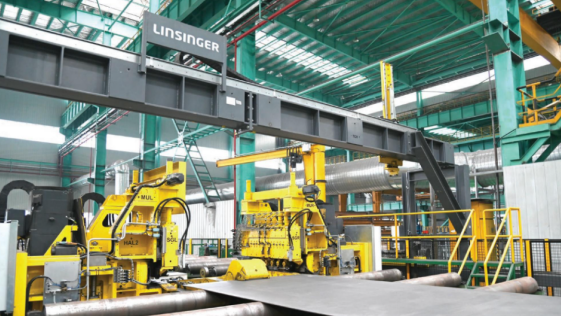 GNEE Steel provides professional steel plate beveling and edge preparation services supported by a large-scale Beveling Platform equipped with 115 sets of advanced beveling and machining equipment.
This platform is dedicated to the pre-fabrication of steel plate edges and components, ensuring that plates meet the strict requirements of welding, assembly, and structural fabrication.
Through precision beveling processes, steel plates can be processed into various welding groove types, providing accurate angles, smooth edges, and consistent dimensions. This ensures high-quality welding performance and reliable structural strength for downstream manufacturing.


Steel Plate Rolling Services
GNEE Steel is one of the most renowned heavy plate rolling companies in China, thanks to our team of professional roll operators who have a combined experience of over 16 years of rolling. With 12 heavy plate mills, our team has the equipment and tools needed to roll the largest and most challenging cylinders in the steel industry. During our steel plate rolling services, our company is dedicated to providing durable and customized rolled steel plates for your specific project. The end result is superior quality and performance.


Steel Plate Forming Service
GNEE Steel provides comprehensive steel plate forming and machining services through our large-scale Forming Platform equipped with 206 sets of advanced forming and processing equipment.
The forming platform is designed to perform a wide range of steel plate forming, shaping, and semi-finished component processing, enabling customers to obtain steel parts that are ready for fabrication, welding, or assembly.
With advanced CNC machinery and rich manufacturing experience, GNEE Steel can efficiently process steel plates into custom shapes and structural components, helping customers reduce manufacturing time and improve production efficiency.


From steel plate cutting, beveling, to rolling and forming, we offer one-stop prefabrication services. Simply provide your drawings, and we deliver finished components ready for direct welding – helping you save up to 30% on on-site labor costs.
Upload Your Drawings for a Fabrication Quote
FAQ