



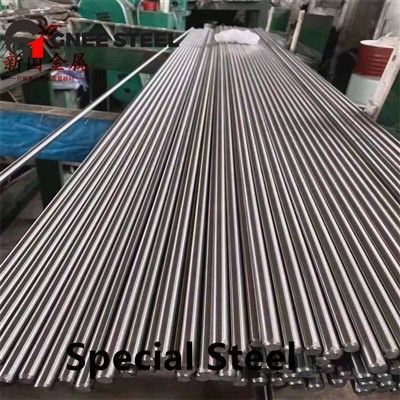
Special Steel
Our goal is to become your true partner in the field of ABS shipbuilding steel plate in China. Gnee Steel Group is committed to becoming the world's most internationally competitive supply chain group, meeting the different needs of different customers. We have a skilled engineering team dedicated to refining every stage, from product development and process improvement to production oversight, ensuring every product delivered meets rigorous quality and performance standards. The price is competitive and the product is quality-assured, which is a good choice for your long-term cooperation.


Our services:
In the pre-sales stage, our team of experts will recommend the most suitable products according to the needs of customers and provide detailed technical consultation. During the sales period, we ensure timely delivery and provide installation guidance. For after-sales, we provide long-term technical support, warranty services and spare parts to help customers maximize the use of products and get reliable maintenance during use.
Our certification:
Our company has obtained SGS certification. We have also passed ISO9001 and ISO14001 environmental management system certification.
Our capacity:
We have established long-term cooperative relationships with dozens of factories to ensure the production of our products, and our annual export volume exceeds 80,000 tons.
Quality control:
All our products are made of the highest quality materials and are subject to factory inspection, cargo inspection at any time.
Types of Special Steel
The special steel produced by our company mainly include the following types:
Alloy Tool Steel
Alloy tool steel is steel used to make tools, molds and standard parts. By using different alloying elements such as molybdenum, chromium or silicon and their compositions, special material properties can be achieved depending on the intended use.
Spring Steel Sheet
Spring steel refers to specialized alloy steel used to manufacture various types of springs and other elastic components. According to performance requirements and usage conditions, it can be divided into ordinary alloy spring steel and special alloy spring steel.

Advantages of Special Steel
Alloy Tool Steel
Alloy tool steel have many advantages, including:
Exceptional hardness: One of the most prominent advantages of tool steel alloys is their exceptional hardness. These materials can withstand high levels of stress and pressure without deforming or wearing down. This makes them ideal for applications where cutting, shearing, and forming processes are involved.
Superb wear resistance: Tool steel alloys are renowned for their superb wear resistance. They can withstand abrasive forces and friction, which are common in manufacturing and machining operations. This property not only extends the lifespan of tools but also ensures consistent and high-quality output.
High toughness: In addition to hardness and wear resistance, tool steel alloys also possess high toughness. This means they can absorb shocks and impacts without fracturing or breaking. High toughness is especially crucial in applications involving heavy machinery and equipment, where tools May be subjected to sudden, intense forces.
Corrosion resistance: While tool steel alloys are primarily known for their mechanical properties, they also offer corrosion resistance. This makes them suitable for use in environments where exposure to moisture and chemicals is a concern.
Spring Steel Sheet
Spring steel sheet have many advantages, including:
Excellent resilience: One of the significant advantages of using spring steel sheet is its remarkable resilience. This sheet can withstand repeated use and maintain its consistent shape and size.
High tensile strength: Spring steel sheet is known for its high tensile strength, which means it’s highly resistant to breaking or deforming. It can withstand significant stress, making it ideal for heavy-duty applications that require reliable strength. Its high tensile strength also makes it useful in projects that must withstand constant wear and tear, such as industrial machinery components.
Corrosion resistant: Another advantage of using spring steel sheet is its excellent corrosion-resistant properties. It has an added layer of protection against rust and corrosion, making it ideal for products exposed to harsh environments.
Cost-effective: Spring steel sheet is also a cost-effective material for your projects. Due to its durability and long-lasting properties can save you money in the long run by reducing the need for frequent replacements of your products.
Versatile applications: Spring steel sheet has a wide range of applications, making it versatile for different industries. You can use it in the automotive industry to manufacture components such as suspension springs, clutch plate backing plates, and brake shoes.
Application of Special Steel

Alloy Tool Steel
Alloy tool steel can be used for a variety of purposes, including:
Cutting and forming tools: One of the most prevalent applications of alloy tool steels is in the manufacturing of cutting and forming tools. These tools, such as drills, milling cutters, and dies, rely on the exceptional hardness and wear resistance of alloy tool steels to maintain precision and efficiency over prolonged use.
Injection molding: Alloy tool steels play a pivotal role in injection molding processes. The ability to withstand the high pressures and temperatures involved in molding operations makes them indispensable for creating intricate and high-quality plastic components.
Woodworking: In woodworking, alloy tool steels are favored for their durability and ability to retain sharp edges. Saw blades, chisels, and plane irons made from these alloys ensure precise and clean cuts in wood, enhancing the overall quality of woodworking projects.
Aerospace industry: The aerospace industry relies heavily on alloy tool steels for the fabrication of critical components, such as aircraft landing gear and engine parts.
Automotive industry: In the automotive sector, alloy tool steels find applications in the production of engine components, transmission parts, and cutting tools for precision machining.
Medical instruments: Alloy tool steels are also used in the manufacture of medical instruments, including surgical blades and dental tools. The combination of sharpness and corrosion resistance is vital in these applications, where precision and hygiene are paramount.
Spring Steel Sheet
Spring steel sheet can be used for a variety of purposes, including:
Clips & fasteners: With high-strength and good fatigue strength resistance, spring steel is ideal for creating clips and fasteners that hold things together.
Springs: From everyday machinery to vehicular parts, spring steel is most commonly used to create coil springs, compression springs, torsion springs, and leaf springs.
Medical equipment: Spring steel is often used to create medical instruments, like surgical tools and orthodontic appliances.
Machinery: Spring steel is used for manufacturing machinery and equipment, from lawnmowers and aircrafts to conveyors and pumps.
Hand tools: With its high strength, spring steel is perfect for producing strong, durable tools like pliers, wrenches, and scissors.

Classification of Alloy Tool Steels
The hardenability, hardenability, wear resistance, and toughness of alloy tool steel are higher than those of carbon tool steel, and can be roughly divided into three categories according to their use: cutting tool steel, mold steel, and measuring tool steel. Steel with high carbon content (carbon mass fraction greater than 0.80%) is mostly used for manufacturing cutting tools, measuring tools, and cold working molds. After quenching, the hardness of this type of steel is above HRC60 and it has sufficient wear resistance; Steel with moderate carbon content (carbon mass fraction 0.35%~0.70%) is mostly used for manufacturing hot work molds. This type of steel has a slightly lower hardness after quenching, reaching HRC50~55, but good toughness.
Common Grades Of Alloy Tool Steel
9CrSi: Mainly used for the manufacturing of mold steel plates.
Cr12MoV: High wear resistance and cutting ability, used for manufacturing molds, cutting tools, and templates.
SKD11: Good wear resistance, suitable for manufacturing parts with high hardness and thin film thickness.
H13: Good thermal strength, suitable for manufacturing high load and high temperature molds.
CrWMn: Suitable for manufacturing cold heading molds, cutting blades, stamping molds, etc.
42CrMo4: High strength, wear resistance, and corrosion resistance, suitable for manufacturing high load, high pressure, and long-life mechanical components and tools.
1.2311: Suitable for manufacturing injection molds and extrusion molds.
Cold drawn (rolled) spring steel according to production methods. Hot rolled spring steel includes round or trapezoidal steel used for manufacturing spiral springs, torsion bars, and flat steel used for manufacturing leaf springs; Cold drawn (rolled) spring steel includes cold drawn steel wires for manufacturing small-sized spiral springs, spring springs for manufacturing, and cold-rolled steel strips for various spring plates. Alloy spring steel usually contains manganese, silicon, chromium, molybdenum, tungsten, vanadium, and trace amounts of boron, all of which can improve the hardenability of the steel. Manganese and silicon are dissolved in ferrite, which can improve the yield strength. Chromium, tungsten, and vanadium can improve the elastic limit, yield ratio, and heat resistance of steel.

Mechanical Properties of Spring Steel Sheet
|
Grade |
Heat Treatment |
Mechanical Properties |
||||||
|
Quenching temperature (℃) |
Quenching agent |
Tempering temperature(℃) |
σ0.2 |
σb |
δ5 (%) |
δ10 (%) |
Ψ (%) |
|
|
(kgf/mm2) |
||||||||
|
65 |
840 |
Oil |
500 |
80 |
100 |
|
9 |
35 |
|
85 |
820 |
Oil |
480 |
100 |
115 |
|
6 |
30 |
|
65Mn |
830 |
Oil |
540 |
80 |
100 |
|
8 |
30 |
|
60Si2Mn |
870 |
Oil |
480 |
120 |
130 |
|
5 |
25 |
|
60Si2CrVA |
850 |
Oil |
410 |
170 |
190 |
6 |
|
20 |
|
50CrMn |
840 |
Oil |
490 |
110 |
130 |
|
5 |
35 |
|
55SiMnVB |
860 |
Oil |
460 |
125 |
140 |
|
5 |
30 |
|
50CrVA |
850 |
Oil |
500 |
115 |
130 |
10 |
|
40 |
|
30W4Cr2VA |
1050~1100 |
Oil |
600 |
135 |
150 |
7 |
|
40 |
The Manufacturing Process Of Carbon Steel Plate
Raw materials selection: The journey of spring steel begins with the careful selection of raw materials. Typically, this involves choosing high-quality steel alloys, such as carbon steel or low-alloy steel, that possess the necessary properties for spring applications.
Melting and alloying: The selected steel is then melted in a furnace, reaching temperatures upwards of 2,500 degrees fahrenheit (1,371 degrees celsius). During this process, various alloying elements are introduced to the molten steel to impart specific properties.
Casting or rolling: Once the steel has been alloyed, it is shaped into its initial form through either casting or rolling. Casting involves pouring the molten steel into molds to create ingots or billets. Rolling, on the other hand, passes the steel through a series of rollers to form it into desired shapes, such as sheets or bars.
Heat treatment: The key to spring steel’s remarkable properties lies in the controlled heating and cooling processes. After shaping, the steel undergoes heat treatment. This typically involves heating the steel to a specific temperature and then rapidly cooling it, a process known as quenching.
Tempering: To strike the right balance between hardness and flexibility, tempered spring steel is subjected to a secondary heat treatment called tempering. During this process, the steel is reheated to a lower temperature and then slowly cooled.
Quality testing: Before spring steel is deemed ready for use, it undergoes rigorous quality testing. This includes assessing its mechanical properties, such as tensile strength and elasticity, to ensure it meets industry standards.
Packing and Shipping of Special Steel
|
Packing |
Standard export packing (inside:water proof paper,outside:steel covered with strips and pallets) |
|
Shipping |
Shipped by road, sea, rail |
Other Service of Special Steel
|
Delivery time |
7 to 15 working days |
|
Payment terms |
30%TT for deposit, 70% balance before shipment or LC at sight |
|
Supply ablitity |
10000 Ton/ per Month |
FAQ