



Stainless Steel Plate
Why Choose Us
We Are 100% Factory
We are a professional manufacturer with many years of experience, offering a one-stop packaging solution from design and production to shipping.
Professional Service
We accept factory and goods inspections at any time. We also offer technical discussions, research and development of new products, and comprehensive after-sales service.
Our Products
Our main products include shipbuilding steel plates, wear-resistant steel plates, corten steel plates, pressure vessel steel plates, alloy steel plates, and low alloy steel plates.
Quality Assurance
We utilize state-of-the-art equipment, experienced designers, and skilled workers. Our advanced production management experience and strict quality management standards ensure high quality. OEM and ODM services are available, and we can provide samples upon request.
What Is Stainless Steel Plate?
Stainless steel plate is a type of flat metallic product that is made from a mixture of steel, chromium, and other elements to enhance its resistance to corrosion and staining. It is often used in industrial and commercial applications due to its durability, strength, and resistance to high temperatures and harsh environments. Stainless steel plates can come in various sizes, thicknesses, and grades, and can be used in various fields, including aerospace, marine, chemical processing, and more.


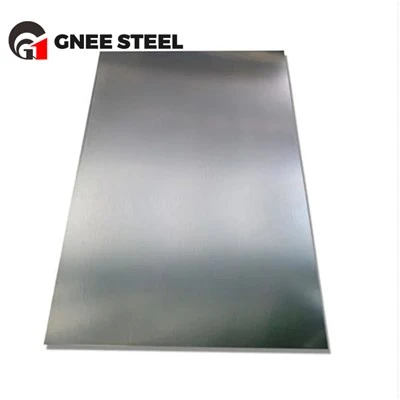


Stainless Steel Is A Versatile Material
Stainless steel is an extremely valuable and versatile material that offer superior strength and corrosion resistance, as well as a sleek and modern appearance. It can also withstand extremely high and low temperatures, allowing it to be used in a variety of applications.
It Is Non-Reactive
The stainless steel is non-reactive and thus is a good choice for cooking acidic foods. Foods that are too acidic can damage metal surfaces when cooked with reactive metals. There are different grades of stainless steel. Different countries have different systems. The foodservice industry uses SAE grades and flatware grades. The lowest grade is 201 and is the most expensive. The next lowest grade is 304.
It Is Easy To Bend
If you're working with a thin or small piece of stainless steel sheet, bending it is quite easy. However, some types of shapes are difficult to bend with standard bending tools. In these cases, a metal-bladed jigsaw or a RotoZip saw will be sufficient.
It Is Non-Magnetic
Stainless steel is a solid material. It can contain various alloys that include chrome, nickel, and other materials. Some types are non-magnetic, while others contain both chromium and iron. These alloys interact with each other in a special way, making them non-magnetic. For example, some stainless steels are magnetic, while others are not. The reason for this is because the magnetism of stainless steel is counteracted by the ferromagnetic property of nickel and iron.
It Is Heat Resistant
Stainless steel sheet is a good choice for high-temperature applications, especially those that require a high level of corrosion resistance. This material resists oxidation and scaling at temperatures of up to 2,000 degF (1100 degC). However, its low level of silicon makes it susceptible to intergranular corrosion at high temperatures.
It Is Corrosion Resistant
Stainless steel is an excellent choice for applications that require corrosion resistance. Its chemical composition is rich in chromium and consists of at least 10.5% of the element. The different grades of stainless steel are also distinguished by their different combinations of properties. Each grade has a different corrosion resistance level.
Properties of Stainless Steel Plates
Corrosion Resistance
Stainless steel plates are renowned for their unparalleled resistance to corrosion. This resistance is a result of the alloying elements, primarily chromium, forming a protective oxide layer on the surface. This makes stainless steel plates ideal for use in corrosive environments, such as chemical processing plants and marine applications.
High Strength
Despite its sleek appearance, stainless steel plates exhibit remarkable strength. This property makes them suitable for applications where structural integrity and load-bearing capabilities are crucial. Different grades of stainless steel offer varying levels of strength to meet the specific requirements of diverse projects.
Heat Resistance
Stainless steel plates retain their strength and integrity at high temperatures, making them suitable for applications in extreme heat conditions. This property is particularly valuable in industries such as manufacturing, where exposure to elevated temperatures is common.
Hygiene and Cleanliness
The smooth, non-porous surface of stainless steel plates makes them resistant to bacterial growth and easy to clean. This property is especially important in industries such as food processing and healthcare, where hygiene is of utmost importance.

Applications of stainless steel plate?
Kitchen Appliances
Stainless steel plates are used to make kitchen appliances such as ovens, stoves, and dishwashers.
Food and Beverage Manufacturing
Stainless steel plates are used to create storage tanks, containers, trays, and other food and beverage processing equipment.
Automotive
Stainless steel plates can be used to make car parts, such as exhaust systems and exhaust manifolds.
Construction
Stainless steel plates can be used to construct buildings and other structures.
Medical
Stainless steel plates are used to make medical instruments, such as surgical tools and implants.
Marine
Stainless steel plates are used to make components for ships and other vessels.
Chemical Processing
Stainless steel plates are used in the production of chemicals, such as fertilizers and pharmaceuticals.
Heat Exchangers
Stainless steel plates are used to construct heat exchangers, which are used in various industries to transfer heat from one medium to another.
Uses of Stainless Steel Plate in Construction
Structural Components: Stainless steel plates are utilised in building projects for structural purposes. They are useful for load-bearing applications such as beams, columns, and trusses due to their strength, endurance, and corrosion resistance.
Facades and Cladding: Stainless steel plates are used for structural purposes in building projects. Because of their strength, durability, and corrosion resistance, they are excellent for load-bearing applications such as beams, columns, and trusses.
Roofs and Roofing Components: Residential and commercial roofing applications both use stainless steel plates. They are lightweight, strong, and corrosion-resistant, making them excellent for protecting the building from the elements.
Handrails and Balustrades: Stainless steel plates are frequently used in the manufacture of handrails and balustrades. They offer a durable and long-lasting railing system while also giving a modern and stylish touch to staircases, balconies, and pathways.
Decorative Applications: Decorative stainless steel plates are used in construction projects. They can be utilised in interior design as wall panels, elevator cladding, decorative screens, and marketing materials. The gleaming surface of stainless steel may give it a visually appealing and modern appearance.
The precautions for selecting stainless steel plates. The standard for using wall thickness in stainless steel plate product profiles is set in accordance with the requirements of energy conservation and environmental protection in today's society to ensure product safety and functionality. Therefore, it does not mean that the thicker the wall of the stainless steel plate profile, the better the quality of the stainless steel plate. Due to the use of stainless steel plates with thick profiles, it cannot be guaranteed that the airtightness and water tightness of the stainless steel plate product will be better, and the quality of the stainless steel plate will be higher.
1. The rationality of the profile planning for the use of stainless steel plate products;
2. The water tightness and air tightness of stainless steel plate products;
3. Are the accessories, glass, and hardware components of stainless steel plate products complete; If a stainless steel plate product uses improperly planned profiles and does not meet the requirements for water and air tightness, even if the wall thickness of the aluminum profile used exceeds N times the standard, it will not be a good stainless steel plate product. On the other hand, excessive pursuit of aluminum alloy profile wall thickness is a waste of resources for the theme of energy conservation and environmental protection. Moreover, the use of thick stainless steel plate profiles can also increase the price of stainless steel plates, bringing unnecessary economic burden to other customers. Therefore, when choosing stainless steel plates, we must conform to the consumption concept of energy conservation and environmental protection.
How To Maintain Stainless Steel Plate
If stainless steel plate has something like spalls, cement, oil, lime, putty, sand and other products attached to the surface, it should be cleaned up in time; otherwise it will produce rust or mildew after some time.
Water quality varies with areas and even the transportation mediums. For instance, the water transported through the galvanized pipe is likely to contain iron which, if left on the stainless steel surface without cleaning, will produce the floating rust easily.
The mineral materials, acid, or alkaline dusts in the newly decorated house, if falling on the surface of the stainless steel plate without timely cleanup, will produce floating rust easily.
Stainless steel surface, if exposed to pig iron or the like for a long time, will also incur floating rust, mildew or discoloration.
If chemical agents, cleaning agents, paints, sauces, oil, pesticides or other chemicals are left on the surface for a long time, the stainless steel products will get mildew or rust.
When it comes to processing and installing stainless steel products, residuals or water stains left on the surface of the stainless steel plate should be cleaned by cotton cloth dipped in the clean water after installing and use.
Please do not use wire ball or hard material to brush the stainless steel surface when in use or in maintenance. If external erosion causes floating rusts or yellow spots on the surface, it is advisable to use wet cotton dipped with old toothpaste to clean it up. Following that, use cotton dipped with transformer oil or sewing machine oil applying to the stainless steel surface so as to recreate a protection layer against secondary erosion.
The Production Process Of Stainless Steel Plates


Material Selection
The raw material for stainless steel plates consists of iron alloys containing added elements such as chromium, nickel, silicon, manganese, nitrogen, and carbon. The performance of the final alloy can be finely adjusted by changing the amounts of these alloying elements. Among them, chromium is the most important element in the manufacture of stainless steel, which is essential for the production of stainless steel and currently has no viable alternative methods. Chromium is a hard, corrosion-resistant transition element that can provide corrosion resistance to stainless steel plates. Generally speaking, the higher the chromium content, the more corrosion-resistant the stainless steel.
Melting
After the raw materials are selected, the production and manufacturing process of stainless steel begins with melting, which is the fusion of the raw materials together in an electric arc furnace.
Removal of Impurities
Next is the removal of excess carbon elements, which is accomplished by processing the molten metal in an AOD (Argon Oxygen Decarburization) converter. The AOD converter reduces carbon by injecting a mixture of oxygen and argon.
Chemical Composition Adjustment
Following this is the adjustment phase, where most stainless steels have very strict quality requirements. The adjustment process even allows for fine-tuning of the chemical composition. Adjustment involves slowly stirring the steel to remove unwanted elements and increase viscosity while maintaining the required composition within temperature limits.
Casting
The casting step involves pouring the molten steel into shapes. These forms can be patterned (rectangular), billets (round or square), plates, bars, or tubes.
Hot Rolling
Then comes hot rolling, which occurs at temperatures above the steel's recrystallization temperature. The exact temperature depends on the grade of stainless steel required. The stainless steel plates are heated and passed through tall rolls. Billets and blooms form bars and wires, while slabs form plates, strips, and sheets.
Cold Rolling (if necessary)
If necessary, cold rolling can also be performed, which is commonly used for stainless steel plates that require very precise dimensions or attractive surface finishes.
Annealing
After rolling, the stainless steel plates undergo an annealing treatment, which is a process used to soften the stainless steel, improve ductility, and refine the grain structure. It is also used to relieve internal stresses caused by previous processing. During annealing, the steel is heated and cooled under controlled conditions.
Descalving
After annealing, it is necessary to descale because the annealing process can cause scale to form on the steel. These scales are typically removed by pickling, which involves immersing the stainless steel plates in a mixture of nitric acid and hydrofluoric acid. Electrocleaning is another method that uses an electric current to remove the oxide scale.
Cutting
Then comes the cutting process, where the stainless steel plates can now be cut to the required sizes. Mechanical cutting is the most common method. Stainless steel plates can be cut straight with shearing knives, cut into circles with circular knives, cut with high-speed blades, or punched with punches and dies.
Finishing
Finally, there is finishing, as surface finish is very important for stainless steel plate products, especially in applications where appearance is important. Grinding wheels or sand belts are commonly used for grinding or polishing the steel.
Our Factory

We have established long-term cooperative relationships with dozens of factories in China to ensure that our products are manufactured using high-quality materials and in sync with various international standards, with an annual export volume of more than 80,000 tons. Gnee Group is committed to becoming the world's most internationally competitive supply chain group, meeting the different needs of different customers, and truly realizing: one-stop service, making choice easier.
FAQ