

Low‑carbon hot‑rolled structural steel plates serve as base materials for global building frames, machinery bases, offshore secondary structures and general fabrication works. ASTM A36, EN S235JR and JIS SS400 are three most commonly specified grades under American, European and Japanese standard systems respectively.
Based on 18 years of steel export experience, we frequently encounter costly errors in cross‑border procurement. Many buyers incorrectly treat these grades as direct one‑to‑one equivalents, resulting in third‑party inspection rejection, on‑site weld cracking risks and even project rework losses. Typical cases include American contractors receiving SS400 material failing AISC requirements; EU importers accepting A36 without Charpy impact test data and failing CE compliance audits; Southeast Asian fabricators applying SS400 for dynamically loaded beams and incurring latent safety hazards.
If you have project drawings or material specification sheets, send them over. Our technical team can provide free grade‑selection consultation and verify whether conditional material substitution is feasible for your tender.
Send your project drawings or material specification sheets
What is ASTM A36 Low Carbon Structural Steel Plate?
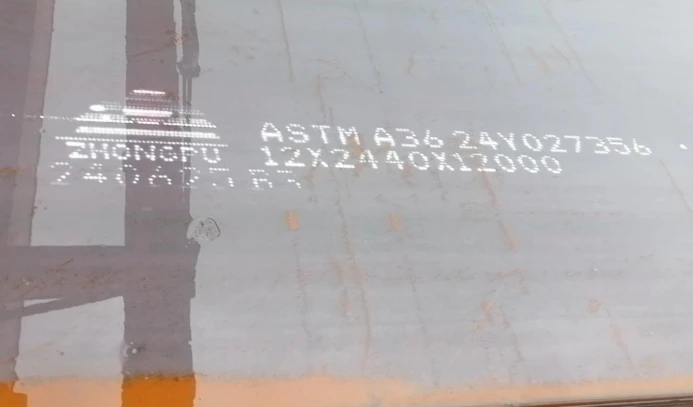
Specified under ASTM A36/A36M (US standard). The designation "36" refers to a minimum yield strength of 36 ksi (~250 MPa). This specification covers plates, sections, bars and sheet products and is widely adopted for North‑American, Middle‑Eastern and Latin‑American projects designed to AISC and AWWA codes. A36 guarantees a fixed minimum yield strength for most thickness ranges. No mandatory Charpy V‑notch impact test is defined in the base standard; impact testing must be separately ordered as a supplementary requirement.
What is S235JR Low Carbon Structural Steel Plate?
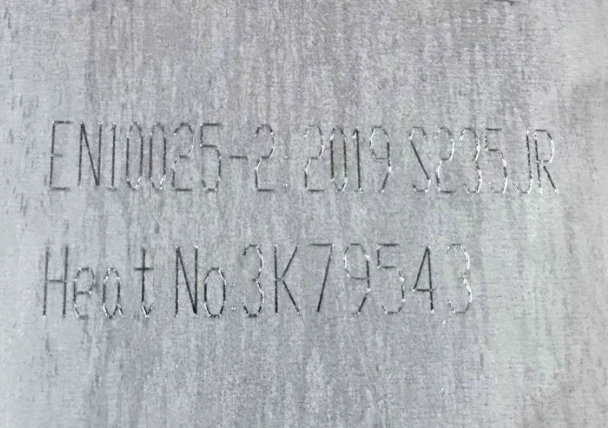
Governed by EN 10025‑2 (European standard). Designation breakdown: S = structural steel; 235 = minimum yield strength for thickness ≤16 mm; JR = minimum 27 J Charpy V‑notch impact energy at +20 ℃. Mandatory room‑temperature toughness is its core characteristic. S235JR shall be supplied with an EN 10204 3.1/3.2 mill test certificate. CE marking is legally mandatory for structural products placed onto the EU market. This grade is widely used in EU civil construction, machinery bases and general steel fabrication.
What is SS400 Low Carbon Structural Steel Plate?
Defined in JIS G3101 (Japanese standard). "SS" stands for structural steel; "400" denotes minimum tensile strength of 400 MPa. Critical note: JIS G3101 does not specify a rigid mandatory minimum yield strength value; yield values listed are reference figures which decrease as plate thickness increases. No mandatory Charpy impact requirement exists. Main application markets include Japan, Southeast Asia and Oceania for local machinery and low‑priority building structures.

A36, S235JR, SS400 Carbon Steel Plate Specification
|
Item |
Specification |
|
Product Name |
Carbon Steel Plate |
|
Grade |
A36, S235JR, SS400 |
|
Thickness |
0.5mm – 200mm |
|
Width |
600mm – 3000mm |
|
Length |
1000mm – 12000mm or Customized |
|
Surface Treatment |
Black Surface, Pickled, Oiled, Galvanized (Optional) |
|
Standard |
ASTM, EN, JIS |
|
Tolerance |
According to International Standards |
|
MOQ |
Negotiable |
A36 vs S235JR vs SS400 Structural Steel Plate Chemical Composition
| Grade | C | Mn | P | S | Si |
|---|---|---|---|---|---|
| A36 | 0.26 | 0.80‑1.20 | 0.040 | 0.050 | 0.40 |
| S235JR | 0.17 | 1.40 | 0.035 | 0.035 | 0.35 |
| SS400 | 0.25 | 1.35 | 0.050 | 0.050 | - |
A36 vs S235JR vs SS400 Structural Steel Plate Mechanical Property
| Item | ASTM A36 | S235JR | SS400 |
|---|---|---|---|
| Yield Strength (MPa) | ≥250 MPa (≤200 mm; ≥220 MPa for >200 mm) | 235 (≤16 mm); 225 (16‑40 mm); 215 (40‑63 mm) | 245 (≤16 mm); 235 (16‑40 mm); 215 (>40 mm). No mandatory lower yield limit specified in JIS G3101 |
| Tensile Strength (MPa) | 400‑550 | 360‑510 | 400‑510 |
| Elongation | ≥20% | ≥26% | ≥20% |
| Charpy V‑Notch Impact | Not required by base standard; available upon separate order | ≥27 J @ +20 ℃, mandatory | No mandatory requirement |
Certification & Compliance Requirements
- ASTM A36: ASTM mill test report (MTR / MTC). Compliant with AISC, AWWA; CE marking not applicable.
- S235JR: EN 10204 3.1 mill test certificate (signed by manufacturer's independent quality‑control department). EN 10204 3.2 witness report is specified for high‑risk projects. CE marking is legally required for structural steel delivered into the EU.
- SS400: JIS mill certificate; no universal mandatory third‑party inspection requirement.
A36 vs S235JR vs SS400 Low Carbon Plate Welding & Fabrication Performance
ASTM A36
Good general weldability. Pre‑heating to 60‑100 ℃ is recommended for plate thickness >25 mm to mitigate cold‑cracking risk during welding.
S235JR
Low carbon‑equivalent, excellent weldability. Plates under 25 mm generally require no pre‑heating and exhibit low cold‑cracking susceptibility, well‑suited for multi‑pass site welding.
SS400
Acceptable fabrication performance. Due to its wider chemical composition tolerance range, weldability varies between different steel producers. Carbon‑equivalent values shown on MTRs shall be reviewed for thick‑plate welding assessment.
When placing orders for these grades, we offer pre‑shipment sampling services including chemical analysis, tensile testing and impact testing (as required), alongside full traceable mill documentation prior to container loading.
A36 vs S235JR vs SS400 Carbon Steel Plate Application Scenarios
ASTM A36 Steel Plate
✅ Recommended scenarios: US‑spec factory steel frames, bridge base plates, AWWA flanges, non‑critical offshore secondary structures, Latin‑American infrastructure built to US codes.
❌ Not suitable: Tenders requiring EU CE marking; components designed for low‑temperature impact performance.
S235JR Steel Plate
✅ Recommended scenarios: EU civil steel construction, machinery bases requiring guaranteed room‑temperature toughness, wind‑turbine secondary supports, projects designed to Eurocode 3.
❌ Not suitable: Contracts explicitly specifying ASTM A36; mechanical‑equipment projects following Japanese local standards.
SS400 Steel Plate
✅ Recommended scenarios: General workshop steel structures in Southeast Asia, ordinary support brackets, non‑critical static components, cost‑sensitive secondary parts.
❌ Not suitable: Third‑party‑supervised export projects; primary dynamically‑loaded beams or fatigue‑critical structural members.


Critical Substitution Rules & Risk Warning
Core conclusion from international steel‑trade practice: A36, S235JR and SS400 are NOT one‑to‑one equivalent grades. Conditional substitution shall only proceed when ALL prerequisites listed below are satisfied.
Four mandatory pre‑conditions for conditional substitution
- The contract or tender document does not lock to a single material standard;
- Full original mill test reports containing actual chemical and mechanical test values are available for each production batch;
- Formal written approval for grade substitution is issued by the project's structural engineer;
- Material shall not be used for safety‑critical primary structural components subject to low‑temperature loading or fatigue.
Major risks of unauthorized direct grade swapping
- Structural‑safety risk: Without a guaranteed minimum yield strength, thick‑plate SS400 may exhibit scattered yield test results and create hazards for load‑bearing members.
- Inspection and customs risk: Where a contract specifies a defined standard, supplying an alternate grade will trigger third‑party rejection and destination‑port detention.
- Contractual‑liability risk: Delivery of non‑compliant material may result in rework, product returns and compensation claims.
If you are exploring material substitution for project‑budget optimization, send over your contract clauses and load‑case descriptions. Our metallurgical engineers will assess whether cross‑grade substitution is permissible and outline all required supporting documentation.
GNEE Steel's Supporting Service
Drawing on 18 years of export experience with low‑carbon structural steel plates, we supply A36, S235JR and SS400 hot‑rolled plates with full compliance documentation:
- Multi‑grade spot stock available: thickness range 6‑100 mm. Custom cutting, laser blanking, blast cleaning and oiled surface finishes are available;
- Complete certification packages: ASTM MTR, EN 10204 3.1 / 3.2, JIS mill certificates. Each batch is traceable to its original heat number;
- Technical support: pre‑order grade consultation, welding‑procedure guidance, coordination for third‑party surveyors for pre‑shipment inspections;
- Flexible minimum order quantities for project‑based orders, seaworthy export‑standard packaging.


Send your drawing, project standard & size requirement for free material consultation & quotation
FAQ
Is SS400 fully equivalent to ASTM A36?
No, SS400 is not fully or officially equivalent to ASTM A36, though they are frequently treated as practical, close substitutes in non-critical structural applications. They originate from different governing bodies-Japanese Industrial Standards (JIS) and ASTM International-and carry distinct mechanical and chemical nuances.
Does ASTM A36 require Charpy impact testing like S235JR?
No, ASTM A36 does not require Charpy V-notch impact testing by default, whereas S235JR mandates it as a standard part of its specification.
Which grade delivers better weldability, A36 or S235JR?
S235JR generally delivers slightly better weldability than A36. S235JR has a lower maximum carbon content (up to 0.17%) and stricter impurity limits for phosphorus and sulfur than A36 (which allows carbon up to 0.26% or higher in thick plates). This cleaner chemistry reduces cracking risks and usually removes the need for preheating.
Can SS400 be used for primary load‑bearing bridge girders?
Not recommended, SS400 structural steel can be used for secondary elements and small-scale or minor bridge structures, but it is generally not recommended or used for primary, long-span, major load-bearing bridge girders today. Modern major bridge engineering typically requires higher-strength, certified fracture-tough grades (such as SM490 or weathering steels like SMA490).


