

What is ASTM A517 Grade B?
A517 Grade B is a classic quenched-and-tempered high-strength pressure vessel steel formulated by ASTM for heavy-duty pressure-bearing equipment. Inspection and acceptance of steel plates shall comply with ASTM A20 standard specifications. Restricted by its original design positioning, this product is only supplied as thin plates with a maximum thickness of 31.75 mm. Adopting a Cr-Mo-V-Ti-B microalloyed design, it achieves ultra-high strength after quenching and tempering without large additions of nickel-based alloys.
What is EN 10028-6 P690Q?
P690Q is the base grade of quenched-and-tempered pressure vessel steel with a yield strength of 690 MPa under EN 10028-6 specification. The suffix "Q" stands for Quenched & Tempered, with a reference temperature of -20°C for Charpy impact tests. Designed with a multi-element composite alloy system of Mn-Cr-Mo-Ni, this steel grade breaks the thickness limitation of ASTM A517 Grade B and enables stable production of steel plates ranging from 6 mm to 300 mm in thickness.
What is EN 10028-6 P690QL1?
Based on the chemical composition of P690Q, P690QL1 realizes upgraded control over molten steel cleanliness with stringent limits on detrimental impurities such as phosphorus and sulfur, alongside optimized grain refinement technology. The suffix "L1" indicates the steel has obtained L1-grade low-temperature toughness certification, with Charpy impact testing conducted at -40°C (consistent with the requirement of ASTM A517 Grade B).


Quick Overview Comparative Table: A517 Grade B vs P690Q vs P690QL1 Steel Plate
| Comparison Item | ASTM A517 Grade B | EN 10028-6 P690Q | EN 10028-6 P690QL1 |
|---|---|---|---|
| Executive Standard | ASTM A517 / ASTM A20 | EN 10028-6 | EN 10028-6 |
| Core Definition | US Q&T high strength pressure vessel plate | European Q&T pressure vessel steel, 0℃ base toughness | European ultra-low temperature Q&T pressure vessel steel |
| Minimum Yield Strength | ≥690MPa (100ksi) | ≥690MPa (t≤50mm) | ≥690MPa (t≤50mm) |
| Maximum Delivery Thickness | The standard specifies a maximum of 31.75 mm (1.25 inch). However, we can supply thicker ones. | 300mm | 300mm |
| Standard Charpy Impact Test Temperature | -40℃ | -20℃ | -40℃ |
| Typical Impurity Control | S≤0.008%, P≤0.025% | S≤0.015%, P≤0.025% | Strict control S≤0.010%, P≤0.020% |
| Delivery State | Quenched + Tempered (Q&T) | Quenched + Tempered (Q&T) | Quenched + Tempered (Q&T) |
| PWHT Risk | The material exhibits high susceptibility to reheat cracking; therefore, the post-weld heat treatment (PWHT) process must be strictly controlled. | Low reheat cracking tendency | Low reheat cracking tendency |
| Main Application Orientation | US-standard thin-plate pressure vessels, conventional cryogenic tank trucks | European normal temperature high-pressure containers, thick plate heavy industry | European cryogenic equipment, offshore polar engineering |
| Overall Cost Level | Medium (thin plate premium) | Medium-Low (mass production advantage) | Medium-High (low-temperature purification cost premium) |
Contact our professional technical team for further advice on product selection
A517 Gr.B vs P690Q vs P690QL1 High Strength Pressure Vessel Steel Plate Specification
| Item | Specification |
|---|---|
| Product Name | High Strength Pressure Vessel Steel Plate |
| Available Grades | ASTM A517 Grade B, P690Q, P690QL1 |
| Standards | ASTM A517/A517M, EN 10028-6 |
| Steel Category | Quenched and Tempered Pressure Vessel Steel |
| Thickness | 6–300 mm (Customized thickness available) |
| Width | 1500–4000 mm |
| Length | 3000–18000 mm |
| Testing | Chemical Analysis, Tensile Test, Charpy Impact Test, Hardness Test, Ultrasonic Testing (Optional) |
| Inspection Documents | Mill Test Certificate (MTC), EN 10204 3.1 / 3.2 Certificate |
| Surface Treatment | Shot Blasting, Primer Coating (Optional) |
| Cutting Service | CNC Cutting, Flame Cutting, Plasma Cutting |
| Applications | Pressure Vessels, Gas Storage Tanks, Petrochemical Equipment, Reactors, Heavy Industrial Equipment |
Chemical Composition: A517 Grade B vs P690Q vs P690QL1 PVQ Steel Plate
| Element | ASTM A517 Grade B | EN 10028-6 P690Q | EN 10028-6 P690QL1 |
|---|---|---|---|
| C | 0.15~0.21 | ≤0.20 | ≤0.20 |
| Si | 0.15~0.35 | ≤0.80 | ≤0.80 |
| Mn | 0.70~1.00 | ≤1.70 | ≤1.70 |
| P | ≤0.025 | ≤0.025 | ≤0.020 |
| S | ≤0.008 | ≤0.015 | ≤0.010 |
| Cr | 0.40~0.65 | ≤1.50 | ≤1.50 |
| Mo | 0.15~0.25 | ≤0.70 | ≤0.70 |
| Ni | Trace | ≤2.50 | ≤2.50 |
| V | 0.03~0.08 | ≤0.12 | ≤0.12 |
| Ti | 0.01~0.04 | ≤0.05 | ≤0.05 |
| B | 0.0005~0.005 | ≤0.005 | ≤0.005 |
| Cu | - | ≤0.30 | ≤0.30 |
| Nb | - | ≤0.06 | ≤0.06 |
Mechanical Property: A517 Grade B vs P690Q vs P690QL1 PVQ Steel Plate
| Performance Index | ASTM A517 Grade B | EN 10028-6 P690Q (t≤50mm) | EN 10028-6 P690QL1 (t≤50mm) |
|---|---|---|---|
| Yield Strength Re | ≥690MPa (100ksi) | ≥690MPa | ≥690MPa |
| Tensile Strength Rm | 793~931MPa (115~135ksi) | 770~940MPa | 770~940MPa |
| Elongation A | ≥16% | ≥14% | ≥14% |
| Charpy V-notch Impact Energy | ≥27J@-40℃ | ≥27J@-20℃ | ≥27J@-40℃ |
| Section Contraction Rate | ≥35% (rectangular specimen) | - | - |
Comparative Analysis of Weldability: A517 Grade B vs P690Q vs P690QL1 Plate
ASTM A517 Grade B
ASTM A517 Grade B steel plate features a high carbon equivalent and prominent cold cracking susceptibility. Preheating at 150–200°C is mandatory prior to welding, and low-hydrogen welding consumables must be adopted. Rust and moisture on welding grooves shall be thoroughly removed. A prominent drawback is the high risk of reheat cracking after post-weld heat treatment (PWHT). Accordingly, weld layout shall be optimized during structural design to relieve residual stress.
EN 10028-6 P690Q
P690Q steel plate has a moderate carbon equivalent. The preheating temperature shall be maintained at 100–180°C with interpass temperature controlled below 250°C. High-strength low-hydrogen welding wires and electrodes complying with EN ISO 16834-A shall be matched. Conventional welding procedures for pressure vessels are adequate for fabrication, delivering low construction difficulty and excellent on-site applicability.
EN 10028-6 P690QL1
Welding procedure requirements for P690QL1 are generally consistent with those for P690Q, yet stricter control of welding heat input is required to prevent grain coarsening in the heat-affected zone (HAZ) which would degrade low-temperature toughness. Rapid cooling is prohibited after welding; the weldment shall be covered with thermal insulation cotton for slow cooling to guarantee the low-temperature impact performance of welded joints.
Typical Application Scenario: A517 Grade B vs P690Q vs P690QL1 Low Alloy Plate
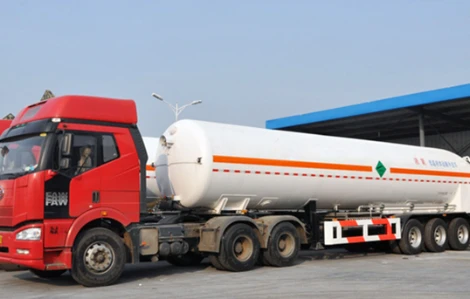
ASTM A517 Grade B Preferred Scenarios
American standard ASME certified small pressure vessels, mobile cryogenic tank trucks, skid-mounted high-pressure buffer tanks;
Thin-wall pressure-bearing structural parts with thickness less than 30mm and design temperature -40℃;
Projects that strictly prohibit post-weld overall stress relief heat treatment.
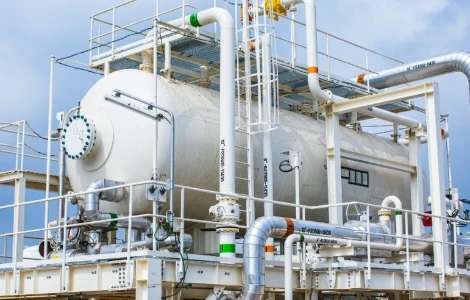
P690Q Preferred Scenarios
EU PED certified normal temperature petrochemical reactors, boiler drums, heat exchanger cylinder sections;
Large-scale heavy-duty machinery: all-terrain crane boom, hydraulic support cylinder body, bridge high-strength bearing plate;
Thick-wall pressure vessel main body with thickness ranging from 30mm to 300mm and design temperature ≥-20℃.

P690QL1 Preferred Scenarios
PED certified LNG atmospheric storage tank, cryogenic separation tower, liquid ammonia low-pressure storage tank;
Offshore platform pressure modules, polar oil and gas production equipment, cold-resistant pipeline pressure-bearing sections;
European pressure vessel projects with design temperature -40℃ long-term service requirements.
One-Stop Supply Service of GNEE Steel
GNEE Steel is a professional pressure vessel steel plate export supplier with 18 years of industry experience, with ISO9001 quality system certification, CE-PED pressure vessel material certification, mill test certificate (MTC) full traceability service, long-term stable supply cooperation with mainstream steel mills, and has provided customized steel plate solutions for more than 60 pressure vessel manufacturers, offshore engineering companies and petrochemical EPC contractors worldwide.
Core Supporting Services
- Full-spec supply: Complete inventory of ASTM A517 Grade B thin plate, P690Q/P690QL1 conventional & extra-thick quenched and tempered steel plates, support fixed-length cutting, beveling, ultrasonic flaw detection (UT), Z-direction performance Z15/Z25/Z35 customized processing;
- Document support: Provide EN 10204 3.1 / 3.2 inspection certificate, ASME material certification, PED material registration documents, meet the inspection requirements of domestic and foreign pressure vessel inspection bureaus;
- Technical after-sales service: Professional steel structure welding engineer team provides free welding process guidance, heat treatment scheme optimization, low-temperature toughness test verification technical support.


If you are engaged in pressure vessel design, material procurement or engineering construction and need accurate material quotation, welding process technical data, or third-party inspection customization for A517 Grade B, P690Q, P690QL1 steel plates, please send your thickness, quantity, design temperature, certification requirements to our business team, GNEE Steel will provide you with a targeted technical quotation sheet and free material selection optimization scheme within 24 hours to help you control material cost and improve equipment safety margin.
Click to submit thickness, quantity, design temperature, and certification requirements
FAQ
Can A517 Grade B be processed by bending and cold forming?
Yes, ASTM A517 Grade B can be processed by bending and cold forming, but it requires caution due to its ultra-high 100 ksi minimum yield strength.
Why is A517 Grade B forbidden for overall post-weld stress relief annealing?
A517 Grade B is restricted or forbidden from overall post-weld stress relief annealing because thermal soaking degrades its specialized quenched and tempered microstructure, causing severe loss of tensile and yield strength, reduced toughness, and high susceptibility to reheat cracking in the heat-affected zone.
Can A517 Grade B replace P690QL1 for European cryogenic pressure vessel projects?
No, ASTM A517 Grade B cannot directly replace EN 10028-6 P690QL1 for European cryogenic pressure vessel projects without extensive re-engineering, specialized code approvals, and verification challenges. While both are quenched and tempered (Q&T) high-strength steels with a 690 MPa minimum yield strength, they belong to different regulatory frameworks and possess distinct low-temperature toughness profiles.


