

ASTM A612 is fully killed C-Mn-Si steel plate, engineered for welded pressure vessels operating under medium and low temperature service conditions. The grade delivers balanced high tensile strength, consistent cryogenic toughness and weld compatibility, specified for use within petrochemical, power generation and natural gas storage & transport sectors.
Full Name: Standard Specification for Pressure Vessel Plates, Carbon Steel, High Strength, for Moderate and Lower Temperature Service ASTM International.
Designation: ASTM A612 (inch-pound units) / ASME SA612M (metric units) ASTM International.
Current Version: ASTM A612/A612M-20 (approved May 1, 2020).
Scope: Covers killed carbon-manganese-silicon steel plates for welded pressure vessels in moderate and lower temperature service ASTM International.
Contact us now for the latest quote on ASTM A612.


ASTM A612 Plate Finished Vessel & Plate Cutting Fabrication
Industries Specified for ASTM A612 Pressure Vessel Plate:
ASTM A612 is specified for severe industrial environments featuring combined medium-low temperature and high pressure. Fabrication and inspection of components using this grade shall comply with applicable codes for pressure vessels and boilers.

Petrochemical & Chemical Process Equipment
- Cryogenic Storage Tanks & Spherical Vessels:Covers LPG and industrial gas tanks (1.6 MPa, -40 °C). ASTM A612 prevents cryogenic brittle fracture.
- High-Pressure Reaction & Separation Units:Includes urea converters, ammonia reactors, demethanizers (2.5 MPa, -100 °C). Resists acidic media and maintains structural stability.
- Heat Exchangers & Separators:For medium-high pressure, low-temperature heat transfer and phase separation loops.
Power Station Boilers & Thermal Power Plants
- Boiler Drums & Pressure Components:Boiler drums operate under high temperature and pressure; partial zones such as condensing towers sustain sub-zero temperatures. ASTM A612 inhibits cryogenic brittle failure and extends service life.
- Condenser Tubes:Installed in thermal plant condensing towers for cold northern climates, resistant to low-temperature embrittlement and corrosion from oxygen-bearing condensate.


Natural Gas & New Energy Storage & Transport
- LNG Storage Tanks & Piping:LNG service temperature reaches -162 °C. ASTM A612 and modified variants maintain structural integrity under ultra-low temperature to prevent tank brittle rupture.
- Liquid Hydrogen & Liquid CO₂ Storage Vessels:Liquid hydrogen operates at -253 °C. The improved variant of A612 steel plate alloyed with nickel and other elements is suitable for such ultra-low temperature service conditions.
- Offshore Platform Cryogenic Separation Units:Deployed for offshore oil & gas extraction, rated for -45 °C service and resistant to marine salt-spray corrosion.
Nuclear Power Engineering and Other Large-Scale Chemical Machinery
- Material selection enforces stringent thresholds on cryogenic toughness, tensile strength and structural safety. ASTM A612 plate is applied for reactor pressure retaining components.
- Specified for heavy chemical, metallurgical and municipal gas industries, meeting pressure containment and low-temperature impact resistance under complex operating conditions.

Which working conditions require mandatory HIC testing?
Acidic service environments containing wet hydrogen sulfide (H₂S): sour crude oil storage tanks, desulfurization units, sour gas separation columns, offshore cryogenic oil & gas equipment, and projects subject to NACE standards.
GNEE GROUP can supply ASTM A612 plates with full HIC tests complying with NACE TM0284. We adopt low-sulfur clean steel and deliver official HIC inspection reports, perfectly fitting sour oil & gas, desulfurization and offshore cryogenic projects with wet H₂S media.
Contact us for your personalized service
ASTM A612 Heat Treatment Delivery Condition
ASTM A612 steel plate is produced via fully killed steel melting process to guarantee dense microstructure and uniform chemical composition. Plates are normally supplied as hot-rolled; normalized or stress-relief heat treatment can be performed upon purchaser's request.

ASTM A612 Chemical Composition
| Element | Content (%) |
|---|---|
| Carbon (C), max | 0.25 |
| Manganese (Mn) | 1.00-1.50 |
| Phosphorus (P), max | 0.025 |
| Sulfur (S), max | 0.025 |
| Silicon (Si) | 0.15-0.50 |
| Copper (Cu), max | 0.35 |
| Nickel (Ni), max | 0.25 |
| Chromium (Cr), max | 0.25 |
| Molybdenum (Mo), max | 0.08 |
| Vanadium (V), max | 0.08 |
ASTM A612 Mechanical Properties
| Property | Thickness ≤12.5mm | Thickness 12.5-25mm |
|---|---|---|
| Tensile Strength | 570-725 MPa (83-105 ksi) | 560-695 MPa (81-101 ksi) |
| Yield Strength, min | 345 MPa (50 ksi) | 345 MPa (50 ksi) |
| Elongation in 200mm, min | 16% | 16% |
| Elongation in 50mm, min | 22% | 22% |
ASTM A612 Product Classes
Per the prevailing ASTM A612/A612M specification (2020 edition), steel plates are formally classified into three distinct grades: Class 1, Class 2 and Class 3.
The three classes differ primarily in specified mechanical properties, notably tensile strength and toughness. Below is a comparison of critical performance metrics for each class:
| Class | Minimum Yield Strength (MPa) | Tensile Strength Range (MPa) | Characteristics |
|---|---|---|---|
| Class 1 | 345 | 550 – 690 | Delivers satisfactory low-temperature notch toughness. |
| Class 2 | 390 | 590 – 725 | Provides superior notch toughness relative to Class 1. |
| Class 3 | 450 | 550 – 690 | Offers the highest notch toughness among the three classes. |

ASTM A612 Pressure Vessel Plates
Impacts of Divergent Notch Toughness Across Classes:
1.Low-temperature operating threshold
- Class 1: Basic notch toughness, suited for mild sub-zero environments above -40°C with minimal cyclic load.
- Class 2: Improved toughness, allows steady operation down to -40°C under regular pressure cycling for LPG separators and medium cryogenic vessels.
- Class 3: Maximum notch toughness, applicable to extreme cryogenic conditions (-40°C ~ -60°C), offshore salt-spray assets and critical pressure boundary components with strict fracture prevention requirements.
2.Resistance to brittle fracture failure.
Lower notch toughness grades shift to brittle fracture at warmer temperatures. Under thermal shock, pressure surges or cold startup, Class 1 faces higher risk of rapid crack growth at notched zones; Class 3 retains ductile fracture behavior under severe impact load to avoid catastrophic vessel rupture.
3.Code compliance for high-risk projects.
- Class 1: General industrial pressure vessels without critical safety certification.
- Class 2: Standard selection for PED, ASME low-to-medium hazard chemical storage tanks.
- Class 3: Mandatory for ASME U-stamp vessels, offshore platforms, nuclear auxiliary components and liquefied gas tanks with extreme cold service, where design codes demand premium anti-cracking performance.
Grades with higher notch toughness accommodate higher residual welding stress and thicker plate sections without mandatory post-weld heat treatment adjustments, reducing fabrication constraints.

Comparison Chart of Low-Temperature Toughness Fracture Surface: ASTM A612 vs Ordinary Carbon Steel
- Specimen on the right: ASTM A612 Class 3. After Charpy impact test at -40°C, it shows a rough fibrous fracture with large shear lips, characteristic of ductile fracture, with absorbed impact energy ≥27 J.
- Specimen on the left: Ordinary carbon steel suffers brittle fracture at low temperature, featuring a flat, shiny fracture surface without plastic deformation. The sharp contrast highlights the superior anti-brittle-fracture performance of ASTM A612 under cryogenic conditions.
GNEE Specifications for ASTM A612 Steel Plates
ASTM A612/A612M Standard Stock Inventory List
| Thickness (mm) | Standard Width (mm) | Standard Length (mm) | Minimum Stock Tonnage |
|---|---|---|---|
| 8 | 1500 / 1800 | 6000 / 8000 | ≥ 50 MT |
| 10 | 1500 / 1800 | 6000 / 8000 | ≥ 80 MT |
| 12 | 1500 / 2000 | 6000 / 9000 | ≥ 100 MT |
| 14 | 1500 / 2000 | 6000 / 9000 | ≥ 60 MT |
| 16 | 1500 / 2000 | 6000 / 10000 | ≥ 120 MT |
| 20 | 1800 / 2200 | 6000 / 10000 | ≥ 150 MT |
| 25 | 1800 / 2200 | 6000 / 10000 | ≥ 80 MT |
| 30~50 | 2000 / 2500 | 6000 / 12000 | Stock availability to be confirmed per order |
ASTM A612/A612M Dimensional Tolerance
| Nominal Thickness Range | Thickness Tolerance (Width ≤1500mm) | Thickness Tolerance (Width 1500~2500mm) | Thickness Tolerance (Width >2500mm) | Corresponding Width Tolerance | Corresponding Length Tolerance | Flatness Tolerance | Camber Tolerance |
|---|---|---|---|---|---|---|---|
| 6 ~ 10 | -0.3 / +0.7 | -0.3 / +0.8 | -0.4 / +0.9 | ±3 | ±5 | ≤3mm/m | ≤2mm/m |
| 10 ~ 20 | -0.3 / +0.8 | -0.4 / +0.9 | -0.4 / +1.0 | ±5 | ±5 | ≤3mm/m | ≤2mm/m |
| 20 ~ 30 | -0.4 / +0.9 | -0.4 / +1.0 | -0.5 / +1.1 | ±5 | ±10 | ≤3mm/m | ≤2mm/m |
| 30 ~ 50 | -0.4 / +1.0 | -0.5 / +1.1 | -0.5 / +1.2 | ±8 | ±10 | ≤3mm/m | ≤2mm/m |
| 50 ~ 100 | -0.5 / +1.1 | -0.5 / +1.2 | -0.6 / +1.3 | ±8 | ±15 | ≤3mm/m | ≤2mm/m |
| 100 ~ 150 | -0.6 / +1.3 | -0.6 / +1.4 | -0.7 / +1.5 | ±8 | ±15 | ≤3mm/m | ≤2mm/m |
Why Choose GNEE GROUP ASTM A612 Steel Plate?
- Full Standard Compliance Fully meets ASTM A612/A612M standard, covers Class1/2/3. Fully killed steel with uniform composition; available in hot rolled, normalized, QT delivery states.
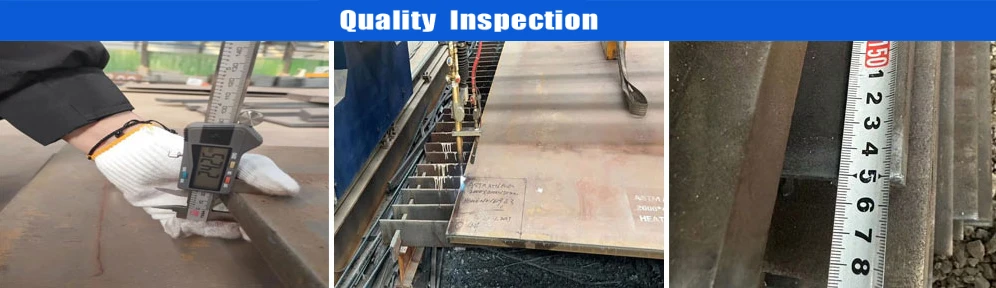
- Rigorous Quality Inspection Complete tensile, low-temperature impact and UT tests. Provide official MTC; support third-party inspection like SGS/BV. Traceable heat numbers for ASME & PED certification.
- Spot Stock & Custom Processing Rich stock for fast delivery. Offer cutting, beveling, rolling and other one-stop machining to save your processing cost.
- Excellent Low-Temperature Performance High notch toughness, safe for -40℃~-60℃ cryogenic high-pressure vessels. Good weldability without extra preheating for thin plates.
- Stable Supply & Competitive Price Direct cooperation with certified mills, stable supply and factory-direct cost for bulk orders; small trial orders acceptable.
- Professional Export Service Years of steel export experience. Technical team assists grade selection and process solutions. Complete shipping & customs documents.
- Reliable After-Sales Support Whole-order progress tracking, flexible payment terms and long-term technical guidance for fabrication.

Contact us now for the latest quote on ASTM A612.


Mill Test Certificate (MTC) and Ultrasonic Testing (UT)
FAQ:
What are the mechanical properties of ASTM A612 carbon steel plate?
ASTM A612 carbon steel plate typically offers a yield strength of at least 345 MPa, tensile strength of 570–725 MPa, and elongation of no less than 16%, ensuring strong and ductile performance.
Is ASTM A612 steel plate good for welding in pressure vessel fabrication?
Yes, ASTM A612 steel plate has low carbon content and controlled composition, providing excellent weldability, although preheating may be required for thicker plates.
What is the composition of ASTM A612?
ASTM A612 steel plate is a high-strength low-alloy (HSLA) steel plate designed for welded pressure vessels. It has a nominal composition of carbon, manganese, phosphorus, sulfur, silicon, nickel, chromium, molybdenum, and copper.


