

Abrasion resistant (AR) steel plates are widely used across industries where strength, durability, and wear resistance are critical. Among these grades, AR500, AR550, and AR600 are the most frequently specified for industrial fabrication and export projects. Each offers unique mechanical properties and performance characteristics, which makes choosing the right grade crucial for cost-efficiency and safety.
In this guide, we'll provide an in-depth comparison of AR500 vs AR550 vs AR600, explore key properties such as hardness, toughness, and machinability, and help you decide which grade best fits your application. We will also address common queries such as ar500 vs ar550 steel, ar550 vs ar500 steel, and ar500 vs ar600 steel, since these are typical questions when sourcing abrasion resistant steel plates from suppliers.
For international buyers looking to source AR500 steel plates, AR550 steel sheets, or AR600 steel plates, GNEE Steel offers high-quality stock with customization options and competitive pricing.

What Is Abrasion Resistant (AR) Steel?
Abrasion Resistant (AR) steel is a high-carbon alloy steel specifically designed to resist wear and tear. By adding alloying elements and controlling the heat-treatment process, AR steels achieve impressive hardness levels measured on the Brinell Hardness Scale (BHN).
For example, AR500 generally falls around 480–540 BHN, while AR550 is harder, and AR600 is at the top range. The higher the hardness, the more resistant the steel is to wear. However, higher hardness can also reduce ductility and make fabrication more challenging.
Overview of AR500, AR550, and AR600
1. What is AR500 Steel?
AR500 steel is a medium-carbon, alloy-abrasion resistant steel plate. It is heat treated to achieve a Brinell hardness rating of around 470–540 BHN. This hardness provides strong resistance to wear and impact, which is why AR500 is widely used in mining equipment, heavy machinery, dump truck liners, and shooting targets.

Key Features of AR500 Steel
Brinell Hardness: 470–540 BHN
Excellent impact resistance compared to higher-hardness grades
More workable than AR550 or AR600 (cutting, forming, limited welding possible)
Balanced cost and performance
For applications requiring both abrasion and impact resistance, AR500 steel plates strike the right balance. Buyers comparing ar500 vs ar550 steel often prefer AR500 for fabrication-heavy applications due to its toughness and easier machining.
2. What is AR550 Steel?
AR550 steel has a hardness range of 525–560 BHN, making it slightly harder than AR500. This additional hardness improves wear resistance but sacrifices some toughness and workability.
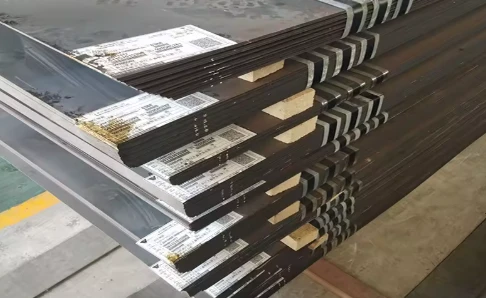
Key Features of AR550 Steel
Brinell Hardness: 525–560 BHN
Superior wear life compared to AR500
Less ductile and slightly more difficult to machine or weld
Frequently used in ballistic protection (shooting targets, body armor backplates)
Buyers comparing ar550 vs ar500 steel are often evaluating whether the increase in hardness is worth the trade-off in fabrication ease. AR550 steel plates can offer longer service life for high-volume targets or heavy equipment.
3. What is AR600 Steel?
AR600 steel represents the highest hardness in this family, usually ranging from 570–625 BHN. Its primary advantage is extreme abrasion resistance, but this comes with a significant trade-off: AR600 is less impact-resistant and extremely difficult to process.
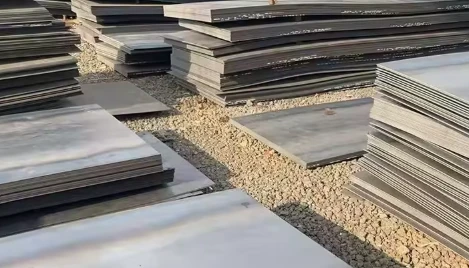
Key Features of AR600 Steel
Brinell Hardness: 570–625 BHN
Maximum wear resistance among AR steels
Not easily welded or cut without specialized equipment
Common in extreme-wear environments like mining chutes, industrial hoppers, and armor applications
When comparing ar500 vs ar600 steel, the decision is usually between cost-efficiency and maximum wear resistance. AR600 steel lasts longer in abrasive conditions, but it is more expensive and less versatile than AR500.
Hardness Comparison
| Grade | Typical Hardness (BHN) | Relative Toughness | Workability |
|---|---|---|---|
| AR500 | 470–540 | High | Good |
| AR550 | 525–560 | Moderate | Fair |
| AR600 | 570–625 | Lower | Difficult |
This chart helps buyers visualize the difference between ar500 vs ar550 steel and ar500 vs ar600 steel.
AR500 offers balanced hardness and toughness, AR550 improves wear life, and AR600 maximizes hardness where processing ease is less important.

Applications of AR500 vs AR550 vs AR600
1. AR500 Applications
AR500 steel plates for shooting range targets (Click to see why shooting target manufacturers choose ar500 steel for targets)
Mining and quarry equipment
Construction machine parts
Dump truck and trailer liners
Armor plating for vehicles
2. AR550 Applications
Ballistic steel plates
Police and military-grade targets
Heavy equipment subject to extreme abrasion
Structural parts requiring longer wear life
3. AR600 Applications
Mining chutes and hoppers
Industrial crushers
High-wear liners for cement and aggregate industries
Military and security armor where maximum protection is required
💡 Tip for buyers: For high-impact industrial applications, consider AR500 steel plates for balanced performance or upgrade to AR550/AR600 when maximum abrasion resistance is required. Contact us to buy AR500, AR550, or AR600 steel plates in custom sizes.
Common Buyer Comparisons
1. AR500 vs AR550 Steel
For ar500 vs ar550 steel, usually compared in industries like shooting sports or light armor. AR550 is harder and lasts longer for targets but comes at a premium price. If targets need to handle thousands of rounds, AR550 is worth the investment. For budget-conscious buyers, AR500 remains more popular.
2. AR550 vs AR500 Steel
The flip-side query, ar550 vs ar500 steel, reflects the same debate but from the opposite angle: Is AR550 always better? The answer is no. AR550 sacrifices toughness and weldability, which can be problematic in fabrication-heavy industries.
3. AR500 vs AR600 Steel
When it comes to ar500 vs ar600 steel, the comparison is starker. AR600 provides unmatched wear resistance but is significantly harder to fabricate. In mining, AR600 often outperforms AR500 in terms of service life. However, for industries requiring both abrasion and impact resistance, AR500 remains superior.
Conclusion
Choosing between AR500 vs AR550 vs AR600 steel plates depends entirely on your application. For a balanced, cost-effective, and tough steel, AR500 steel is the most popular option. If longer wear life is required and cost is less of a concern, AR550 can be a good upgrade. When extreme abrasion resistance is the top priority, AR600 steel is unmatched, though it is costly and challenging to fabricate.
If you are sourcing abrasion-resistant steel plates for your project, make sure to check out our Abrasion Resistant Steel Plates Collection Page for detailed specifications and availability or contact us for AR500/AR550/AR600 steel plate price and availability.
Frequently Asked Questions (FAQ)
Q1: Can AR500, AR550, or AR600 be welded?
AR500: Possible with preheating and controlled procedures.
AR550: Difficult; welding may compromise hardness.
AR600: Not recommended except with advanced methods.
Q2: Which is best for shooting targets?
AR500 is the industry standard.
AR550 lasts longer and is used by professional ranges.
AR600 is rarely used due to cost and brittleness.
Q3: Which grade provides the longest wear life?
AR600 outlasts both AR500 and AR550 in abrasive-only conditions.
Q4: Which grade is easiest to machine and fabricate?
AR500 is far easier to cut, bend, and process than AR550 or AR600.
| Other steel plate by GNEE | ||||
| Name | Material | Specification (mm) | Tons | Remark |
| Clad steel plate | P265GH+410,S355JR+410,A516Gr70+316, A537CL1+304L,Q235B+304L,Q345B+304, A516Gr70(NACE)+410,A537CL1+904L, A537CL1+316L,A516Gr70+304L,A537CL1+304 ,A516Gr70+410,A516Gr70+904L |
2-300mm(Based plate),1-50mm(Composited plate) | / | UT, AR, TMCP.Normalized, Quenched and Tempered,Z Direction Test, Charpy V-Notch impact TestThe Third Party Test , Coated or Shot Blasting and Painting. |
| Low Alloy | Q345A, Q345B, Q345C, Q345D, Q345E, Q390, Q420, Q460C, ST52-3, S355J2+N, SS400, SA302GrC, S275NL, 35CrMo | 6 - 350 | 5788.56 | Normalizing, tempered ,controlled rolling, hot rolling , Hot rolling,1st inspection, 2nd inspection, 3rd inspection |
| Pressure Vessel Plate | A204 Grade B,A515 Grade 70,A537 Class 1,SA387 Grade 11 Class 1,P265GH,S537 Class 2,P355Q,P275N,P355N,P690Q,Q345R, | 3 - 300 | 8650 | Normalizing, tempered ,controlled rolling, hot rolling , Hot rolling,1st inspection, 2nd inspection, 3rd inspection |
| High-Strength Plate | A514 Grade F, A572 Grade 50, A588 Grade A, S355JR, S690Q, SS400, S690QL, Q345B, Q345E | 8 - 120 | 3086.352 | Quenched and tempered |
| Wear-Resistant Plate | NM360, NM400, NM450, NM500 | 6 - 150 | 3866.297 | Quenched and tempered |
| Ship Plate | ABS AH32,ABS DH32,ABS EH32,ABS FH36,ASTM A131 A, ASTM A131 EH32,ASTM A131 AH36,CCS A,CCS AH32,LR AH32, DNV A36,BV AH32 |
8 - 200 | 2853.621 | Hot rolling, normalized ,hot rolling controlled rolling, quenched and tempered + toughness and brittleness |


