

How does Q345R differ from regular Q345 steeL ?
Q345R is a specialized low-alloy steel designed for pressure vessels (indicated by 'R' for Rongqi), requiring higher impact toughness, stricter quality control, and testing compared to the general structural Q345 (e.g., Q345B). Q345R generally requires strict non-destructive testing and has better performance under pressure, while Q345 is used for structural, bridge, and vehicle construction.

Q345R is a type of pressure vessel steel widely used in China. It is a low-alloy high-strength steel designed to handle moderate pressure and temperature conditions. The "Q" stands for yield strength, and "345" indicates the minimum yield strength of 345 MPa.
Key Characteristics
High strength: Minimum yield strength of 345 MPa.
Good toughness: Maintains impact resistance at low temperatures.
Weldability: Suitable for welding and forming into pressure vessels.
Corrosion resistance: Moderate, suitable for typical industrial environments.
Grade Designation
Chinese standard designation: GB/T 1591-2008 / GB713-2014 (pressure vessel steel).
"R" in Q345R indicates steel for pressure vessels (R = "Reactor / Pressure Vessel").
Equivalent international grades: Roughly similar to ASTM A516 Grade 70, but chemical compositions differ slightly.
Comparison
Vs A516 Grade 70: Comparable weldability and usage, but Q345R is specifically standardized for Chinese pressure vessels.
Q345R: Excellent weldability due to lower carbon content.
Q345R: Primarily used in Chinese pressure vessels, boilers, chemical tanks.
A516 Grade 70: Good weldability, but sometimes requires preheating for thicker sections.
A516 Grade 70: Used internationally in pressure vessels, boilers, storage tanks.
Common Applications
Manufacturing of pressure vessels, steam boilers, and heat exchangers.
Can be used in chemical equipment and storage tanks requiring moderate pressure resistance.
Occasionally used in large structural steel constructions where toughness and welding are critical.
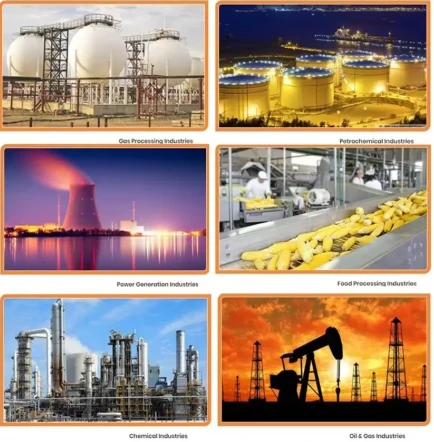
What standards does Q345R comply with?
Q345R is primarily governed by the Chinese GB 713 standard, which specifies the material requirements for steel plates used in pressure vessels. It is also compatible with international standards such as ASME and ASTM for pressure vessel applications.
Can Q345R be welded?
Yes, Q345R has excellent weldability. It can be welded using conventional welding methods without significant risk of cracking, ensuring structural integrity in welded pressure vessels and other critical components.
What are the common applications of Q345R steel?
Q345R is primarily used in pressure vessels, boilers, storage tanks, heat exchangers, and piping systems where high pressure and temperature are encountered. It is also used in industries such as chemical, petrochemical, and power generation due to its high strength and durability.
Main chemical elements composition
| C | Si | Mn | P | S | Alt(min.) |
| ≤0.20 | ≤0.55 | 1.20-1.60 | ≤0.025 | ≤0.015 | ≥0.020 |
Main mechanical properties
| Thickness (mm) | Tensile strength (MPa) | Yield strength (MPa) | Elongation (%) |
| >16-36 | 510-640 | ≥345 | ≥21 |
| >36-60 | 500-630 | ≥325 | ≥21 |
1. What is Q345R?
Q345R is a low-alloy steel designed for use in pressure vessels, boilers, and other equipment subjected to high temperature and pressure. It meets the Chinese GB 713 standard and offers good weldability, high strength, and resistance to deformation under pressure, making it ideal for industrial applications.
2. Can Q345R be used in hot and cold environments?
Yes, Q345R is designed for use in both hot and cold environments. It maintains its strength and toughness at high temperatures, while its impact resistance ensures reliability in cold temperatures, making it versatile for various industrial applications.
3. What is the tensile strength of Q345R?
The tensile strength of Q345R ranges from 470 MPa to 630 MPa, which indicates its ability to withstand high stress before breaking. This makes it suitable for applications involving high-pressure environments.
4. What is the welding procedure for Q345R?
Q345R can be welded using traditional methods such as arc welding, gas tungsten arc welding (TIG), and gas metal arc welding (MIG). Preheating may be required for thicker sections to avoid welding defects like cracks.
5. Is Q345R suitable for low-temperature environments?
Yes, Q345R is designed to perform well in low-temperature conditions. Its impact toughness remains high even at low temperatures, making it a reliable choice for pressure vessels and equipment that may operate in colder climates.
6. What is the impact toughness of Q345R?
Q345R has good impact toughness, particularly at low temperatures, making it resistant to cracking and brittle failure in harsh operating environments, which is essential for pressure vessels exposed to fluctuating temperatures.
7. What industries use Q345R?
Q345R is used across various industries including petrochemical, power generation, and manufacturing. It is especially favored in the production of pressure vessels, storage tanks, boilers, and piping systems that require materials capable of withstanding high temperatures and pressures.
Full specification and details are available on request. The above information is provided for guidance purposes only. For specific design requirements please contact our technical sales staff


