

What is the machinability of S690QL1?
S690QL1 is a high-strength structural steel with good strength and toughness, but its machinability is considered fair to challenging due to its high hardness, requiring robust machinery, slower speeds, and specialized tooling for effective chip control, though its fine-grain structure and low carbon content aid in welding and forming with appropriate procedures. It's a Quenched & Tempered (Q&T) grade, excellent for weight-saving in heavy machinery (cranes, mining), but demanding for machining compared to mild steels.

The defining characteristic of S690QL1 is its exceptional notch toughness at extremely low temperatures. While the standard S690QL grade is tested for impact resistance at -40°C, the "L1" variant is specifically engineered and certified for service at temperatures as low as -60°C. This is achieved through precise alloying and low impurity levels (phosphorus and sulfur), ensuring the steel remains "tough" rather than "brittle" in freezing environments. This property makes it an indispensable material for structures operating in arctic climates or deep-sea conditions where the risk of brittle fracture is a critical safety concern.
Key Characteristics:
High Strength: Minimum yield strength of 690 MPa (megapascals).
Low-Temperature Toughness: Tested for impact energy at -60°C, preventing brittle fracture.
Heat Treatment: Quenched and Tempered (Q&T) for enhanced mechanical properties.
Weldability: Good, due to low sulfur and phosphorus content, suitable for complex fabrication.
High Strength-to-Weight Ratio: Allows for thinner sections, reducing material use and improving efficiency.
Common Applications:
Engineering Machinery: Excavators, loaders, dozers, cranes, hydraulic supports.
Construction: Bridges, high-rise buildings, heavy structures.
Transportation: Chassis and dumper bodies for heavy road vehicles, railway components.
Mining: Machinery structures, haul trucks.
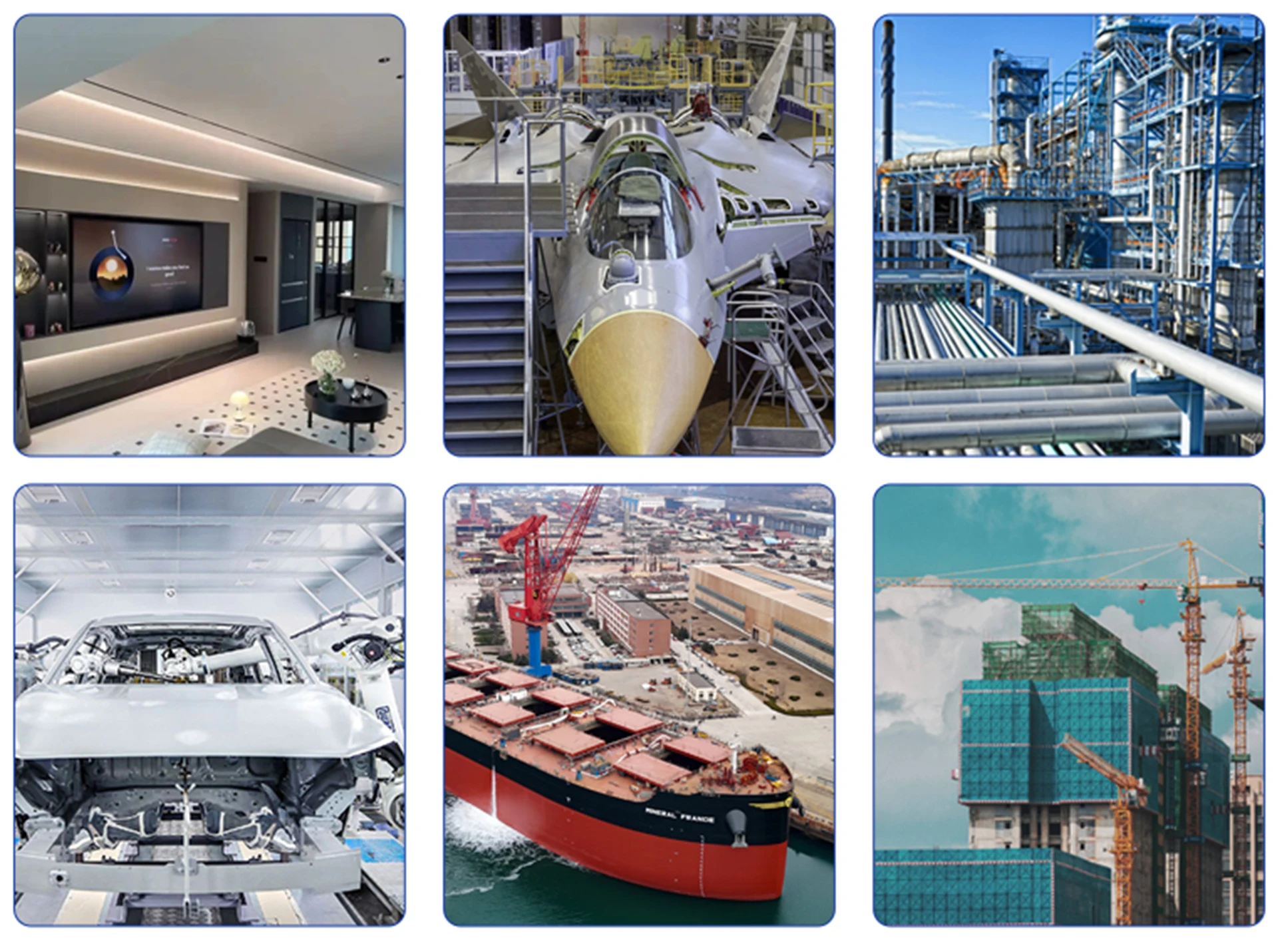
Production & Delivery:
Standard: EN 10025-6.
Delivery Condition: Quenched and tempered
What temperature is S690QL1 steel?
S690QL1 steel is designed for low-temperature service, specifically meeting impact toughness requirements at -60°C (-76°F), making it excellent for cold environments, with typical operating temperatures ranging from roughly -60°C up to 350°C, though its properties (like yield strength) decrease at higher temperatures, and it requires preheating for welding and quenching/tempering after hot forming.
What are common testing requirements for S690QL1?
Common testing requirements for S690QL1, a high-strength structural steel, focus on its key properties: minimum 690 MPa yield strength, 770-940 MPa tensile strength, and crucial -60°C impact toughness (QL1 designation), verified through tensile tests and longitudinal Charpy-V notch impact tests on heat-treated plates, ensuring performance in demanding, cold environments, with testing typically per EN 10025-6 standard.
What is the equivalent of S690QL1 steel?
S690QL1 is a European high-yield strength structural steel (EN 10025-6) with a minimum yield strength of 690 MPa, and its equivalents include American grades like ASTM A709 Grade 100 or A514, German TStE690V, Swedish WELDOX 700, and Japanese grades such as JFE HITEN 780LE, with trade names like DILLIMAX 690 E or NAXTRA 70 also serving as close matches, all offering superior strength for demanding applications.
Chemical Composition for S690QL1 Steel Plate
|
C |
Si |
Mn |
Ni |
P |
S |
Cr |
Mo |
V |
N |
Nb |
Ti |
Cu |
Zr |
B |
CEV |
|
max 0.2 |
max 0.8 |
max 1.7 |
max 2 |
max 0.02 |
max 0.01 |
max 1.5 |
max 0.7 |
max 0.12 |
max 0.015 |
max 0.06 |
max 0.05 |
max 0.5 |
max 0.15 |
max 0.005 |
max 0.83 |
Mechanical Properties for S690QL1 Steel Plate
|
Plate thickness |
Re |
Rm |
A% |
|
≤ 50 |
690 |
770 – 940 |
14 |
|
> 50 ≤ 100 |
650 |
760 – 930 |
14 |
|
> 100 |
630 |
710 – 900 |
14 |
|
Equivalent steel grade of S690QL1 |
|||
|
Europe |
Germany |
France |
Sweden |
|
|
EStE 690 V |
- |
- |
S690QL1 Steel Plate Notch Impact Energy
|
Steel Grade |
Position of Samples |
0°C |
- 20°C |
- 40°C |
- 60°C |
|
S690QL1/MAXIL® 690 QL1 |
LongitudinalTransverse |
60 J40 J |
50 J35 J |
40 J30 J |
30 J27 J |
1 What is the yield strength of S690QL1?
The yield strength of S690QL1 steel is typically 690 MPa for thicknesses up to 50 mm, decreasing to 650 MPa for thicknesses over 50mm to 100mm, and 630 MPa for thicknesses over 100mm, as it's a high-strength quenched and tempered steel where strength varies with plate thickness.
2 Is S690QL1 hard to drill?
Yes, S690QL1 is significantly harder to drill than standard structural steels like S355, primarily due to its high yield strength (690 MPa) and the Quenched and Tempered (Q+T) delivery condition. While it is not "un-drillable," it requires professional-grade tooling and specific parameters to prevent the material from work-hardening or destroying your drill bits.
3 What is S690QL1 equivalent to?
S690QL1 (EN 10025-6) is a high-strength, quenched, and tempered structural steel with a minimum yield strength of 690 MPa, and its common equivalents include ASTM A514, ASTM A709 Grade 100, ASTM A710, German EStE690V (DIN/WNr 1.8988), French E690T, and Swedish SS 2625 (Weldox 700), though exact interchangeability requires engineering confirmation due to specific code requirements.
3 What are the typical application fields of S690QL1?
S690QL1, a high-yield strength, quenched, and tempered steel, is used in heavy-duty, high-stress applications where weight saving and durability are crucial, such as cranes (booms, jibs), heavy construction equipment (excavators, bulldozers), bridges, offshore structures, mining machinery, truck chassis, and pressure vessels, benefiting from its high strength-to-weight ratio, excellent toughness at low temperatures (down to -60°C), and good weldability for lighter, stronger designs.
5 What is the difference between S690QL1 and S690Q?
The main difference is the impact toughness requirement at lower temperatures: S690QL1 offers superior performance, tested to a lower temperature (-60°C) with higher guaranteed energy absorption, compared to S690QL (-40°C) and S690Q (-20°C), making S690QL1 better for very cold environments, while all offer similar high yield strength (690 MPa) after quenching and tempering (Q).
6What is the difference between S690QL1 and S690QL?
The main difference between S690QL and S690QL1 is their specified minimum impact toughness at lower temperatures: S690QL is tested at -40°C, while S690QL1 is tested at a more extreme -60°C, making S690QL1 superior for applications in exceptionally cold environments requiring higher impact energy absorption. Both are high-strength, quenched, and tempered (Q&T) structural steels with a minimum yield strength of 690 MPa, excellent weldability, and toughness, but the "L1" designation signifies enhanced low-temperature performance.
7What is the hardness of S690QL1 steel?
S690QL1 steel, a high-strength quenched and tempered structural steel, doesn't have a single mandatory hardness value specified in the standard, but its hardness typically falls in the range of 235-295 BHN (Brinell Hardness Number), though it can be harder depending on processing, with the focus being on its high yield strength (≥690 MPa) and excellent toughness, making it suitable for heavy-duty, lightweight structures.
If you want to learn more about S690QL1 GNEE's products, you can send an email to info@gneesteels.com. We are more than happy to assist you.


