

Products Description
In the field of liquefied petroleum gas (LPG) storage and transportation, HP295 hot-rolled steel sheet, with its unique material properties, has become a core material for manufacturing high-pressure gas cylinders. This low yield strength ratio steel, specially designed for welded gas cylinders, achieves a perfect balance between strength and plasticity through precise composition control and process optimization, providing key guarantees for the safety and lightweight design of gas cylinders.

HP295 Hot Rolled Steel plate
The core characteristics of HP295
Yield Ratio (ie, the ratio of yield strength to tensile strength) is the core indicator for measuring the cold forming performance of materials. For LPG cylinders, an excessively high yield-to-strength ratio will cause cracks in the material during the stamping process. HP295 solves this problem through the following technological breakthroughs:
Ingredient Optimization:
The chemical composition of HP295 has been strictly designed, with carbon content controlled at 0.12%-0.16%, manganese content 0.75%-0.9%, and trace amounts of aluminum (0.015%-0.045%) and low nitrogen (≤0.0045%) added. This low-carbon and low-silicon formula synergizes with solid solution strengthening and fine-grain strengthening to ensure strength while lowering the yield platform, stabilizing the yield-strength ratio within the range of ≤0.8.
Process innovation:
Using two-stage cooling technology, under the conditions of final rolling temperature of 850-880°C and coiling temperature of 600-650°C, by controlling the laminar cooling speed (7-12m/s) and cooling water flow rate (180-220m³/h), the uniform refinement of ferrite grains and the dispersed distribution of pearlite are achieved. This microstructure control allows the material to accurately control the yield strength below 380MPa while maintaining a tensile strength of 480-550MPa.
advantages of low yield-to-strength ratio for gas cylinder manufacturing
Improved molding performance
In the deep drawing process of gas cylinder heads, low yield ratio materials can significantly reduce the risk of "crescent" cracking. Experimental data shows that using the optimized HP295 steel plate, the stamping cracking rate is reduced from 10% to less than 0.5%, while the cold bending performance (180° bending test) pass rate reaches 100%.
Lightweight design breakthrough
By reducing the difference between yield strength and tensile strength, HP295 reduces the cylinder wall thickness design from the traditional 3.0mm to 2.5mm, reducing the weight of a single cylinder by more than 15%. Taking the 50kg LPG cylinder as an example, after the wall thickness is optimized, the dead weight is reduced from 50kg to 42.5kg, which effectively improves transportation efficiency and energy utilization.
Welding performance optimization
Low-yield-ratio materials generate smaller residual stresses during the welding process. With the automatic submerged arc welding process, the hardness fluctuation in the weld zone is controlled within ±10HV, which significantly reduces the risk of local failure in blast tests. Actual measurement data from a gas cylinder manufacturer shows that after using HP295, the weld pass rate increased from 92% to 99.5%.
Key Production Process Control
Controlled Rolling and Cooling Technology
- Final Rolling Temperature: Controlled at 850-880℃, refining austenite grains through dynamic recrystallization.
- Coiling Temperature: Utilizing 600-650℃ post-coiling cooling to promote ferrite nucleation and inhibit pearlite coarsening.
- Cooling Rate: Laminar cooling water flow rate set at 180-220 m³/h to ensure the microstructure transformation kinetics meet the CCT curve requirements.
Thickness Accuracy Control
Through high-precision mill load distribution (F1 stand bears 42% of the deformation, decreasing to 10% of F7 in each pass) and looper tension closed-loop control, thickness deviation ≤ ±0.1 mm is achieved, meeting the butt welding accuracy requirements of the cylinder coil welding process.
Industry application and standard system
HP295 hot-rolled steel plate has been widely used in household LPG gas cylinders, vehicle-mounted CNG gas cylinders and industrial gas storage tanks. Its performance indicators strictly follow international standards:
- ISO 9809-1:2019: It is stipulated that the tensile strength of steel for seamless cylinders must be <1100MPa. Through composition optimization and heat treatment process, the measured tensile strength of HP295 is stable in the range of 480-550MPa.
- GB 6653-2018: Chinese standards clearly require that the yield-strength ratio of welded gas cylinder steel is ≤0.85. HP295 uses two-stage cooling technology to compress this indicator to 0.75-0.80, exceeding the national standard requirements.
- DOT 4BA certification: The U.S. Department of Transportation standards impose strict requirements on the impact toughness of cylinders. By controlling the manganese content and cooling rate, HP295 stabilizes the -20°C Charpy impact energy above 34J to meet the needs of use in extreme environments.
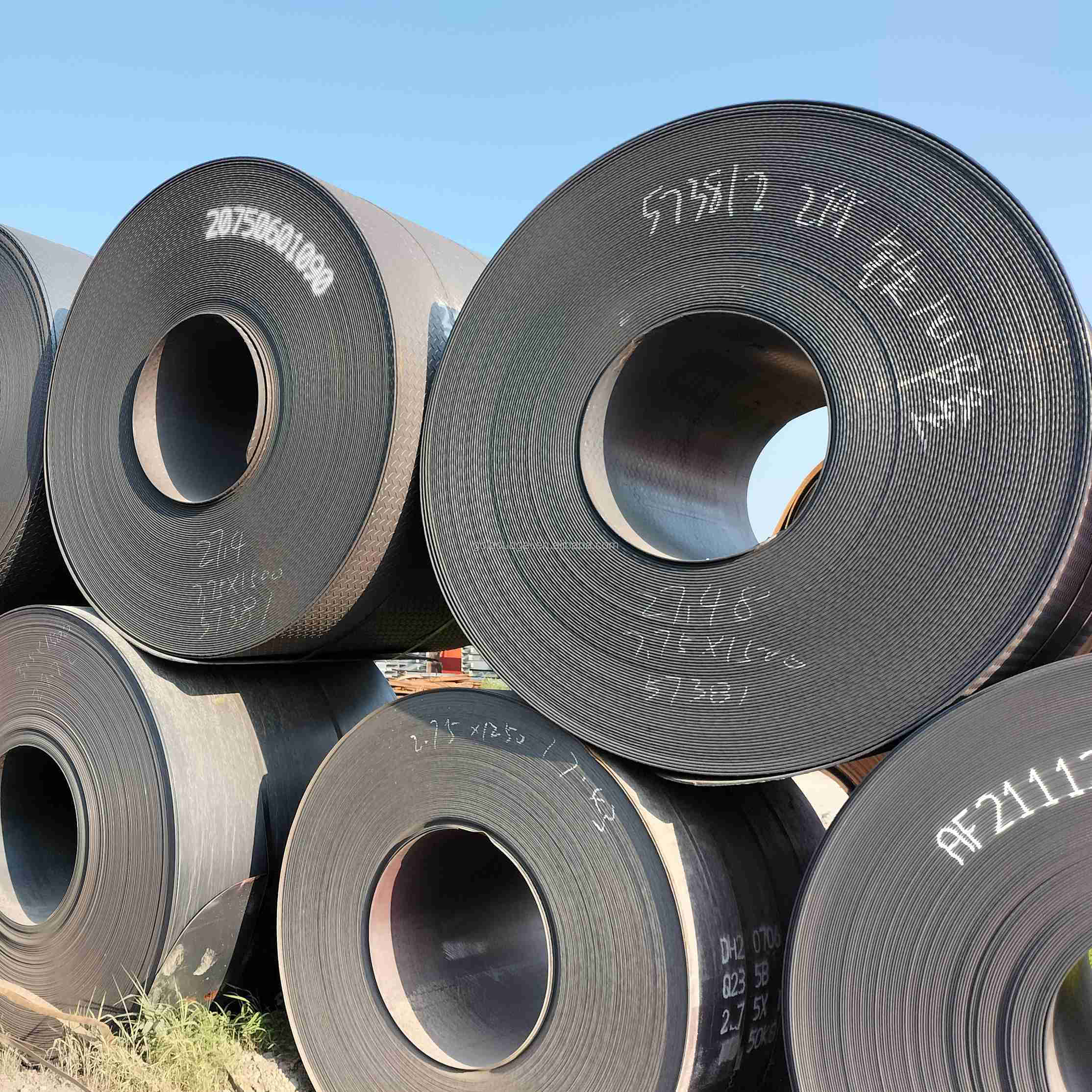
HP295 Steel Coils - High Quality for Gas Cylinders
Manufacturing Process Adaptability
Process Advantages
- Low stamping cracking rate, suitable for complex head shapes
- Welfare parameter window is wide, requiring less skill from welders
- Small springback during coil forming, easily ensuring cylinder roundness
- Suitable for small to medium-sized gas cylinder manufacturing enterprises
Typical Application Cases
In the African market, a 50kg LPG steel cylinder (with a volume of 118L) manufactured by a certain enterprise using HP295 has passed multiple national certifications such as DOT/ISO 4706/CE/GB. This product has achieved performance breakthroughs through the following innovations:
Composition optimization: The manganese content is increased to 0.9%, combined with 0.02% titanium microalloying, which reduces the yield ratio to 0.78 while maintaining a yield strength of 345MPa.
Process improvement: A U-tube laminar cooling device is adopted, so that the temperature difference between the head and tail of the strip is ≤3℃,
significantly improving the uniformity of the structure.
Lightweight design: Through precise thickness control (the wall thickness of the cylinder body is 2.8mm, and the wall thickness of the head is 3.2mm), the weight of a single cylinder is reduced by 8% compared with traditional products under the premise of maintaining a burst pressure of ≥60MPa.

Why Choose GNEE as Your Supplier?
- 18+ years manufacturing experience
- Full certification support (EN, JIS, GB standards)
- Custom sizes, thickness, and surface treatment
- Fast delivery and global logistics
- Strict quality inspection (chemical + mechanical testing)

Does hot rolling increase yield strength?
The rolls induce plastic deformation. Thus, the yield strength of cold rolled steel is higher than that of hot rolled steel. As an example, a hot rolled steel product may have a yield strength of 235 MPa
What is the delivery condition of HP295?
It is usually delivered as hot-rolled coils, but steel plates are also available.
What are the surface quality requirements for HP295?
The surface should be smooth, free from cracks, bubbles, inclusions, and other defects.
What are the dimensional accuracy requirements for HP295?
Thickness should have minimal variation with the plate, and width tolerances should conform to national standards.
What is the meaning of the HP295 designation?
"HP" represents steel for welded gas cylinders, and "295" indicates the lower limit of yield strength.
What is the applicable standard for HP295?
It conforms to GB/T 6653-2017 "Steel Plates and Strips for Welded Gas Cylinders" standard.


