

Products Description
In gas cylinder manufacturing, selecting the right steel grade directly affects safety, cost, and production efficiency. HP345 and HP295 is a common comparison for buyers seeking the optimal balance between strength, weldability, and application range.
As a professional steel manufacturer, GNEE supplies all three grades and helps global clients choose the most suitable material based on specific pressure requirements and production conditions.
What is HP295?
HP295 is one of the core grades in the GB 6653 standard "Steel Plates and Strips for Welded Gas Cylinders". Its naming rules are clear and straightforward:
HP: Derived from the first letters of the Chinese pinyin for "welding" and "cylinder," representing "for welding gas cylinders".
295: Represents the minimum yield strength of this material as 295 MPa.
What is HP345?
HP345 is a high-strength grade steel plate in the welded gas cylinder series. According to GB/T 6653 standard, the HP series naming follows a fixed rule:
HP: Derived from the first letters of the Chinese pinyin for "welding" and "cylinder," representing "dedicated for welded gas cylinders."
345: Represents the material's minimum yield strength of 345 MPa, measured in megapascals (MPa).
Compared to HP295 (minimum yield strength 295 MPa), HP345 has approximately 17% higher strength, meeting the manufacturing requirements for gas cylinders with higher operating pressures.
Core Advantages of HP295 and hP345 Steel for Welded Gas Cylinders
Advantages of HP295 Steel for Welded Gas Cylinders
Just the Right Strength:HP295 has a minimum yield strength of 295 MPa and a tensile strength of 440~560 MPa. This strength profile is carefully designed:
Excellent Stamping Performance
Good weldability:As a steel for welded gas cylinders, HP295 must possess excellent weldability:Low carbon design and Mature welding process
Good low-temperature toughness
HP295 is suitable for an ambient temperature range of -40℃ to 60℃. Its impact toughness requirement is ≥27 J (average) in transverse impact at room temperature, ensuring sufficient resistance to brittle fracture under cold conditions.

Advantages of HP345 Steel for Welded Gas Cylinders
Higher strength and stronger pressure resistance:Yield strength ≥345MPa, approximately 17% higher than HP295, meeting the design requirements for medium- and high-pressure industrial gas cylinders of 15–30MPa, with a larger safety margin.
Lightweight design is possible:Under the same pressure and diameter, HP345 allows for thinner walls, making the cylinder lighter and easier to transport, vehicle-mounted, and used in long-tube trailers.
Excellent weldability:Low-carbon design, low tendency to cold cracking, good weldability, and stable weld joint toughness make it suitable for mass production of automated welded gas cylinders.
Cold forming performance meets gas cylinder manufacturing requirements:Although the strength is improved, the plasticity still meets the standards, allowing for smooth forming processes such as rolling, stamping, and bending, suitable for gas cylinder body processing.
Industrial gas cylinder material selection: HP295 vs HP345 - how to choose?
| Item | HP295 | HP345 |
|---|---|---|
| Applicable Pressure | Low pressure: generally ≤15MPa | Medium & high pressure: commonly 15–30MPa |
| Strength Grade | Yield strength ≥295MPa | Yield strength ≥345MPa |
| Wall Thickness / Weight | Thicker wall and heavier under the same pressure | Thinner wall and lighter under the same pressure |
| Plasticity & Toughness | Better impact resistance and bending performance | Slightly lower, but still meets gas cylinder safety requirements |
| Cost | Lower | Slightly higher |
| Typical Applications | Civil LPG cylinders, small low-pressure gas cylinders | Industrial high-pressure gas cylinders, large cylinders for N₂, O₂, Ar, etc. |
HP295 Selection Scenario
- Low-pressure gas cylinders with working pressure ≤15MPa
- Household liquefied petroleum gas cylinders, small portable gas cylinders
- Cost-sensitive, lightweight requirements are not high
- Prefer bending and stamping performance
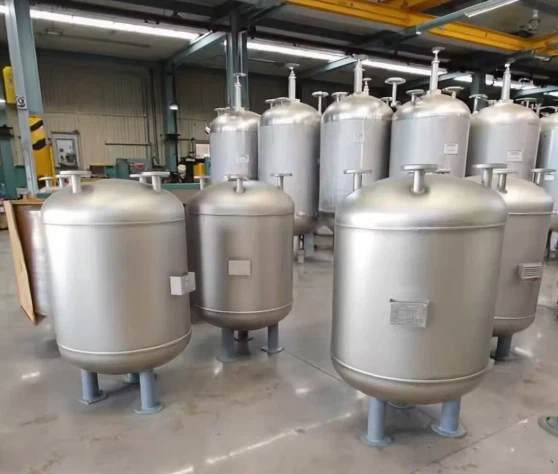
HP345 Selection Scenario
- Industrial high-pressure gas cylinders: 15MPa, 20MPa, 30MPa
- Large-capacity gas cylinders, vehicle-mounted gas cylinders, long-tube trailer gas cylinders
- Desiring lightweight: thinner and lighter at the same pressure resistance
- Export/high-end gas cylinders, requiring higher safety margins
- Large welding volume, high requirements for weld heat-affected zone toughness
Summary
- For low-pressure conventional gas cylinders → Choose HP295, the best cost-performance ratio.
- For medium- and high-pressure industrial gas cylinders → Choose HP345, superior strength and lightweight design.
- For export, high-end, and large-capacity products → Prioritize HP345.
Why Choose GNEE as Your Supplier?
- 18+ years manufacturing experience
- Full certification support (EN, JIS, GB standards)
- Custom sizes, thickness, and surface treatment
- Fast delivery and global logistics
- Strict quality inspection (chemical + mechanical testing)
We don't just sell steel-we provide complete gas cylinder material solutions.
What products is HP295 mainly used for?
It is mainly used in the manufacture of pressure vessels such as liquefied petroleum gas cylinders, acetylene cylinders, oxygen cylinders, and liquid chlorine cylinders.
Can HP295 be used in high-pressure cylinders?
It is suitable for medium and low-pressure cylinders (design pressure is usually ≤10MPa). High-pressure cylinders require a higher strength grade (such as HP345).
Can HP295 be used in low-temperature environments?
The operating temperature range is generally -20℃ to 60℃. Impact toughness needs to be verified in low-temperature environments.
How are HP345 gas cylinders periodically inspected?
Periodic inspections are required according to the Special Equipment Safety Technical Specifications, including visual inspection, hydrostatic testing, wall thickness measurement, and airtightness testing. Cylinders containing corrosive media typically have shorter inspection cycles.
Can HP345 and HP295 gas cylinders be used interchangeably?
No, they are not interchangeable. The design pressure and wall thickness of HP345 cylinders differ from those of HP295. During use, filling must strictly adhere to the original cylinder markings and design requirements; mixing is strictly prohibited.


