

GB/T 4171-2008 Atmospheric Corrosion Resisting Structural Steel is a Chinese national standard that specifies technical requirements for weathering steel used in outdoor structural applications. Developed to enhance durability in corrosive environments, this standard covers hot-rolled and cold-rolled steel plates, strips, and sections for industries like construction, transportation, and energy.
Key Features:
1. Alloy Composition
The steel incorporates elements such as copper (Cu), phosphorus (P), chromium (Cr), and nickel (Ni) to form a dense, adherent rust layer that protects against atmospheric corrosion. For example, Q355NH steel contains 0.25–0.55% Cu and 0.40–0.80% Cr to achieve corrosion resistance 2–8 times better than normal carbon steel.
2. Grade System
Grades are designated by yield strength (e.g., Q235, Q355), followed by "NH" (Gao Nai Hou,weathering) or "GNH" (Gao Nai Hou,high-weathering), and quality levels (A–E). For instance:
Q355GNHC: Yield strength ≥355 MPa, high-weathering grade with improved cold resistance (C quality).
Q550NH: The highest-strength grade (tensile strength ≥700 MPa), used for demanding applications like photovoltaic brackets and containers.
3. Mechanical Properties
Yield Strength: Ranges from 235 MPa (Q235NH) to 550 MPa (Q550NH).
Impact Resistance: Required for thickness ≥6 mm, with grades like Q355NHD offering -20°C impact toughness.
Weldability: High-weathering grades (GNH) are optimized for welding, suitable for bolted, riveted, or welded structures.
4. Applications
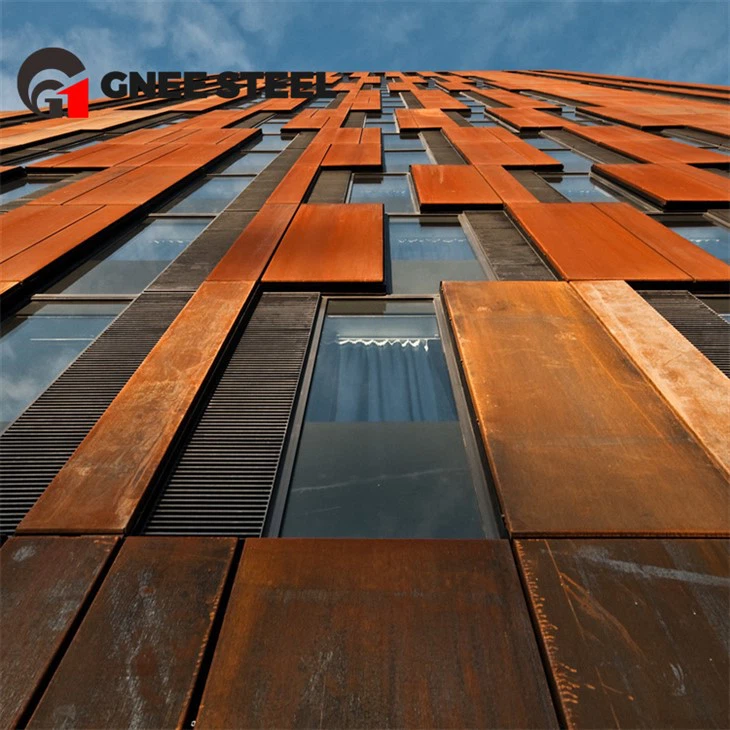
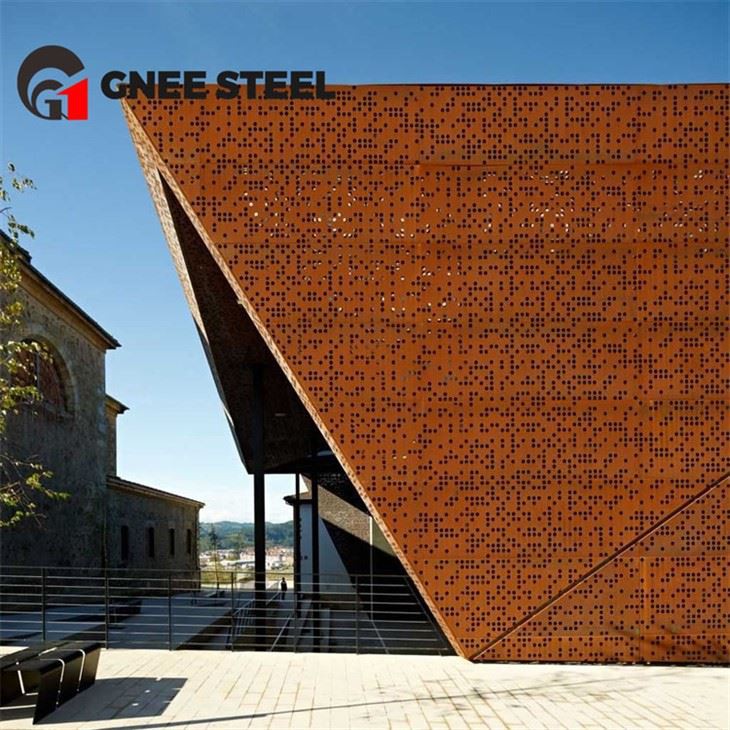
Infrastructure: Bridges, towers, and the exterior frame of high-rise buildings,where long-term exposure to rain, salt, or industrial pollutants is expected35.
Transportation: Railway carriages, port machinery,and marine containers, thanks to resistance to salt spray.
Energy & Industry: Coal-fired power plant flues, inner lining of desulfurization tower, and photovoltaic bracket,combining corrosion resistance with structural integrity.
5. Economic & Environmental Benefits
Self-Protective Rust Layer: Once stabilized, the rust layer eliminates the need for painting, reducing maintenance costs by over 30% and extending service life to 30+ years.
Sustainability: Reduced coating requirements lower carbon emissions and material waste.
Standards Compliance & Testing
Chemical Tolerances: Adheres to GB/T 222 for compositional variations in finished products.
Dimensions: Hot-rolled products follow GB/T 709; cold-rolled products follow GB/T 708.
Corrosion Testing: Typically evaluated via atmospheric exposure or accelerated salt spray tests to ensure compliance with performance criteria37.
Industry Adoption
Since its release in 2008, GB/T 4171-2008 has been widely adopted in China, with recent advancements like 2.0mm-thick Q550NH steel strip for new energy projects. While similar to international standards (e.g., ASTM A588), it emphasizes localized performance requirements for diverse climatic conditions across China.
This standard balances structural strength with cost-effective corrosion resistance, making it a cornerstone for sustainable infrastructure and industrial design.
FAQ
1. What is GB/T 4171-2008?
It is a Chinese national standard specifying technical requirements for atmospheric corrosion-resistant structural steel, covering hot/cold-rolled plates, strips, and sections for durable outdoor structures.
2. Which alloy elements improve corrosion resistance in this steel?
Key elements include copper (Cu), phosphorus (P), chromium (Cr), and nickel (Ni), which form a protective rust layer, enhancing resistance 2–8 times over ordinary carbon steel.
3. What do the grade designations like "Q355NH" mean?
"Q" indicates yield strength (355 MPa here), "NH" means weathering steel, and letters (A–E) denote quality levels (e.g., impact resistance at low temperatures).
4. Where is GB/T 4171-2008 steel commonly used?
In infrastructure (bridges, towers), transportation (railway carriages, containers), and energy sectors (power plant flues, solar bracket), enduring harsh atmospheric conditions.
5. What are the main benefits of this steel?
It reduces maintenance costs by up to 30% via a self-protective rust layer, extends service life to 30+ years, and offers sustainability through lower coating needs.


