

Is ASTM A387 Grade11 Class1 steel hard to drill?
Yes, drilling ASTM A387 Grade 11 Class 1 (a Chrome-Moly alloy) can be challenging due to its hardness and tendency to work harden, similar to stainless steels, requiring slow speeds, strong lubrication, and carbide or cobalt bits to prevent dulling, but it's manageable with the right tools and technique, unlike truly "hard" steels.

The ASTM A387 specification is the Standard Specification for Pressure Vessel Plates, Alloy Steel, Chromium-Molybdenum intended primarily for use in welded boilers and pressure vessels designed for elevated temperature service. As a chromium-molybdenum (Cr-Mo) alloy steel plate, ASTM A387 Grade 11 Class 1 is designed specifically for high-temperature service, following the ASTM/A387M standard.
Chemical Composition and Properties
The foundational composition of A387 Grade 11 Class 1 ensures excellent resistance to hydrogen corrosion and oxidation. It is particularly suitable for medium-temperature environments ranging from 350–480 °C. Key alloying elements include:
Chromium: 1.00% – 1.50% (Nominally ~1.25%) for enhanced oxidation and corrosion resistance.
Molybdenum: 0.45% – 0.65% (Nominally ~0.5%) for high-temperature strength and creep resistance.
Mechanical Classification and Supply
While sharing the same chemical composition as Class 2, ASTM A387 Grade 11 Class 1 is distinguished primarily by its mechanical properties. Class 1 specifies lower tensile strength than Class 2 and is often supplied in the normalized or annealed condition. Due to these characteristics, it is a preferred material for fabricators serving the oil, gas, and petrochemical applications.
Uses:
Hydrogenation reactors,
synthesis towers,
heat exchangers,
other critical high-temperature equipment.
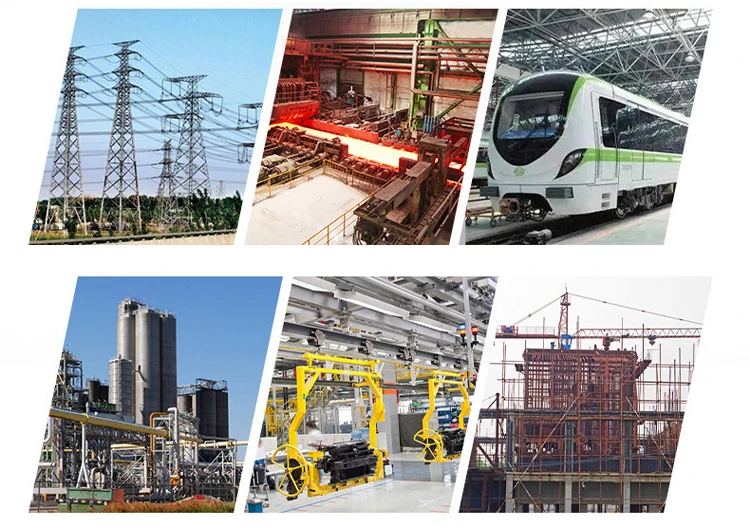
What are the typical application fields ASTM A387 Grade 11 Class 1?
ASTM A387 Grade 11 Class 1 is a chromium-molybdenum alloy steel primarily used for welded boilers and pressure vessels in high-temperature applications, especially in the oil, gas, and petrochemical industries for equipment like reactors, heat exchangers, and storage tanks needing strength and corrosion resistance at elevated temperatures, including sour gas service.
What are the primary advantages of ASTM A387 Grade 11 Class 1?
ASTM A387 Grade 11 Class 1's primary advantages are its excellent resistance to high-temperature oxidation, creep, and hydrogen attack, thanks to its ~1.25% Chromium (~Cr) and ~0.5% Molybdenum (~Mo) content, making it ideal for severe service in boilers, pressure vessels, and petrochemical equipment. It offers a good balance of high-temperature strength, durability, and corrosion resistance, extending the life of equipment in demanding environments like oil refineries and chemical processing plants.
What is ASTM A387 Grade 11 Class 1 equivalent material?
The most direct equivalent is ASME SA387 Grade 11 Class 1, which is essentially the same material specification but adopted by the American Society of Mechanical Engineers (ASME) for use in boiler and pressure vessel codes.
Dimension Range SA 387 GR. 11 CL. 1 Alloy Steel
| Grade | Product type | Thickness in |
Width | Length in |
|---|---|---|---|---|
| Grade 11 | Plate | 0.185 - 3.60 4.70 - 91.4 |
60 - 131.9 1500 - 3350 |
73 - 590 1900 - 15000 |
|
A387 Gr.11 CL.1Chemical Composition |
|||||||
|
Grade |
The Element Max (%) |
||||||
|
C |
Si |
Mn |
P |
S |
Cr |
Mo |
|
|
A387 Gr.11 Cl.1 |
0.04-0.17 |
0.44-0.86 |
0.35-0.73 |
0.035 |
0.035 |
0.94-1.56 |
0.40-0.70 |
Tensile Requirements for ASTM A387 Grade 11 Alloy Steel Plates Class 1 Plates
| Designation: | Requirement: | Grade 11 |
| A387 Grade 11 | Tensile strength, ksi [MPa] | 75 to 100 [515 to 690] |
| Yield strength, min, ksi [MPa]/(0.2% offset) | 43 [310] | |
| Elongation in 8 in. [200mm], min % | 18 | |
| Elongation in 2 in. [50mm], min, % | 22 | |
| Reduction of area, min % | ––– |
|
Equivalent steel grade of A387 Gr.11 Cl.1 |
||||||||
|
Europe |
Belgium |
Germany |
France |
Italy |
Sweden |
India |
Japan |
U.K |
|
|
|
|
|
|
|
|
|
621 gr. A,B |
1What is ASTM A387 Grade 11 Class 1 material?
ASTM A387 Grade 11 Class 1 is a chromium-molybdenum (Cr-Mo) alloy steel plate for high-temperature pressure vessels, boilers, and piping in industries like oil, gas, and petrochemicals, offering good strength, weldability, and resistance to oxidation/corrosion due to its ~1.25% Chromium and ~0.5% Molybdenum content, supplied normalized and tempered for demanding service.
2Is ASTM A387 Grade 11 Class 1 steel hard to drill?
Yes, drilling ASTM A387 Grade 11 Class 1 (a Chrome-Moly alloy) can be challenging due to its hardness and tendency to work harden, similar to stainless steels, requiring slow speeds, strong lubrication, and carbide or cobalt bits to prevent dulling, but it's manageable with the right tools and technique, unlike truly "hard" steels.
3What is the P number of ASTM A387 Grade 11 Class 1?
The P-Number for ASTM A387 Grade 11 Class 1 (a chromium-molybdenum alloy steel) is P-Number 4, as it falls into the group of low alloy steels containing chromium and molybdenum, similar to other P-Number 4 materials like SA-335 P11 and SA-213 T11.
4What precautions should be taken when welding ASTM A387 Grade 11 Class 1?
When welding ASTM A387 Grade 11 Class 1, critical precautions involve proper preheating, controlled interpass temperatures, using low-hydrogen electrodes (like E8018-B2), slow cooling, and post-weld heat treatment (PWHT) to prevent cracking, alongside standard welding safety like good ventilation, appropriate PPE (hood, gloves, protective clothing), and keeping the area clear of flammables, ensuring the weld matches the base metal's high-temp strength and oxidation resistance.
5Is ASTM A387 Grade 11 Class 1 high speed steel?
ASTM A387 Grade 11 Class 1 is not high-speed steel but a chromium-molybdenum alloy steel plate for high-temperature pressure vessels, known for corrosion resistance, creep resistance, and strength in elevated temperature service, containing ~1.25% Chromium and ~0.50% Molybdenum, used in boilers, heat exchangers, and reactors in oil, gas, and power industries, differing from Class 2 by its specific mechanical properties (higher elongation).
6What is the best way to cut ASTM A387 Grade 11 Class 1?
For ASTM A387 Grade 11 Class 1, plasma cutting is the most efficient method, though waterjet is best for avoiding heat damage. Due to the alloy content, preheating to 150°C is critical to prevent cracking, and cut edges must be ground clean before welding.
7What are Common Testing Requirements for ASTM A387 Grade 11 Class 1?
Common testing for ASTM A387 Grade 11 Class 1 includes tensile tests (strength, yield, elongation), chemical analysis (Cr, Mo, Si, C, P, S), and often Charpy V-Notch impact tests, with requirements for heat treatment (normalized & tempered) and optional supplementary tests like HIC or through-thickness testing for sour service. Key mechanicals are typically 75-100 ksi tensile, 43 ksi min yield, and 18-22% elongation, with specific chemical limits for its chromium-molybdenum alloy composition.
Request a professional quotation for ASTM A387 Grade 11 Class 1 from GNEE Steel.


