

Is S890QL high speed steel?
S890QL isn't high-speed steel (HSS) for cutting tools; it's an extra high-strength structural steel plate (HSLA) from the European EN 10025-6 standard, known for its immense strength (890 MPa minimum yield) and toughness after quenching and tempering (Q) for low temperatures (L). It's used in demanding construction, heavy machinery, and oil & gas applications for lighter, stronger structures, offering excellent weldability and impact resistance, unlike traditional HSS used for cutting tools.

S890QL is a structural steel grade with an even greater yield strength than S690QL. The material serves as a great option for procurers who wish to promote high strength in a cost effective way. Due to the characteristics of the steel, clients can use this material in numerous applications resulting in a leaner build whilst still maintaining great strength.
S890QL is a water quenched & tempered steel which complies with the EN10025:6:2004 specification.
Please refer to the technical details below referring to S890QL.
Key Characteristics:
Grade: S890QL, part of the EN 10025-6 standard for high yield strength steels.
Strength: Minimum yield strength of 890 MPa (megapascals) and tensile strength around 940-1100 MPa.
Heat Treatment: Quenched and Tempered (Q&T), which enhances mechanical properties.
Toughness: Offers good low-temperature toughness, tested at -40°C (the 'L' in S890QL).
Weldability: Despite its high strength, it remains relatively easy to weld and machine, simplifying fabrication.
Common Applications:
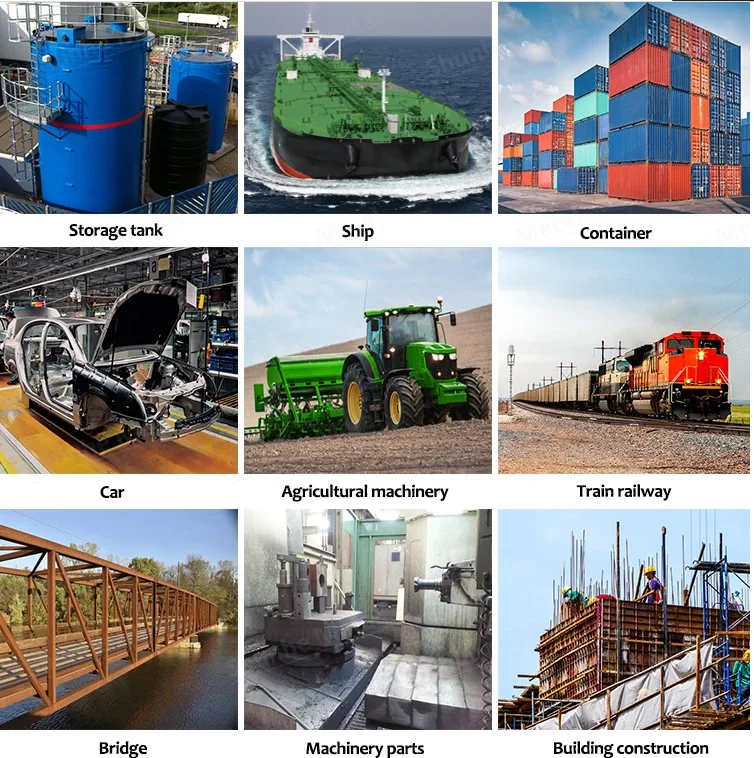
Lifting & Transport: Crane booms, truck chassis, heavy haul trailers.
Construction: Bridges, high-strength structural elements.
Heavy Equipment: Earthmoving machinery, mining equipment, bulldozers.
Offshore Engineering: Demanding structural components.
Benefits:
Enables significant weight reduction in structures, leading to lower material and fabrication costs.
Supports higher payloads and stress levels.
Durable and rugged for demanding environments.
What is the hardness of S890QL ?
S890QL is an extra-high-strength structural steel known for its high yield strength (minimum 890 MPa) and toughness after quenching and tempering, but its specific hardness (Brinell or Rockwell) varies with thickness, typically falling in the range of 290-350 HBW (Brinell Hardness) for standard thicknesses, though it's better defined by its strength and impact properties rather than a single hardness number. While a tool steel like CPM S90V might have ~56-59 HRC, S890QL is a structural steel, focusing on load-bearing capacity.
What temperature is S890QL ?
S890QL is a high-strength structural steel that performs well at low temperatures, with its "L" designation meaning it has specified minimum impact energy at a low temperature, typically -40°C (-40°F), requiring a minimum of 30 Joules of energy absorption for thicknesses up to 50mm, making it ideal for extreme cold conditions.
What precautions should be taken when welding S890QL ?
When welding S890QL (a high-strength, quenched & tempered steel), key precautions involve controlling heat input, managing hydrogen to prevent cracking, using low-hydrogen consumables, ensuring slow, controlled cooling, and implementing proper joint fit-up, all to preserve the steel's strength and toughness, which is more sensitive to heat than standard steels.
Chemical Composition – EN10025 S890QL.
| C | Si | Mn | P | S | B | Cr | Cu | Mo | N | Nb | Ni | Ti | V | Zr |
|---|---|---|---|---|---|---|---|---|---|---|---|---|---|---|
| 0.20 | 0.80 | 1.70 | 0.020 | 0.010 | 0.005 | 1.50 | 0.50 | 0.70 | 0.015 | 0.06 | 2.0 | 0.05 | 0.12 | 0.15 |
Mechanical properties – EN10025 S890QL.
| Plate thickness mm | Yield strength Reh (MPA) | Tensile strength Rm (MPA) | Elongation A5 % minimum |
|---|---|---|---|
| 3mm to 50mm | 890 | 940 – 1000 | 11 |
| 50mm to 100mm | 830 | 880 – 1100 | 11 |
V Notch Impact Testing
| Grade | Sample Orientation | @ 0 Deg C | @ -20 Deg C | @ -40 Deg C | @ -60 Deg C |
|---|---|---|---|---|---|
| S890QL | Longitudinal | 50J | 40J | 30J | |
| Transverse | 35J | 30J | 27J |
S890QL Equivalent grades
| GRADE | 1.8983 | ||
| STANDARDS | WERKSTOFF | GOST | IS |
| COUNTRY | GERMANY | RUSSIA | INDIA |
1What is S890QL equivalent to?
S890QL is a European ultra-high strength structural steel (EN 10025-6) with 890 MPa yield strength, and its equivalents include German TStE 890 V (1.8983), American ASTM A514 (comparable, not exact), Chinese Q890, and brand names like SSAB Strenx 900 E, ArcelorMittal Amstrong Ultra 890QL, and Dillimax 890T, all offering similar strength, toughness, and weldability for demanding applications.
2What are the typical application fields of S890QL ?
S890QL is a high-strength, quenched, and tempered structural steel used in demanding applications requiring excellent strength-to-weight ratios and toughness, finding use in heavy machinery (cranes, earthmovers), transportation (truck frames, rail cars, bridges), construction (structural frameworks, towers), and energy sectors (offshore, oil & gas) for load-bearing components and structures that benefit from weight reduction and high performance.
3What is S890QL material?
S890QL is an ultra-high strength, quenched and tempered (Q&T) structural steel, defined by European standard EN 10025-6, known for its minimum yield strength of 890 MPa, excellent toughness, and good weldability, making it ideal for heavy machinery, cranes, bridges, and other high-stress applications. The designation breaks down as S (Structural Steel), 890 (890 MPa yield strength), Q (Quenched & Tempered), and L (Low-temperature notch toughness, typically at -40°C).
4Is S890QL high speed steel?
S890QL isn't high-speed steel (HSS) for cutting tools; it's an extra high-strength structural steel plate (HSLA) from the European EN 10025-6 standard, known for its immense strength (890 MPa minimum yield) and toughness after quenching and tempering (Q) for low temperatures (L). It's used in demanding construction, heavy machinery, and oil & gas applications for lighter, stronger structures, offering excellent weldability and impact resistance, unlike traditional HSS used for cutting tools.
5What is the difference between S890QL and S890Q ?
S890QL and S890Q are both high-strength structural steels (S890) delivered in a quenched and tempered condition (Q), but the key difference is the impact toughness requirement at low temperatures: S890QL offers superior toughness for colder environments, requiring a minimum impact energy absorption at -40°C, whereas S890Q typically meets the requirement at -20°C, making S890QL ideal for more extreme cold conditions like those in arctic or high-altitude regions.
Full specification and details are available on request. The above information is provided for guidance purposes only. For specific design requirements please contact our technical sales staff


