

Is S890QL1 steel hard to drill?
Yes, drilling S890QL1 steel (a high-strength steel) is challenging and harder than standard steel because of its hardness and work-hardening properties, requiring slower speeds, specific lubricants, and specialized, sharp bits (like carbide or cobalt with TiN/TiAlN coatings) with a 135° point angle to prevent overheating, dulling, and glazing, which can make the metal nearly impossible to drill.

S890QL1 is a general partner steel that depending on thickness guarantees a base yield nature of up to 890 MPa. S890QL1 meets the necessities of EN 10025 for the looking. Standard applications are asking for stack bearing structures.This kind of steel which is well in excess of three times the probability of a basic S275 key steel is still acceptably easy to weld and make. S890Q interfaces with to affect weight to wind sponsorships or keep up higher weights and in this way pass on higher payload for lifting and transportation outline.
Key Characteristics
High Strength: Minimum yield strength of 890 MPa, with tensile strength ranging from 940-1100 MPa depending on thickness.
Toughness: Excellent notch toughness, guaranteeing at least 30 Joules of impact energy at -60°C, crucial for cold conditions.
Processing: Supplied in a quenched and tempered (QT) condition for enhanced mechanical properties, balancing hardness and ductility.
Weldability: Good weldability with excellent strength retention in the Heat Affected Zone (HAZ).
Grade Designation
S: Structural Steel.
890: Minimum Yield Strength in Megapascals (MPa).
Q: Quenched and Tempered.
L1: Low-temperature impact toughness requirement, specified minimum energy at -60°C (e.g., 30J).
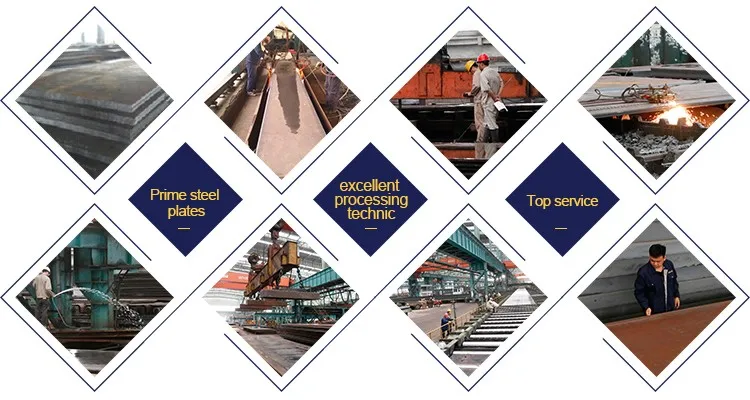
Common Uses
Demanding load-bearing structures.
Construction in harsh, cold environments.
Heavy machinery, cranes, and high-performance engineering applications.

Is S890QL1 carbon steel?
Yes, S890QL1 is classified as a high-strength, low-alloy (HSLA) structural steel, often described as a type of carbon steel, specifically a quenched and tempered (Q+T) grade under the EN 10025-6 standard, notes {Link: Bebon Steel. While it's fundamentally a carbon steel, it has controlled alloying elements (like Nb, Ti, V, Zr, Al) for enhanced strength and toughness, giving it superior properties for heavy-duty applications like bridges and engineering structures, with "L1" indicating specific low-temperature impact toughness requirements.
What are the typical application fields of S890QL1?
S890QL1, a high-strength, quenched, and tempered steel, is used in demanding structural applications requiring excellent strength, toughness, and weldability, particularly for heavy machinery, lifting equipment (cranes, booms), mining equipment, large vehicles (dump trucks, chassis), and highly stressed components in construction and offshore industries, performing well in cold conditions down to -60°C.
What is S890QL1 material?
S890QL1 is a European standard (EN 10025-6) high-strength, fine-grained structural steel plate, known for its excellent combination of high strength (minimum 890 MPa yield strength) and toughness, delivered in a quenched and tempered (Q&T) condition for demanding applications like heavy machinery, bridges, and offshore structures, with the 'L1' indicating superior low-temperature impact toughness down to -60°C.
Chemical composition for S890QL1 High strength steel (Heat Analysis Max%)
| C | Si | Mn | Ni | P | S | Cr | Mo | V | N | Nb | Ti | Cu | Zr | B | CEV |
| max 0.2 | max 0.8 | max 1.7 | max 2 | max 0.02 | max 0.01 | max 1.5 | max 0.7 | max 0.12 | max 0.015 | max 0.06 | max 0.05 | max 0.5 | max 0.15 | max 0.005 | max 0.82 |
Mechnical property for S890QL1 High strength steel:
| Nominal thickness (mm): | 3 - 50 | 50 - 100 |
| Rm - Tensile strength (MPa) | 940-1100 | 880-1100 |
| Nominal thickness (mm): | 3 - 50 | 50 - 100 |
| ReH - Minimum yield strength (MPa) | 890 | 830 |
| A - Min. elongation Lo = 5,65 √ So (%) | 11 |
Equivalent grades of steel S890QL1
| EU | Germany |
| EN | DIN,WNr |
| S890QL1 | EStE890V |
Notch Impact Energy
|
Grade |
Sample Orientation |
@ 0°C |
@-20°C |
@-40°C |
@-60°C |
|
S890QL1 |
Longitudinal |
60 J |
50 J |
40 J |
30 J |
|
Transverse |
40 J |
35 J |
30 J |
27 J |
1 What temperature is S890QL1?
S890QL1 is a high-strength structural steel defined by its properties, not a single temperature; it's quenched and tempered for use down to -60°C, offering high strength (minimum yield 890 MPa) and toughness, with processing often involving temperatures like 530-580°C for stress relieving or preheating around 100-200°C, though it's hot-formed and retempered during manufacturing.
2What is the hardness of S890QL1?
The hardness of S890QL1 (a high-strength, quenched & tempered steel) typically falls in the range of 355 to 550 HBW (Brinell Hardness), though it's a property that can vary slightly with thickness and specific heat treatment, with the material offering high yield strength (890 MPa) and excellent toughness for demanding structural applications.
3What is the P number of S890QL1?
For S890QL1 steel, the phosphorus (P) content is typically limited to a maximum of 0.020% (200 ppm), though some sources list a slightly higher max of 0.025%, but the key is its high strength and low P for weldability, often classified under P-Number 1 in welding codes for its similarity to other carbon/low-alloy steels.
4What is the S890QL1 standard?
The S890QL1 standard defines a high-strength, weldable structural steel (EN 10025-6) with a minimum yield strength of 890 MPa, delivered in a quenched and tempered (Q) condition, offering superior toughness (L1) down to -60°C, making it ideal for heavy-duty applications like lifting equipment, vehicles, and construction where strength and performance in cold conditions are crucial, with 'S' for Structural, '890' for yield strength, 'Q' for Quenched & Tempered, and 'L1' for the low-temperature impact toughness.
5Is S890QL1 steel hard to drill?
Yes, drilling S890QL1 steel (a high-strength steel) is challenging and harder than standard steel because of its hardness and work-hardening properties, requiring slower speeds, specific lubricants, and specialized, sharp bits (like carbide or cobalt with TiN/TiAlN coatings) with a 135° point angle to prevent overheating, dulling, and glazing, which can make the metal nearly impossible to drill.
6What precautions should be taken when welding S890QL1?
When welding S890QL steel, focus on low heat input, appropriate filler materials, controlled preheat/interpass temperatures (60-120°C range common in studies), and post-weld cooling to prevent hydrogen-induced cold cracking (HICC) and maintain joint strength, alongside standard PPE like helmets, gloves, and ventilation, as it's a high-strength steel prone to cracking if parameters aren't precise.
7What is S890QL1 equivalent to?
S890QL1 is a European (EN 10025-6) high-strength structural steel, known for excellent impact toughness at low temperatures (down to -60°C). Its key equivalents include Strenx® 900 F, DILLIMAX 890 E, and German grades like EStE 890 V, offering similar mechanical properties for demanding applications like heavy machinery, cranes, and bridges.
If you want to learn more about S890QL1 GNEE's products, you can send an email toinfo@gneesteels.com. We are more than happy to assist you.


