

Is S890QL high speed steel?
S890QL isn't high-speed steel (HSS) but rather an extra-high-strength structural steel (EHSS), characterized by its minimum 890 MPa yield strength, excellent toughness at low temperatures (down to -40°C), and good weldability, making it ideal for demanding applications in heavy transport, construction, and lifting equipment where lighter, stronger designs are needed.

S890QL is a European standard (EN 10025-6) high-strength structural steel known for its exceptional strength (minimum 890 MPa yield strength), toughness, and good weldability, achieved through quenching and tempering. The 'S' denotes structural steel, '890' its yield strength, 'Q' its quenched & tempered condition, and 'L' indicates low-temperature notch toughness (typically -40°C). It's used in heavy machinery, cranes, bridges, and structural components where weight reduction and high performance are critical.
Key Characteristics
S: Structural Steel
890: Minimum Yield Strength in MPa (890 N/mm²)
Q: Quenched and Tempered (a heat treatment process)
L: Low temperature impact toughness (typically -40°C)
Properties & Benefits
High Strength: Offers superior strength-to-weight ratio, allowing for leaner, lighter structures.
Excellent Toughness: Maintains good impact resistance even at low temperatures.
Good Weldability: Can be easily welded, simplifying fabrication.
Versatile: Suitable for complex designs and demanding applications.
Common Applications
-Heavy transportation (truck frames, rail cars)
-Lifting equipment (crane booms, mobile cranes)
-Heavy machinery (bulldozer blades, quarry equipment)
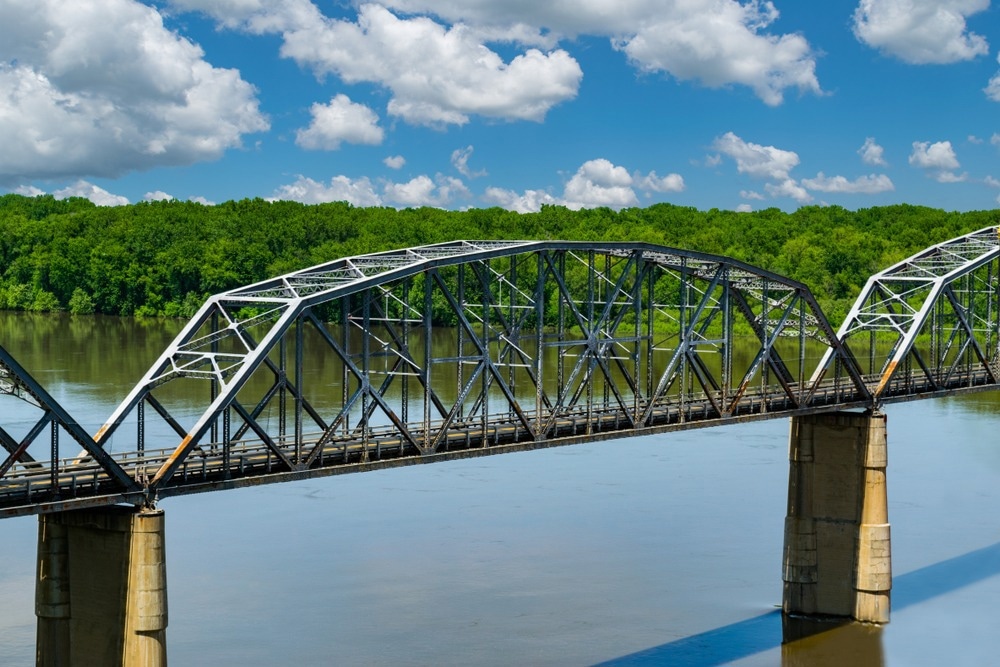
-Bridges and structural frameworks
-Offshore engineering
What is the P number of S890QL?
S890QL (Material No. 1.8983) is a high-strength quenched and tempered structural steel, but it doesn't have a standard P-Number (ASME grouping) assigned in common tables, as P-Numbers typically cover established pressure vessel steels (like P1-P91), while S890QL is a specific EN standard structural grade, often grouped under P-Group 1 (Carbon & Low Alloy Steels) or assigned to a specific P-Number like P36 or P37 in welding codes for similar high-strength Q&T steels, though confirmation with ASME Section IX or a supplier is best for welding procedures.
What are the typical application fields of S890QL ?
S890QL is a high-strength, quenched, and tempered structural steel used in demanding, load-bearing applications like heavy machinery (cranes, earthmoving), transport (truck frames, rail cars, trailers, vehicles), construction (bridges, high-rise buildings), and offshore/energy (oil & gas, wind turbines, offshore structures) due to its excellent strength-to-weight ratio, toughness, and weldability, allowing for lighter, stronger designs.
What is the maximum allowable stress value for S890QL ?
For S890QL steel, the minimum yield strength (ReH) is 890 MPa for thicknesses up to 50mm, decreasing to 830 MPa for thicknesses from 50mm to 100mm, and the tensile strength (Rm) is typically 940-1100 MPa, but the maximum allowable stress (S) depends heavily on the specific design code (e.g., Eurocode, ASME) and application, often calculated as a fraction (like 0.66 or 0.85) of the yield strength, so there isn't a single universal maximum value; it's a calculated design parameter.
Equivalent grades of steel S890QL (1.8983)
| EU EN |
Germany DIN,WNr |
| S890QL | TStE890V |
Chemical Composition for S890QL Steel Plate
|
C |
Si |
Mn |
P |
S |
B |
Cr |
Cu |
Mo |
|
0.20 |
0.80 |
1.70 |
0.020 |
0.010 |
|
1.50 |
0.50 |
0.70 |
|
N |
Nb* |
Ni |
Ti* |
V* |
Zr* |
|||
|
0.015 |
0.06 |
2.0 |
0.05 |
|
0.15 |
Mechanical Properties for S890QL Steel Plate
|
Plate Thickness mm |
Yield Strength ReH (MPa) |
Tensile Strength Rm (MPa) |
Elongation A5 % minimum |
Impact Strength J, Minimum |
|
3 to 50 |
890 |
940 - 1100 |
11 |
30 @ -40º C |
|
> 50 to 100 |
830 |
880 - 1100 |
11 |
30 @ -40º C |
S890QL Steel Plate V Notch Impact Testing
|
Grade |
Sample Orientation |
@ 0°C |
@-20°C |
@-40°C |
@-60°C |
|
S890QL |
Longitudinal |
50 J |
40 J |
30 J |
–– |
|
Traverse |
35 J |
30 J |
27 J |
–– |
1 What is the maximum allowable stress value for S890QL ?
The maximum allowable stress for S890QL isn't a single number but depends on thickness and design code, typically derived from its minimum yield strength (890 MPa for thinner plates, 830 MPa for thicker) by applying safety factors, often around 0.85 or lower for tensile stress in structural design, meaning actual allowable tensile stress could be around 750-800 MPa (for thinner sections), but verify with specific code (like EN 1993) for precise design.
2 What is the composition of S890QL?
S890QL is a high-strength, quenched, and tempered structural steel (EN 10025-6) with a minimum yield strength of 890 MPa, characterized by controlled chemical composition, including low carbon (max 0.20%), manganese (max 1.70%), silicon (max 0.80%), and specific amounts of alloying elements like chromium, molybdenum, nickel, niobium, titanium, vanadium, and boron for enhanced strength, toughness, and weldability, designed for demanding applications requiring high load-bearing capacity and good impact resistance at low temperatures (down to -40°C).
3 What temperature is S890QL ?
S890QL is a high-strength structural steel known for its performance at low temperatures, specifically requiring a minimum impact energy of 30 Joules at -40°C (-40°F), making it suitable for very cold environments, though its working temperature range extends across various conditions, requiring preheating (150-250°C) during welding to prevent cracking.
4 What is the hardness of S890QL ?
S890QL is a high-strength structural steel with a minimum yield strength of 890 MPa, not a specific hardness number in Rockwell C, but its quenched and tempered (QL) condition gives it excellent hardness, toughness, and weldability for demanding applications like cranes, mining, and heavy equipment, with hardness typically measured for comparison rather than as a primary specification like yield strength.
5 Is S890QL high speed steel?
S890QL isn't High-Speed Steel (HSS) for cutting tools, but rather an Extra High Strength, Quenched & Tempered Structural Steel (EN 10025-6 standard) known for its massive strength (890 MPa yield), toughness, excellent weldability, and suitability for heavy-duty construction, heavy machinery, cranes, and mining equipment where lighter, stronger designs are needed. The code breaks down as: S (Structural), 890 (890 MPa yield strength), Q (Quenched & Tempered), and L (Low-temperature notch toughness, -40°C).
6 Is S890QL carbon steel?
Yes, S890QL is a type of high-strength low-alloy (HSLA) structural steel, often referred to as a carbon steel in general classifications, but more accurately a specific grade (EN 10025-6) with controlled alloying elements (like Cr, Ni, Mo) to achieve high yield strength (890 MPa) and good toughness after quenching and tempering (Q) at low temperatures (L, -40°C). While it contains carbon, its properties come from careful alloying and heat treatment, making it more advanced than basic carbon steel.
7 What is S890QL equivalent to?
S890QL is a European high-strength structural steel (EN 10025-6) with a minimum yield strength of 890 MPa, often equivalent to German TStE890V, Chinese Q890, and various trade names like SSAB's Strenx® 900 E, DILLIMAX 890T, or Amstrong® Ultra 890QL, used where high strength, weldability, and toughness are needed, with counterparts in standards like ASTM A514 (though not a direct match).
If you want to learn more about S890QL GNEE's products, you can send an email to info@gneesteels.com . We are more than happy to assist you.


