

Products Description
What is HP325 Cylinder Steel?
HP325 is a hot-rolled steel plate specifically designed for the manufacture of welded gas cylinders and pressure vessels. Classified as a cylinder steel, it possesses the following characteristics:
- Medium-to-high yield strength (approximately ≥325 MPa)
- Good plasticity and elongation
- Excellent cold-stamping and forming properties
- Stable weldability
- Good fatigue and impact resistance
Compared to general structural steels (such as Q345), HP325 better meets the stringent requirements for pressure vessels in terms of safety and consistency.
Advantages of HP325 in Industrial Gas Storage Tanks
Enhanced Safety and Reliability
HP325 features stable yield and tensile strengths, minimizing the risk of plastic deformation or rupture in high-pressure gas storage environments.
Excellent Weldability
Its chemical composition is strictly controlled (incorporating a low-carbon, micro-alloy design), making it resistant to cracking during welding and well-suited for automated welding processes.
Good Formability
HP325 exhibits a low yield ratio, making it ideal for complex forming processes-such as spinning and deep drawing-used in the manufacture of gas cylinder heads.
Outstanding Fatigue Resistance
Under conditions involving repeated gas filling and discharging cycles, the material demonstrates excellent resistance to cyclic stress, thereby extending its service life.
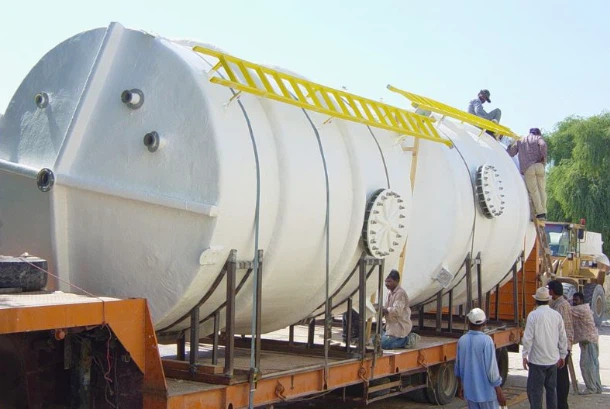
Key Considerations for Material Selection of HP325 Steel for Gas Cylinders
In the manufacturing of industrial gas storage vessels, the selection of HP325 steel requires close attention to the following key aspects:
Chemical Composition
| Element | C | Si | Mn | P | S | Al<sub>s</sub> |
|---|---|---|---|---|---|---|
| HP345 | ≤0.20 | ≤0.35 | ≤1.50 | ≤0.025 | ≤0.015 | ≥0.015 |
Carbon Content (C): Lower levels are more conducive to welding (typically ≤ 0.20%).
Mn & Si: Ensure adequate strength and toughness.
S & P: Must be strictly controlled (to minimize brittleness).
👉 Objective: To ensure optimal weldability and resistance to cracking.
Mechanical Property Matching
| Property | Yield Strength | Tensile Strength | Elongation | Charpy V-Notch Impact(20℃) | Cold Bend Test |
|---|---|---|---|---|---|
| HP345 | ≥345 MPa | 510–620 MPa | ≥20% | ≥27 J | D=2a, 180° |
Key parameters include:
Yield Strength: ≥ 325 MPa
Tensile Strength: Typically within the range of 510–650 MPa
Elongation: ≥ 20%
👉 Material selection must be carefully matched to the specific design pressure rating to avoid both "over-design" and insufficient strength.
Impact Toughness Requirements
For storage tanks intended for use in low-temperature or cold environments, particular attention should be paid to the following:
Impact testing at temperatures of -20°C or lower
Verification that the impact energy meets standard requirements
To prevent accidents caused by low-temperature brittle fracture
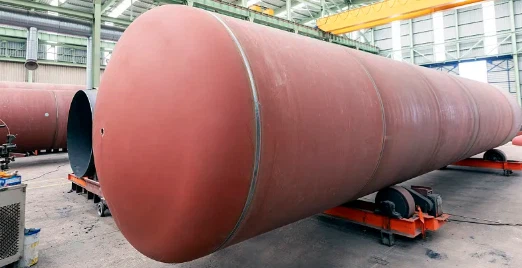
HP325 Cylinder Steel in Industrial Gas Storage Tanks
Steel Plate Thickness and Uniformity
Thickness deviations must comply with applicable standards (e.g., GB/T 6653)
The internal microstructure of the plate material must be uniform, free from defects such as laminations or inclusions
Directly impacts the pressure-bearing capacity and safety of the gas cylinder
Hot Rolling Process and Delivery Condition
- HP325 is typically supplied in either a hot-rolled state or a Thermomechanically Controlled Process (TMCP) state:
- Hot-Rolled: Lower cost; suitable for general-purpose applications
- TMCP: Features a finer microstructure, offering superior strength and toughness
Standards and Certification Requirements
- Commonly Applied Standards:
- GB/T 6653 (Steel Plates for Gas Cylinders)
- EN 10120 (European Standard)
- Relevant ISO standards for pressure vessels
Comparison of HP325 with Other Gas Cylinder Steels
| Material | Strength Level | Formability | Application Recommendation |
|---|---|---|---|
| HP265 | Relatively low | Excellent | Small gas cylinders |
| HP295 | Medium | Excellent | General-purpose gas cylinders |
| HP325 | Relatively high | Good | Medium and high-pressure gas storage tanks |
| HP345 | High | Fair | High-pressure or heavy-duty vessels |
Typical Application Scenarios
- Industrial Oxygen and Nitrogen Storage Tanks
- Liquefied Petroleum Gas (LPG) Cylinders
- Carbon Dioxide Cylinders
- Welding Gas Cylinder Shells
- Pressure Vessel Shells and Heads

Can HP325 be used as a substitute for Q345?
Direct substitution is not recommended. HP325 is a specialized steel designed for gas cylinders; it features more stable chemical composition and mechanical properties, offering a higher level of safety.
Is HP325 suitable for low-temperature environments?
Yes, it is; however, it is necessary to verify that its impact toughness (e.g., impact values at -20°C) meets the required standards.
Is HP325 prone to cracking during welding?
No. When welded using appropriate procedures, its low-carbon composition endows it with excellent resistance to cracking.
Is heat treatment mandatory?
Not necessarily; this depends on the specific design standards and the intended operating environment. However, certain high-specification projects do require post-weld heat treatment.


