

S690QL Ultra High Strength Steel
S690QL is a high yield strength structural steel grade produced in accordance with EN 10025-6. This steel is designed to provide an excellent combination of high strength, toughness, abrasion resistance and weldability. Material/ steel number: 1.8928
S690 QL is a high yield structural steel grade produced in compliance with EN 10025:6:2004. The material is heat treated using the quench and temper process and has good bending and welding properties.
S690QL is a high strength and low alloy structural steel grade. This steel grade has high yield strength (minimum 690 MPa) and excellent toughness properties.

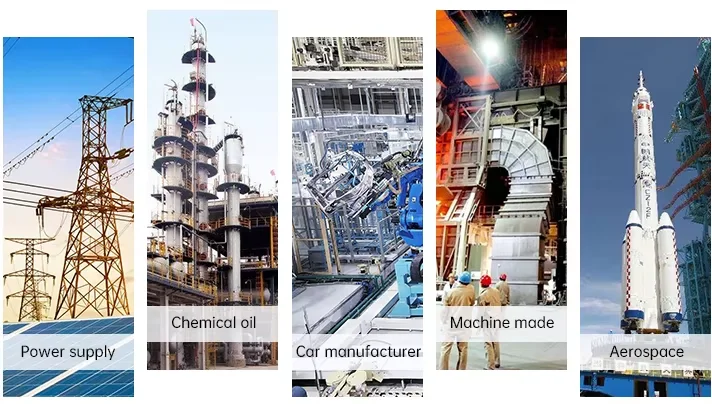
S690QL steel is widely used in applications such as machinery operating under heavy loads, cranes, construction machinery, bridges, shipbuilding, mining equipment and the energy sector. Thanks to its high strength, lightweight structure and excellent weldability, it has become a preferred material in engineering projects. In addition, S690QL steel also performs well at low temperatures and can therefore be used in applications that will be exposed to cold weather conditions.
S690QL Material Properties
S690QL is a high strength structural steel grade and has the following material properties:
-Yield Strength: Minimum 690 MPa (Mega Pascal) or higher. Yield strength refers to the stress level at which the material begins to show plastic deformation.
-Tensile Strength: Ranges from 770 to 940 MPa. Tensile strength refers to the stress level at which the material resists without rupture at the highest stress level.
-Elongation: Minimum 14%. Elongation refers to the amount of elongation of the material after stretching in percentage terms. S690QL has excellent elongation values with high ductility.
-Impact Resistance: Minimum 30 J (Joule) or higher at -40°C. Impact strength refers to the material's resistance to impact or impact. S690QL shows good impact resistance even at low temperatures.
-Weldability: S690QL steel has good weldability properties. This means that the material performs well during welding operations and durability is maintained after welding.
-Low Temperature Performance: S690QL also performs well at low temperatures. This allows it to be used in cold climatic conditions or in low temperature applications.
The material properties of S690QL make it favoured in many industries that require structural strength and light weight. However, it is important to consider more specific properties for a particular application.
-"S" steel is used as a standard designation for structural steels,
-while the number "690" refers to the minimum yield strength of the steel plate.
-"QL" stands for "high ductility".
Common Applications
Heavy Machinery: Excavators, loaders, dump trucks.
Lifting Equipment: Crane booms, jib arms.
Infrastructure: Bridges, high-rise buildings.
Energy: Wind turbine towers, offshore platforms.
Chemical composition
| Element | Percentage % | Element | Percentage % |
| C | 0.20 | Cu | 0.50 |
| Si | 0.80 | Mo | 0.70 |
| Mn | 1.70 | Nb* | 0.06 |
| P | 0.025 | Ni | 2.0 |
| S | 0.015 | Ti* | 0.05 |
| N | 0.015 | V* | 0.12 |
| B | 0.0050 | Zr* | 0.15 |
| Cr | 1.50 |
S690QL - V Notch Impact Testing
| Grade | Sample Orientation | @ 0°C | @-20°C | @-40°C | @-60°C |
| S690QL | Longitudinal | 50 J | 40 J | 30 J | ¨C¨C |
| Traverse | 35 J | 30 J | 27 J | ¨C¨C |
1What is S690QL material?
S690QL is a European standard (EN 10025-6) high-strength, low-alloy structural steel known for its minimum yield strength of 690 MPa, achieved through quenching and tempering ("Q") for high strength and excellent toughness, even at low temperatures ("L"), making it ideal for heavy-duty applications like cranes, construction machinery, and bridges where lighter, stronger designs are needed for increased efficiency and payload.
2What precautions should be taken when welding S690QL material?
When welding S690QL high-strength steel, key precautions include strict preheating (150-200°C) to prevent cold cracking, using low-hydrogen consumables, controlling heat input to avoid excessive cooling rates, maintaining an interpass temperature (150-225°C), and selecting appropriate welding processes (like MMAW/GMAW) to preserve its excellent strength and toughness. Proper PPE, ventilation, and adherence to supplier guidelines are also crucial for safety and weld quality.
3What are the differences between S690QL and S369Q material?
S690QL and S690Q (assuming "S369Q" is a typo) are both high-yield quenched and tempered structural steels with a minimum yield strength of 690 MPa, but they differ in low-temperature impact toughness: while S690Q is tested at -20°C, S690QL is subjected to stricter testing at -40°C and maintains lower phosphorus and sulfur limits, making it more suitable for extreme cold environments and high-load safety-critical applications.
4What temperature is S690QL?
S690QL is a high-yield quenched and tempered steel known for its strength, with the "L" indicating superior low-temperature toughness, specifically tested at -40°C (Charpy impact tests typically require a minimum energy absorption at this temperature, e.g., 30J for thicker plates). While it performs well at sub-zero temperatures, it can be fabricated at room temperature but needs careful preheating for welding (often 100-175°C depending on thickness) and should not exceed about 560°C during stress relief to maintain properties.
5What are the typical application fields of S690QL?
S690QL, a high-yield strength structural steel, is used in heavy-duty applications needing high strength-to-weight, including cranes, bridges, heavy machinery (mining, construction), heavy transport (trailer frames), energy (wind towers, offshore), shipbuilding, and military vehicles, prized for its toughness, weldability, and performance in cold conditions.
Contact us at info@gneesteels.com for pricing, technical support, or customized solutions. We are always ready to support your project.


