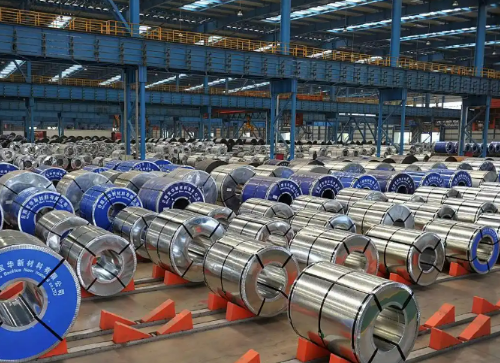
SAPH370 Hot Rolled Pickled And Oiled (hrpo) Coil For Automotive Structural Steel
SAPH370 is an automotive structural HRPO (Hot Rolled Pickled and Oiled) steel with a core tensile strength of 370 MPa. By integrating a low-carbon chemistry, hot rolling, and a pickled surface finish, it precisely balances strength, formability, and economy, making it a mainstream choice for automotive non-load-bearing structural components and general machinery parts.
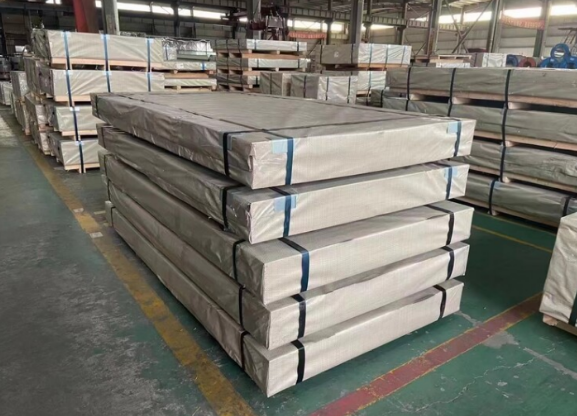
SPHC Hot Rolled Pickled and Oiled Steel Plate
SPHC Steel Plate Forming Sheet For Automobile Structure
SPHC hot-rolled steel plate is a material that has undergone a hot-rolled process, usually low carbon steel. HRPO stands for Hot Rolled pickled and oiled which is used to improve surface quality and smoothness.
1. Grade Decoding: SAPH370
S: Steel
A: Acid-washed (Pickled). The oxide scale is removed to ensure superior paint and coating adhesion.
P: Plate / Sheet
H: Hot-rolled
370: Indicates a minimum tensile strength of 370 MPa, placing it in the medium-high strength category.
2. Specifications & Availability
Standards: Produced primarily to Baosteel's Q/BQB 310-2009, making it a direct equivalent to JIS G3113 (Hot-rolled steel plates, sheets and strip for automobile structural uses).
Dimensions: Supplied in thicknesses from 1.6mm to 14.0mm and widths from 700mm to 2000mm, engineered to suit diverse automotive stamping and forming requirements.
3.Hot rolled pickled steel coil steel sheet SPHC forming sheet
Material properties: ductility, suitable for simple forming, bending or welding.
Typical applications: passenger car structure, motorcycle frame, forklift cab, electric car frame, building molding board, furniture board, mechanical equipment cover outer board, passenger car structure, etc.
| Grade | Yield strength(MPa) | Application |
| SPHC | ≥270 | C:commercial |
| SPHD | ≥270 | D:drawing |
| SPHE | ≥270 | E:deep drawing |
| SPHF | ≥270 | F:deep drawing |
| Category | Grade | Thickness(mm) | Width (mm) |
| Cold-Forming | SPHC,SPHD,SPHE,DD11(StW22), DD12(StW23),DD13(StW24) |
1.5~6.0 | 700~1650 |
| Structural Steel | SS330,SPHT2 | 1.8~6.0 | 700~1650 |
| Structural Steel | SPHT1 | 1.5~6.0 | 700~1650 |
| Structural Steel | SS400,St37-2,St37-3,St44-2, St52-3,SM400B,SM400A |
1.5~6.0 | 700~1650 |
| Structural Steel | SM400C | 2.3~6.0 | 700~1650 |
| Structural Steel | StE255,StE285,StE355, StE420,ZSTE420 |
2.0~6.0 | 700~1650 |
| Structural Steel | S20C,S35C | 2.0~6.0 | 700~1650 |
| Automotive Steel | B330CL | 2.5~4.0 | 700~1650 |
| Automotive Steel | B420CL | 3.0~5.0 | 700~1650 |
| Automotive Steel | B420L | 3.0~5.0 | 700~1650 |
| Automotive Steel | B510L,B510DL | 3.0~5.0 | 700~1650 |
| Automotive Steel | QStE340TM,QstE380TM, QstE420TM,QstE460,QstE500 |
2.0~6.0 | 700~1650 |
| Automotive Steel | SAPH310 | 1.8~6.0 | 700~1650 |
| Automotive Steel | SAPH370 | 1.8~6.0 | 700~1650 |
| Automotive Steel | SAPH400 | 2.0~6.0 | 700~1650 |
| Automotive Steel | SAPH440 | 2.0~6.0 | 700~1650 |
| Automotive Steel | S315MC | 2.0~6.0 | 700~1650 |
| Automotive Steel | S355MC | 2.0~6.0 | 700~1650 |
| Automotive Steel | S420MC | 2.0~6.0 | 700~1650 |
| Automotive Steel | S460MC | 2.0~6.0 | 700~1650 |
| Automotive Steel | S500MC | 2.0~6.0 | 700~1650 |
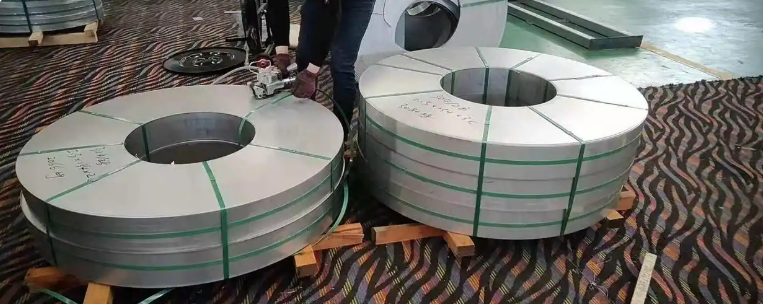
4.Formability: Engineered for Medium-Complexity Cold Working
Elongation:
- ≥ 32% (Thickness: 1.6 – 2.0 mm)
- ≥ 36% (Thickness: 3.15 – 4.0 mm)
- Capabilities: Supports medium-complexity stamping operations, including U-bending combined with localized drawing. Maintains a thinning ratio of ≤ 12% with zero cracking.
- Target Applications: Automotive spare wheel wells and irregular structural profiles.
Cold Bendability:
- Achieves 180° bending without cracking at a bend radius of R=1t (t = plate thickness).
- Tolerates tight-radius bending at R=1.5t for gauges ≤ 4.0 mm.
- Target Applications: 4.0 mm automotive body brackets. Provides crack-free edges post-bending, eliminating the need for subsequent grinding operations.
Strain Hardening Exponent (n-value):
- Value: ~0.16. Ensures uniform material flow during press forming.
- Springback Control: Restricted to within 5.0°.
- Production Compatibility: Specified for continuous automated stamping lines operating at stroke rates exceeding 6 SPM (Strokes Per Minute).
Target Applications
Automotive Manufacturing (Primary Sector)
- Body Structural Components: Chassis frames, subframes, longitudinal beams, and rocker panels (Thickness: 2.0 – 4.0 mm). Delivers a 25% strength increase over standard hot-rolled steel.
- Non-Safety-Critical Components: Inner door panels, hoods, and cabin interior panels (Thickness: 1.0 – 2.5 mm). Engineered to balance lightweighting mandates and material costs.
- Wheel Assemblies: Rims and spokes.
- Commercial Truck Beds: Floor plates for cargo carriages.
- Chassis Components: Driveshaft brackets and spare wheel wells (Thickness: 1.5 – 3.0 mm). Fatigue life is increased by 20%.
- Miscellaneous Stamping Parts: Crash bumpers, brake sleeves, and internal automotive brackets.
Heavy Machinery & Construction Equipment
- Medium-Duty Structures: Loader arms and excavator track shoes (Thickness: 4.0 – 6.0 mm). Yields a 20% strength increase over standard HR steel.
- Agricultural Machinery: Planter frames and tractor trailing arms (Thickness: 3.0 – 5.0 mm). The pickled surface provides superior baseline corrosion resistance compared to unpickled (black) steel in humid field environments.
- Construction & General Machinery
- Light Steel Structures: Building purlins and roof truss supports (Thickness: 2.0 – 4.0 mm). The 225 MPa minimum yield strength meets seismic design intensity 7 parameters.
- Industrial Equipment: Conveyor guide rails and pressure vessel bases (Thickness: 3.0 – 5.0 mm). Demonstrates significantly higher deformation resistance than standard carbon steel.
- General Machinery: Textile machinery, mining equipment, and industrial fans.
Light Industry, Appliances & General Fabrication
- Appliance Components: Compressor shells, structural brackets, and water heater inner tanks.
- Industrial Packaging: Chemical oil drums.
- General Fabrication: Welded pipes, electrical cabinets, highway guardrails, heavy-duty shelving, fencing, steel ladders, and custom stamped profiles.
Material Cross-Reference & Equivalency Analysis
SAPH370 vs. SAPH400
Mechanical Specs: Tensile strength is 7.5% lower (SAPH400 mandates ≥400 MPa), but elongation is marginally higher (≥32% vs. ≥31%).
Procurement Economics: Material costs are 5% to 8% lower.
Specification Matrix: Specified for components demanding moderate strength profiles combined with higher formability.
SAPH370 vs. HC420LAD+Z (Galvanized HSLA)
Mechanical Specs: Yield strengths are comparable (HC420LAD+Z operates at 420-520 MPa). Elongation for SAPH370 is slightly lower, though overall formability characteristics remain equivalent.
Procurement Economics: Utilizing the bare HRPO substrate reduces material costs by 15%.
Specification Matrix: Specified for internal structural components where stringent visual surface finishes or extreme galvanic corrosion resistance are not mandatory.