

What are common testing requirements for S690Q ?
Common testing for steel, governed by EN 10025-6, includes tensile testing (yield & tensile strength, elongation) and Charpy V-notch impact testing (typically at -20°C for 30 Joules minimum). Other essential tests are heat analysis, with optional ultrasonic testing (UT) and product analysis, all requiring a mill test certificate (EN 10204 3.1/3.2).

S690Q steel is a high-yield-strength, fine-grained structural steel, standardized under European Norm (EN) 10025-6, known for its excellent strength, toughness, and weldability, achieved through a quenching and tempering (Q+T) heat treatment. The "S" denotes structural, "690" is the minimum yield strength in MPa, and "Q" signifies the Q+T condition, making it ideal for heavy machinery, bridges, cranes, and mining equipment requiring weight savings and high load capacity.
Key Characteristics
High Strength: Minimum yield strength of 690 MPa, with tensile strength typically between 770-940 MPa, enabling lighter structures.
Toughness: Excellent low-temperature impact toughness, often tested at -20°C, ensuring performance in cold conditions.
Fine-Grained: A fine-grained microstructure enhances its mechanical properties.
Weldability: Good weldability when proper procedures, including preheating for thicker plates, are followed.
Applications: Heavy construction equipment, cranes, bridges, offshore structures, mining machinery, and power shovels.
Designation Breakdown (EN 10025-6)
S: Structural Steel.
690: Minimum yield strength in Megapascals (MPa).
Q: Quenched and Tempered condition.
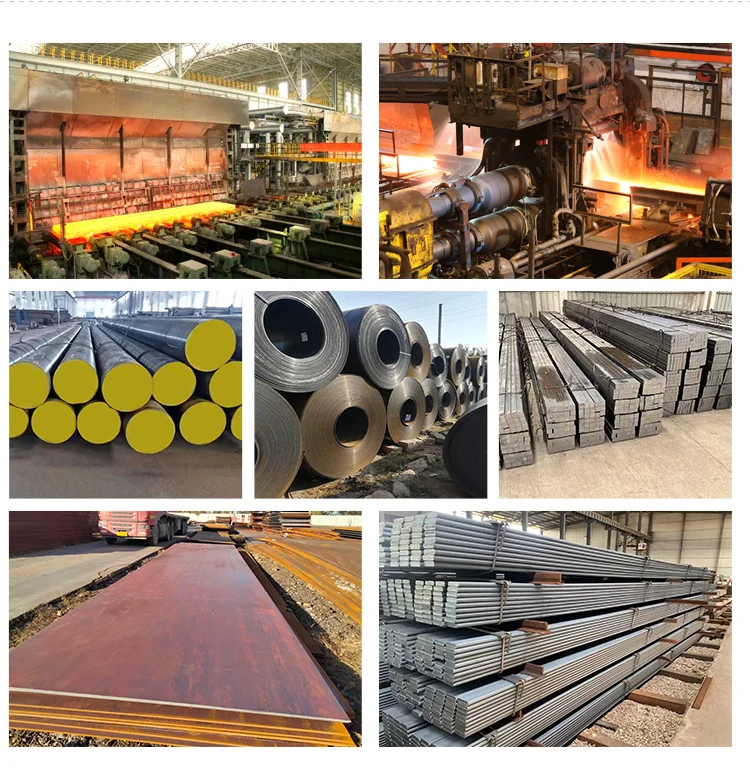
What is S690Q Steel material?
S690Q steel is a high-yield-strength, quenched, and tempered structural steel (EN 10025-6 standard) known for exceptional strength, toughness, and durability, used in heavy machinery, construction (cranes, bridges), and lifting equipment where high strength-to-weight ratio is crucial, offering superior performance and efficiency in demanding applications.
What is the hardness of S690Q ?
The hardness of S690Q steel varies slightly with thickness but generally falls within the range of 210 to 278 Brinell Hardness (HB), with thicker plates having slightly lower minimum hardness values (e.g., 228-278 HB for ≤50mm, 210-266 HB for >100mm) due to the quenching and tempering process. It's an ultra-high-strength steel known for its excellent strength-to-weight ratio, not extreme hardness, but rather its tough, fine-grained microstructure.
What are the typical application fields of S690Q ?
S690Q is a high-strength structural steel used in heavy-duty applications requiring excellent strength-to-weight ratios, such as cranes, bridges, offshore platforms, heavy machinery, wind turbine supports, and high-rise buildings, allowing for lighter, more efficient, and durable designs in construction, mining, and transportation. Its key benefit is enabling lighter structures that can handle extreme loads and dynamic stresses, reducing material use and improving fuel efficiency in transport.
|
S690QChemical Composition |
||||||||
|
Grade |
The Element Max (%) |
|||||||
|
C |
Si |
Mn |
P |
S |
N |
B |
Cr |
|
|
S690 Q |
0.20 |
0.80 |
1.70 |
0.020-0.025 |
0.010-0.015 |
0.015 |
0.005 |
1.50 |
|
Cu |
Mo |
Nb |
Ni |
Ti |
V |
Zr |
|
|
|
0.50 |
0.70 |
0.06 |
2.0 |
0.05 |
0.12 |
0.15 |
|
|
|
Grade |
S690Q Mechanical Property |
|||
|
Thickness |
Yield |
Tensile |
Elongation |
|
|
S690 Q |
mm |
Min Mpa |
Mpa |
Min % |
|
3 |
690 |
770-940 |
14 |
|
|
50 |
650 |
760-930 |
14 |
|
|
100 |
630 |
710-900 |
14 |
|
Equivalent grades of steel S690Q (1.8931)
| EU EN |
USA - |
Germany DIN,WNr |
France AFNOR |
Sweden SS |
||||
| S690Q |
|
|
|
|
1What is the difference between S690Q and S690QL?
The main difference is their specified low-temperature impact toughness, with S690QL offering superior performance for colder climates: S690Q is tested at -20°C (30J), suitable for normal cold, while S690QL is tested at -40°C (≥40J), ideal for arctic/offshore conditions, due to enhanced alloying for better cryogenic resistance, making QL better for extreme cold environments. Both are high-yield (690 MPa) quenched & tempered steels, but the "QL" guarantees toughness at much lower temperatures.
2What temperature is S690Q ?
S690Q is a high-strength, quenched and tempered (Q+T) structural steel, and its "temperature" typically refers to two critical values: it is tested for impact toughness at a minimum of -20°C (where it must maintain an energy absorption of at least 30J), and its mechanical properties are generally guaranteed for service up to approximately 580°C, beyond which it may lose significant yield strength.
3What are common testing requirements for S690Q ?
Common testing for S690Q steel, governed by EN 10025-6, includes tensile testing (yield & tensile strength, elongation) and Charpy V-notch impact testing (typically at -20°C for 30 Joules minimum). Other essential tests are heat analysis, with optional ultrasonic testing (UT) and product analysis, all requiring a mill test certificate (EN 10204 3.1/3.2).
4What are the properties of S690q material?
S690Q is a high-strength, quenched, and tempered structural steel (EN 10025-6) known for its minimum yield strength of 690 MPa, excellent toughness at low temperatures, and good weldability, allowing for lighter, stronger designs in heavy-duty applications like cranes, bridges, and machinery. Its key properties include high tensile strength (typically 770-940 MPa), great impact resistance, and good formability, making it ideal for structures needing weight reduction without compromising safety.
5What is the difference between S690Q and S690QL1 ?
The main difference between S690Q and S690QL1 is their low-temperature impact toughness, specified by the Charpy V-notch test temperature, with S690QL1 offering superior performance for extremely cold conditions compared to S690Q, though both share the same minimum 690 MPa yield strength. S690Q is tested at 0°C (or -20°C), S690QL (an intermediate grade) at -40°C, and S690QL1 at the most stringent -60°C, making it ideal for polar or offshore applications where brittle fracture risk is high.
6What is S690Q equivalent to?
S690Q is a European high-strength structural steel (EN 10025-6) with a 690 MPa yield strength, and its equivalents include ASTM A709 Grade 100, German TStE690V/DILLIMAX 690, Swedish WELDOX 700, French E690T, and ISO E690, all representing similar quenched and tempered (Q&T) steels for heavy-duty applications, though specific properties like low-temp impact testing (e.g., S690QL tested at -40°C) can vary slightly between standards.
7What is the yield strength of S690q?
S690Q steel has a nominal minimum yield strength of 690 MPa (MegaPascals) for thicknesses up to 50mm, but this value decreases for thicker plates, dropping to 650 MPa (50-100mm) and 630 MPa (100-150mm) to maintain performance, all according to the EN 10025-6 standard for quenched and tempered steel.
Contact us at info@gneesteels.com for pricing, technical support, or customized solutions. We are always ready to support your project.


