

S700MC steel and S690QL steel plate are two widely used high strength steel plates in heavy-duty structural applications. Although both are designed to reduce structural weight while maintaining high load-bearing capacity, they are produced according to different European standards.
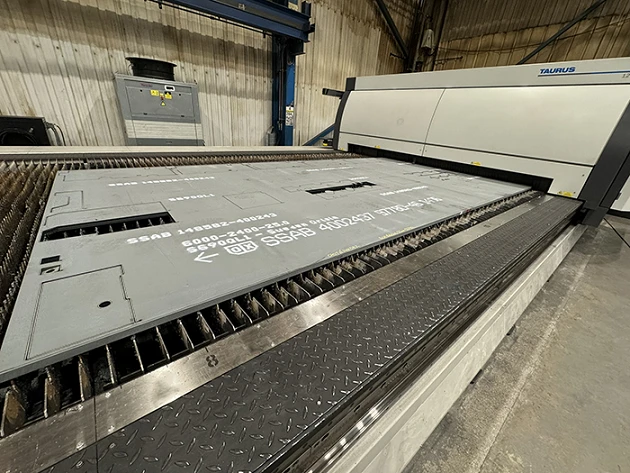
S700MC Steel: Designed for Cold Forming Applications
S700MC steel is a thermomechanically rolled high-strength steel manufactured in accordance with EN 10149-2. It is specifically developed for applications requiring excellent cold forming, bending and stamping performance while maintaining a minimum yield strength of 700 MPa. Thanks to its superior formability, S700MC is widely used for truck chassis, trailer frames, crane booms, agricultural machinery and other lightweight structural components where complex shapes are required without extensive heat treatment.
S690QL Steel Plate: Designed for Heavy Load-Bearing Structures
S690QL steel plate is a quenched and tempered high-strength structural steel produced according to EN 10025-6. With a minimum yield strength of 690 MPa and guaranteed -40°C impact toughness, it is designed for welded structures operating under high static loads, dynamic loads and harsh service conditions. S690QL is widely used in bridge engineering, mining equipment, heavy-duty cranes, lifting machinery, offshore structures and construction equipment, where high strength, fatigue resistance and structural reliability are critical.
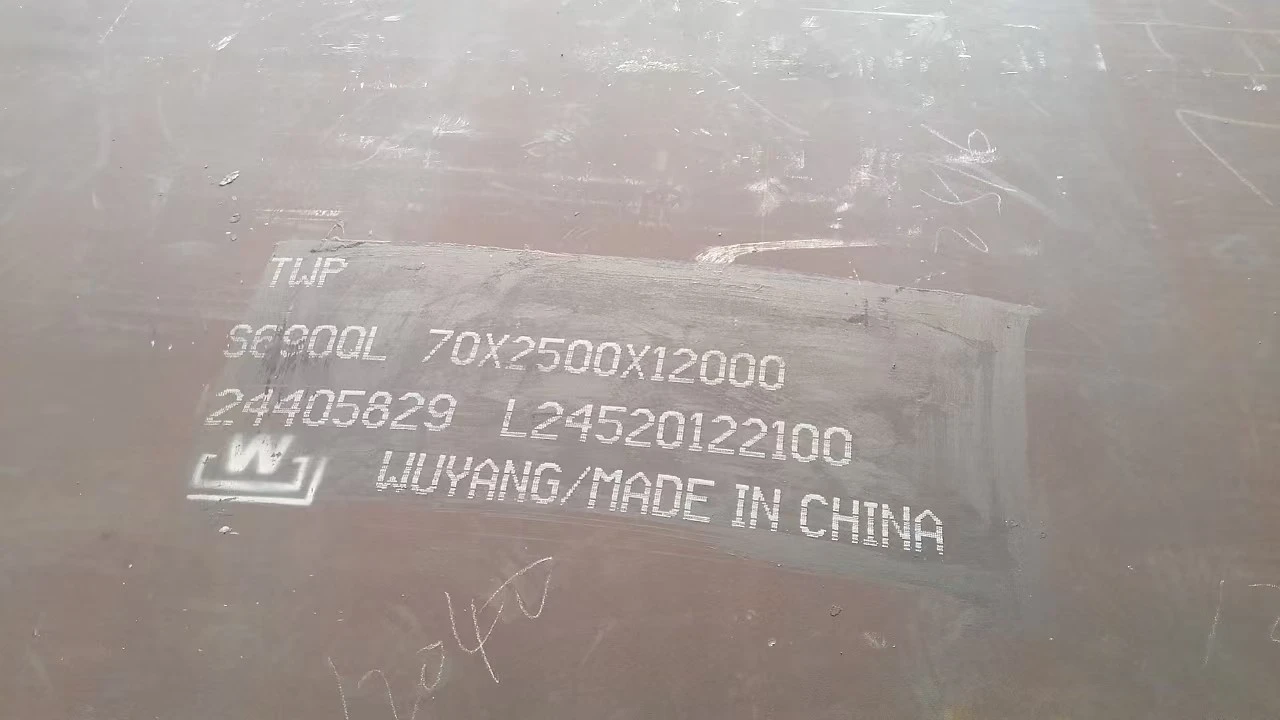
S700MC and S690QL serve distinct application scenarios, and incorrect selection may lead to higher manufacturing costs or hidden structural risks.
Contact us now for the latest price and free samples!
Confused when choosing S700MC or S690QL for your equipment? Contact GNEE STEEL. We provide free technical selection guidance, real-time stock checking and formal quotations for high-strength steel plates.
S700MC vs S690QL Core Differences:Production Processes and Delivery Condition
The most fundamental difference between S700MC and S690QL lies in their standard specifications and production routes.
| Feature | S700MC | S690QL |
|---|---|---|
| Standard | EN 10149-2 (Thermomechanically rolled steels for cold forming) | EN 10025-6 (Quenched and tempered high-strength structural steels) |
| Steel Number | 1.8974 | 1.8928 |
| Production Process | Thermomechanical Control Process (TMCP) + Accelerated Cooling | Quenching (Q) + Tempering (T) Treatment |
| Delivery Condition | Hot-rolled or pickled | Quenched and tempered (Q&T) |
| Strengthening Mechanism | Grain refinement and precipitation strengthening (microalloying) | Martensitic phase transformation strengthening (alloy hardenability) |
| Product Form | Hot rolled steel coils, cut-to-length thin plates | Structural thick plates, coils unavailable |
- S700MC complies with EN 10149-2 for cold forming high strength steel. It adopts TMCP thermomechanical rolling with controlled cooling, delivered as hot rolled without post-heat treatment, focusing on excellent cold formability.
- S690QL follows EN 10025-6 quenched & tempered structural steel standard. Production requires quenching plus tempering (Q+T). Delivered in QT condition, the grade prioritizes load-bearing capacity and low-temperature structural reliability.
S700MC Steel vs S690QL Steel Plate: Chemical composition
The chemical composition of S700MC and S690QL reflects their different design intentions. The table below compares their typical chemical compositions (maximum values, wt.%):
| Element | S700MC (max) | S690QL (max) |
|---|---|---|
| Carbon (C) | ≤0.12% | ≤0.20% |
| Silicon (Si) | ≤0.60% | ≤0.80% |
| Manganese (Mn) | ≤2.10% | ≤1.70% |
| Phosphorus (P) | ≤0.025% | ≤0.020% |
| Sulfur (S) | ≤0.015% | ≤0.010% |
| Chromium (Cr) | ~0.50% | ≤1.50% |
| Nickel (Ni) | Trace | ≤2.0% |
| Molybdenum (Mo) | ≤0.50% | ≤0.70% |
| Boron (B) | ≤0.005% | ≤0.005% |
| Nb+V+Ti | ≤0.22% total | Each added individually |
- S700MC adopts a low-carbon, microalloyed approach. The ultra-low carbon content (≤0.12%) ensures excellent weldability and cold formability, while Nb, V, and Ti provide precipitation strengthening without compromising ductility.
- S690QL employs a higher-carbon, alloy-rich approach. The elevated carbon (≤0.20%) combined with Cr, Ni, Mo, and B ensures deep hardenability-critical for achieving uniform mechanical properties in thick plates.
S700MC Steel vs S690QL Steel Plate: Mechanical properties
Despite similar yield strength values, S700MC and S690QL exhibit significantly different mechanical characteristics:
| Property | S700MC | S690QL |
|---|---|---|
| Minimum Yield Strength (ReH) | ≥700 MPa | ≥690 MPa (3–50mm) |
| Tensile Strength (Rm) | 750–950 MPa | 770–940 MPa |
| Elongation (A5) | ≥12% (≥3mm) | ≥14% |
| Impact Toughness | ≥27J at -20°C | ≥30J at -40°C (longitudinal) |
| Hardness | ~250–290 HV | ~270–320 HV |
The Toughness Gap: A Critical Difference:
The most significant mechanical difference lies in low-temperature impact toughness. S690QL is guaranteed to deliver ≥30J at -40°C, whereas S700MC is typically tested at -20°C. This makes S690QL the preferred choice for applications in cold environments, offshore platforms, and Arctic conditions.
Important Conclusion: S700MC cannot replace S690QL if the drawing specifies -40°C anti-brittle fracture performance.
The performance data above clearly shows the differences between S700MC and S690QL. However, the final selection depends on your specific project conditions-including operating temperature, load characteristics, forming methods, and welding requirements.
Share your project drawings and technical specifications with GNEE STEEL's engineering team.
S700MC vS S690QL Steel Plate:Comparison of Weldability
| Comparison Item | S690QL (Quenched & Tempered Steel) | S700MC (Thermomechanically Rolled Steel) |
|---|---|---|
| Carbon Equivalent (CEV) | Relatively high, CEV ≤ 0.62%; typical value: 0.45–0.48% | Very low, CEV ≤ 0.25%; typical value: approx. 0.40–0.45% |
| Preheating Requirement | Strict preheating is mandatory.General thickness: 100–150°CHeavy plate: 150–250°C | Preheating is generally not recommended |
| Interpass Temperature | Must be strictly controlled, normally ≤ 200–250°C | Higher allowable; up to 400°C under certain conditions |
| Heat Input Control | Narrow operating window, precise control required.Excessive heat input: grain coarsening & embrittlement in HAZInsufficient heat input: higher risk of cold cracking | Maximum heat input must be limited.Excessive heat input leads to HAZ softening and strength loss |
| Primary Welding Risks | Cold cracks (hydrogen-induced cracks), HAZ embrittlement | HAZ softening |
| Filler Metal Requirements | Ultra-low hydrogen consumables mandatory (diffusible hydrogen ≤ 5 mL/100 g) | Low-alloy steel fillers matched to base metal strength |
| Post-Weld Heat Treatment | Generally not recommended | Not recommended; will cause strength reduction |
🔍Analysis of Root Causes for Differences:
- S690QL has strict welding requirements due to its high carbon equivalent. Alloying elements such as Cr, Mo, Nb and V are added to guarantee strength, which brings a strong hardening tendency. Brittle martensite readily forms during welding. Without proper hydrogen control, the risk of cold cracking becomes extremely high.
- S700MC delivers good weldability with ultra-low CEV. Strength comes from grain refinement and precipitation strengthening. The main welding risk is HAZ softening from grain coarsening and dissolved precipitates rather than cold cracks. Therefore, heat input must be restricted to prevent HAZ strength reduction. Preheating is normally not required due to its high crack resistance.
Typical Application Differences of S700MC and S690QL Steel:
S700MC (EN 10149-2): Optimized for cold forming and welding
Suitable for thin & medium plate structures requiring rolling, bending and stamping (common thickness range: 2–12 mm). Mainly used for lightweight thin-walled components of mobile machinery.
Typical applications:
- Telescopic booms of light construction machinery
- Crane turntables
- Tipper truck bodies and longitudinal beams
- Container frames
- Thin-plate chassis components for special vehicles
S690QL (EN 10025-6): Optimized for high toughness and heavy-load thick plate structures
Designed for thick-plate structures without complicated cold forming, demanding stable fracture toughness and reliable weldability. Applied to core load-bearing structures of heavy stationary or large mobile equipment.
Typical applications:
- Main girders and gusset plates for long-span bridges
- Heavy-load joints of offshore wind jackets and offshore platforms
- Heavy-duty hydraulic supports
- Housings for large mining equipment
- Critical load-carrying joints of landmark buildings


For heavy infrastructure projects such as long-span bridges, S690QL serves as a reliable high-toughness structural material. Learn more about its design requirements and project cases in our dedicated article:S690QL high strength steel for bridge construction. If you have ongoing bridge or heavy structure projects requiring S690QL quotations, feel free to contact our engineering team.
S700MC vs S690QL Steel Plates:Price and Cost Comparison
📊Reference Price Comparison (FOB China, Unit: USD / MT, 2026 Market Reference)
| Grade | Standard | Available Thickness | Delivery Status | Reference Price Range | Key Cost Driver |
|---|---|---|---|---|---|
| S700MC | EN 10149-2 | 2–12 mm Coil & CTL sheet | TMCP as hot rolled | $790 – 940 | Continuous rolling production, no offline heat treatment; mass production advantage |
| S690QL | EN 10025-6 | 6–100 mm Steel Plate | Quenched & Tempered (+QT) | $960 – 1220 | Extra QT heat treatment; mandatory -40℃ Charpy impact test; thick plate forming cost |
Cost Gap Summary:Under overlapping thickness window (6–12 mm): S690QL is generally 15% ~ 30% higher than S700MC.
💰Procurement Note:
Total cost assessment cannot rely merely on raw material prices; full project life cycle shall be taken into account.
1.Material Consumption (Lightweighting Potential)
Although S690QL carries a higher unit price, its minimum yield strength is comparable to S700MC. For designs requiring identical load-bearing capacity, both grades enable substantial steel weight reduction, which can offset part of the raw material price premium.
2.Fabrication & Manufacturing Costs
- S700MC: It boasts excellent weldability, lowering welding difficulty and eliminating extensive preheating and related procedures to cut production expenses. Moreover, it is engineered for cold forming and supports easy bending, stamping and shaping operations.
- S690QL: It offers good weldability. Nevertheless, preheating and even post-weld heat treatment (PWHT) are frequently required to avoid cracking, leading to extra time expenditure and higher manufacturing costs.
3.Full Life-Cycle Costs For components subjected to dynamic loads, S690QL delivers superior low-temperature impact toughness and fatigue resistance. It can achieve longer service life and lower maintenance costs, demonstrating greater economic value over long-term operation.
S700MC vs S690QL: 5 Key Factors to Select the Right High Strength Steel
1.Is your core manufacturing process cold forming or welded assembly?
- If components require extensive shaping operations such as cold bending, stamping and folding → Choose S700MC.
- If parts are mainly fabricated by welding with minimal forming work → Choose S690QL.
2.How low is the operating temperature of your application?
- If the equipment operates at ambient temperature or above 0°C → Both S700MC and S690QL are acceptable; either grade can meet performance requirements under these conditions.
- If the equipment is required to operate at -20°C or lower → S690QL is the preferred option.
3.How high are your requirements for welding efficiency and fabrication procedures?
- If you pursue high welding efficiency and aim to simplify processes without preheating → Choose S700MC.
- If stricter welding process control can be accepted → S690QL is also feasible.
4.How demanding are your requirements for load-bearing capacity and fatigue resistance of the structure?
- If the structure mainly bears static loads → S700MC is an efficient and economical option.
- If the structure is subjected to frequent dynamic loads, impacts or alternating stresses → S690QL is the preferred choice.
5.Do you base your cost evaluation on material unit price or total comprehensive cost?
- If the project is highly sensitive to material costs with massive processing volume → S700MC holds advantages in unit price.
- If you attach greater importance to full-life-cycle comprehensive cost → S690QL may deliver better cost performance.
Why Choose GNEE STEEL for S700MC and S690QL Steel Plates?
GNEE STEEL has become a trusted partner for global procurement professionals, especially for sourcing high-strength structural steel plates, S690QL high yield strength steel and S700MC cold forming steel.
18 Years of Professional Steel Export Experience
Established in 2008, GNEE STEEL is an integrated steel supply chain firm staffed by more than 200 professionals. With 18 years of industrial experience, we specialize in the processing and export of hot rolled steel plates. Our products serve clients across over 150 countries throughout Europe, Asia, Africa, South America and North America.
Full Product Portfolio Covering S700MC and S690QL
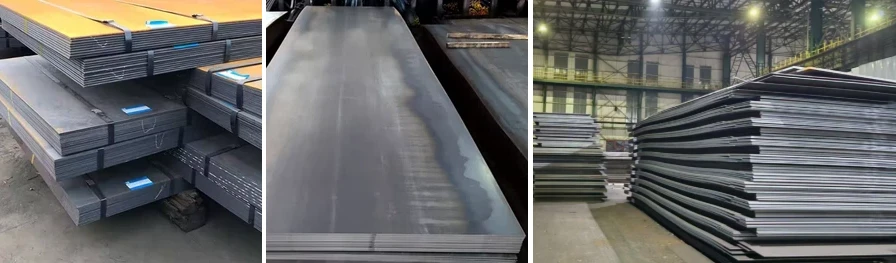
GNEE STEEL stocks a full lineup of HSLA steel plates. Available grades: S700MC, S690QL, S690Q, S690QL1, S890QL, S960QL and equivalents like ASTM A514 in various sizes and thicknesses.
| Product | Standard | Thickness Range | Key Characteristics |
|---|---|---|---|
| S700MC | EN 10149-2 | 3–10 mm | High-strength cold forming steel with excellent weldability and formability |
| S690QL / S690QL1 | EN 10025-6 | 8–60 mm | Quenched and tempered structural steel, minimum yield strength 690 MPa |
Quality Certifications: ISO, SGS & Full Traceability
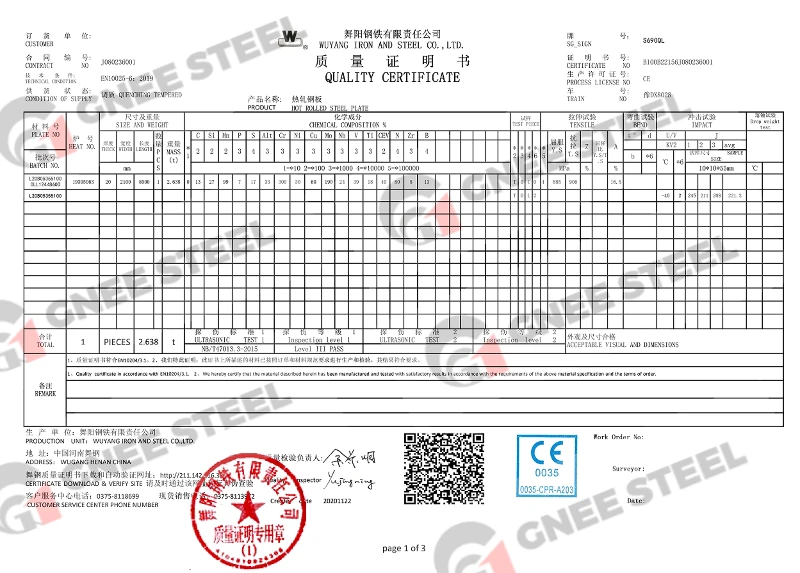
GNEE STEEL owns ISO 9001, ISO 14001, ISO 45001 and CE certificates. Third-party reports from SGS, BV and TÜV can be offered on request. Each shipment comes with full MTC containing chemical analysis, mechanical test results, impact data, dimensional inspection and heat number traceability.
-40°C low-temperature impact test documents are available for S690QL to satisfy offshore and arctic engineering standards.
One-Stop Processing Services
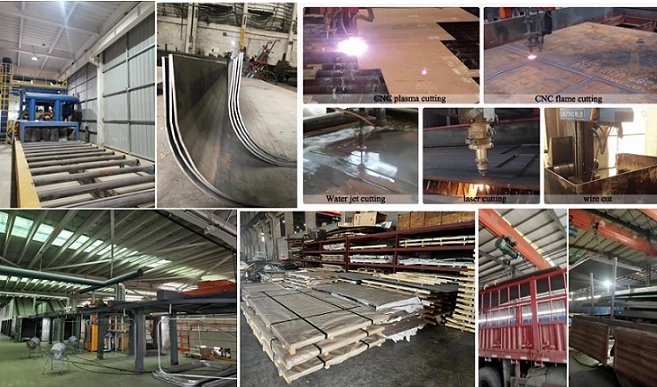
GNEE STEEL delivers more than basic material supply. We operate a dedicated machining center to provide high value-added services tailored to project requirements:
| Service | Capacity |
|---|---|
| Cutting | Flame cutting, plasma cutting, precision CNC cutting |
| Beveling | Weld edge preparation |
| Drilling & Milling | Custom hole layout and surface treatment |
| Bending | Cold bending service for S700MC forming applications |
| Welding | Professional welding service |
| Surface Treatment | Grinding, polishing, shot blasting, painting |
- For buyers of S700MC cold forming steel, GNEE's processing capacity brings outstanding value - the excellent formability of the material can be fully utilized via precision bending and cutting.
- For purchasers of S690QL structural steel, our beveling and edge preparation services simplify on-site welding procedures and shorten manufacturing lead time.
Contact GNEE STEEL Now for the Latest Quotation of S700MC and S690QL Steel Plates
Whether you need S700MC plates for cold forming parts, S690QL high strength steel for heavy structures, or professional material selection advice for S700MC and S690QL, GNEE STEEL offers reliable expertise, ample stock and full service to guarantee your project success.
FAQ:
What is the grade equivalent of S690QL?
S690QL is a European standard quenched and tempered high-yield structural steel (690 MPa minimum yield strength). Its primary global equivalents include ASTM A709 Grade 100 (USA), GB Q690D (China), Bisalloy 80 (Australia), and proprietary grades like Strenx 700 / Weldox 700.
What is the ASTM equivalent of S700MC steel?
The equivalent grades of S700MC steel are SEW092 QStE 690TM, NFA36-231 E690D, ASTM A514, BS1449 75F70.
What is the difference between S690QL and S690Q?
S690Q: Minimum impact toughness tested at -20°C (30J average). → Typical Use: Cranes in temperate climates, quarry equipment. S690QL: Certified for -40°C and below (≥40J impact toughness). → Critical Use: Arctic pipelines, offshore platforms, mining vehicles in Siberia.
How to weld S690 steel?
The steel is suitable for all known welding methods. The material temperature should be at least room temperature. We recommended the following preheating temperatures: for plate thicknesses > 20mm up to 75°C, > 40mm up to 100°C, > 60mm up to 150°C and > 100mm up to 175°C.
What is S700MC steel?
S700MC is a high-strength, low-alloy (HSLA) steel. It's a common engineering material, particularly for load-bearing applications. Automotive manufacturers use S700MC for the likes of chassis parts in trucks and trailers- where high strength combined with reduced weight is crucial.


