

What are the mechanical properties of ASME SA537 Class 3?
ASME SA537 Class 3 is a quenched and tempered carbon-manganese-silicon steel plate designed for high-pressure boilers and pressure vessels. It offers superior strength with a minimum yield strength of 55 ksi (380 MPa) and a tensile strength range of 80-100 ksi (550-690 MPa) for thicknesse ≤65mm, featuring high elongation and excellent toughness.
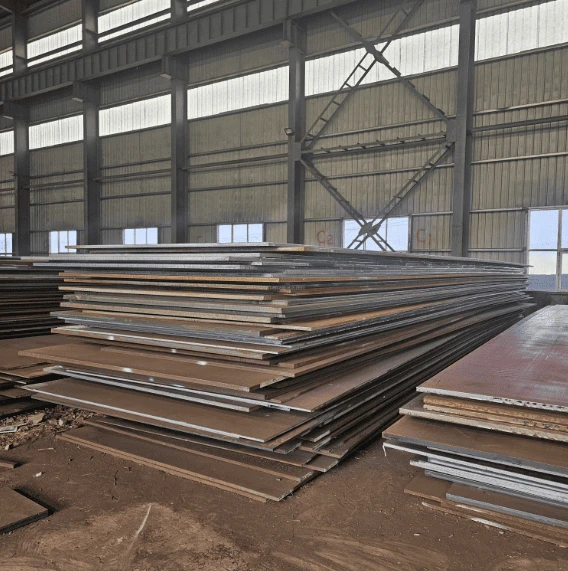
ASME SA537 Class 3 is a specialty carbon steel plate produced to satisfy the demanding requirements of modern fusion-welding techniques. Because it is a Quenched and Tempered material, it provides a unique combination of high tensile strength (80 to 100 ksi) and excellent weldability. This grade is specifically mentioned in ASME Section VIII for its ability to maintain its structural integrity after the heat-intensive processes of rolling and welding, provided that proper heat-input controls are maintained. It is often the first choice for thick-walled vessels where the risk of crack initiation at the weld heat-affected zone (HAZ) must be strictly managed.
Key Characteristics
Controlled Carbon Equivalent: Carefully balanced chemistry ensures low susceptibility to cold cracking during welding.
High Elongation: Retains 22%elongation (in 2 inches), ensuring the material can deform safely before failure.
Normalized Chemistry: High Manganese-to-Carbon ratio ensures superior notch toughness.
Through-Thickness Ductility: Excellent resistance to lamellar tearing, making it suitable for complex welded attachments.
Grade Designation
ASME: American Society of Mechanical Engineers.
SA: Prefix for Ferrous material specifications.
537: The specific numeric standard for heat-treated C-Mn-Si plates.
Class 3: Indicates the specific Quenched and Tempered strength tier.
Comparison (ASME SA537 Class 3 vs. SA738 Grade B)
Quench Severity: Both are liquid-quenched, but SA738 Grade B is designed to achieve deep through-thickness hardness in even heavier plates.
Tensile Strength: SA738 Grade B (85–110 ksi) provides a higher maximum strength than SA537 Class 3 (80–100 ksi).
Chemical Profile: SA738 Grade B often utilizes micro-alloying elements (like Vanadium or Nitrogen) which are less prevalent in the standard C-Mn-Si chemistry of SA537.
Application: SA537 Class 3 is for general high-pressure vessels; SA738 Grade B is the standard for nuclear containment structures.

Common Application
Hydrocarbon Fractionating Columns: Tall towers in refineries that require high strength at the base to support height.
Cryogenic Cold Boxes: External shells for air separation units where secondary containment is needed.
Deaerator Vessels: Tanks in thermal power plants that remove dissolved gases from boiler feedwater.
Compressed Air Bullets: Horizontal high-pressure storage tanks for industrial air systems.
Oil-Water Separators: Primary processing vessels used in midstream oil and gas operations.
What is the heat treatment process for ASME SA537 Class 3?
The heat treatment process for ASME SA537 Class 3 involves normalizing and tempering, followed by post-heat treatments. Normalizing helps refine the grain structure, improving the steel's strength and uniformity. Tempering further enhances toughness by reheating the material to a lower temperature after it has been quenched. The post-heat treatments help ensure resistance to brittle fracture and improve overall mechanical performance under extreme conditions.
What are the advantages of ASME SA537 Class 3 over other materials?
The primary advantage of ASME SA537 Class 3 is its superior toughness and strength under extreme conditions. The additional post-heat treatment enhances the material's performance in high-pressure and high-temperature environments. Compared to other materials like SA516 Grade 70, which offers general-purpose strength, SA537 Class 3 is better suited for critical applications, including nuclear reactors and high-temperature pressure vessels, where impact resistance and fracture toughness are essential.
Is ASME SA537 Class 3 suitable for low-temperature applications?
Yes, ASME SA537 Class 3 is highly suitable for low-temperature applications due to its enhanced toughness after heat treatment. The material is designed to resist brittle fracture and maintain its strength even in sub-zero or cryogenic conditions. This makes it ideal for use in industries like nuclear reactors, cryogenic storage tanks, and offshore oil platforms, where temperatures can drop significantly without compromising the structural integrity of the components.
ASME SA537 Class 3 pressure vessel steel plate chemical composition:
| Grade | C | Mn | P | S | Si | Cu | Ni | Cr | Mo |
| ASME SA537 Class 3 | 0.24 | 0.92-1.72 | 0.035 | 0.035 | 0.13-0.55 | 0.38 | 0.28 | 0.29 | 0.09 |
The mechanical properties of ASME SA537 Class 3 steel plate at ambient temperature:
| Grade | Thickness(mm) | Min Yield (Mpa) | Tensile(MPa) | Elongation(%) |
| ASME SA537 Class 3 | 8mm-65mm | Min 380Mpa | 550-690Mpa | 22% |
| 66mm-100mm | Min 345Mpa | 515-655Mpa | 22% | |
| 101mm-150mm | Min 275Mpa | 485-620Mpa | 20% |
1What is ASME SA537 Class 3?
ASME SA537 Class 3 is a specification for pressure vessel plates made from heat-treated carbon steel. These plates are used in pressure vessel and boiler construction, particularly in industries like petrochemical, power generation, and nuclear. The material undergoes normalizing and tempering, as well as additional post-heat treatments to improve its toughness, making it ideal for high-pressure and high-temperature environments.
2What thicknesses are available for ASME SA537 Class 3 plates?
ASME SA537 Class 3 plates are typically available in thicknesses ranging from 3/16" (5 mm) to 4" (100 mm). However, these thicknesses may vary depending on the manufacturer and specific project requirements. The material can be rolled to meet the needs of various pressure vessel designs, ensuring it provides optimal strength and toughness for a range of high-pressure, high-temperature applications.
3Can ASME SA537 Class 3 be welded?
Yes, ASME SA537 Class 3 is weldable, but proper procedures must be followed to avoid issues like cracking. Preheating is often recommended, especially for thicker sections, and post-weld heat treatment (PWHT) may be required to relieve residual stresses and ensure the welded joints retain their desired mechanical properties. It's crucial to select the right filler materials that match the chemical composition of the base metal for a successful weld.
4What are the mechanical properties of ASME SA537 Class 3?
ASME SA537 Class 3 offers excellent mechanical properties, including a tensile strength between 70-90 ksi (480-620 MPa), a yield strength of at least 36 ksi (250 MPa), and an elongation of 20% minimum in 8 inches. It also has superior toughness, making it suitable for critical applications, especially where impact resistance is needed, such as low-temperature environments or high-stress pressure vessel designs.
5What is the chemical composition of ASME SA537 Class 3?
The chemical composition of ASME SA537 Class 3 typically includes Carbon (0.17–0.21%), Manganese (0.60–0.90%), Silicon (0.15–0.30%), and low levels of Phosphorus (≤ 0.035%) and Sulfur (≤ 0.035%). The controlled composition ensures good weldability, formability, and resistance to cracking under high-pressure, high-temperature conditions. The material is designed to meet stringent standards for both mechanical properties and performance under extreme conditions.
6What industries use ASME SA537 Class 3?
ASME SA537 Class 3 is widely used in industries where high-pressure, high-temperature conditions are common. These include petrochemical, nuclear, oil & gas, and power generation industries. The material is ideal for pressure vessels, heat exchangers, reactors, and other equipment that must withstand severe service conditions. Its high toughness and strength make it suitable for extreme operating environments like those found in refineries or nuclear plants.
7What are the standard specifications for ASME SA537 Class 3?
ASME SA537 Class 3 conforms to ASME Boiler and Pressure Vessel Code (BPVC), Section II, Part A, which outlines the material's mechanical properties, chemical composition, and heat treatment requirements. This ensures that the material meets the stringent standards necessary for use in high-pressure systems, pressure vessels, and boilers. Manufacturers must adhere to these specifications to ensure the material's reliability and suitability for critical industrial applications.
Full specification and details are available on request. The above information is provided for guidance purposes only. For specific design requirements please contact our technical sales staff


