

What is ASTM A612 steel used for?
ASTM A612 is a high-strength, killed carbon-manganese-silicon steel specification designed for welded pressure vessels, boilers, and storage tanks operating at moderate and lower temperatures. It is commonly used where improved notch toughness is required, primarily in the energy, petrochemical, and manufacturing sectors.

ASTM A612 is a standard material specification for killed carbon-manganese-silicon steel plates intended for use in fusion-welded pressure vessels designed for moderate and lower-temperature service. Unlike many other pressure vessel steels that are produced in heavy thicknesses, A612 is specifically optimized for notch toughness in relatively thin plates, with a maximum thickness limit of 1 inch (25 mm) or less. This steel is typically killed and produced using a fine-grain practice to ensure high strength and excellent impact properties, making it a specialized choice for the construction of high-pressure storage tanks where weight reduction and weldability are critical factors.
Key Characteristics
High Yield Strength: Offers a minimum yield strength of 50 ksi (345 MPa), which is high for a carbon steel in this thickness range.
Fine Grain Practice: Specifically manufactured to have a fine austenitic grain size for improved toughness.
Weldability: Excellent suitability for fusion welding due to controlled carbon and manganese levels.
Thickness Limitation: Engineered specifically for plates 1 inch (25 mm) and under.
Grade Designation
ASTM A612: The primary designation for this high-strength, carbon-manganese-silicon pressure vessel steel.
Condition: Usually supplied in the as-rolled, normalized, or stress-relieved condition depending on requirements.
Comparison with ASTM A516 Grade 70
Strength: A612 has a higher yield strength (50 ksi) compared to A516-70 (38 ksi).
Thickness Range: A612 is restricted to 1 inch max, whereas A516-70 is used for much heavier sections (up to 8 inches or more).
Application Focus: A612 is for portable tanks and high-pressure thin-wall vessels; A516 is the "workhorse" for general heavy-duty pressure vessels.
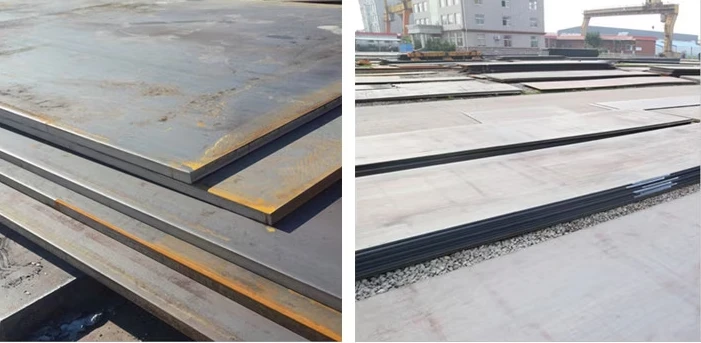
Common Applications of ASTM A612
Used in the construction of pressure vessels, boilers, and heat exchangers.
Commonly found in chemical plants, oil refineries, and power stations.
Ideal for medium- to high-pressure environments requiring thermal cycling and mechanical stress resistance.
Critical for pressure containment and high-temperature applications where durability and reliability are necessary.
Also used in piping systems that transport high-pressure steam or chemicals.
What is the hardness of ASTM A612?
The hardness of ASTM A612 typically ranges between 180-250 HB (Brinell Hardness), depending on thickness and heat treatment. This hardness level provides a balance of strength and toughness, allowing it to resist wear and deformation under mechanical stress and high-pressure conditions. ASTM A612 is ideal for use in pressure vessels and boilers, where durability and resilience are essential.
Can ASTM A612 be used for cryogenic applications?
No, ASTM A612 is not suitable for cryogenic applications due to a decrease in impact toughness and ductility at low temperatures. In cryogenic environments, materials need to maintain their resilience and toughness, which ASTM A612 does not provide. For low-temperature applications, materials such as A350 LF2 or A516 are better suited, as they remain tough and strong in extremely cold conditions.
What is the elongation of ASTM A612?
The elongation of ASTM A612 is typically around 20% in 8 inches (200 mm), depending on thickness and heat treatment. This elongation indicates the material's ability to deform without breaking, which is important in pressure vessels and boilers where thermal expansion and mechanical stress occur. The ability to stretch before failure ensures the material performs well under fluctuating pressures and extreme conditions.
Dimension Range
|
Grade |
Thickness |
Width |
Length |
|---|---|---|---|
|
A612 |
9.52 - 34.92 |
1900 - 3050 |
6100 - 25910 |
Mechanical Properties
|
Grade |
Thickness |
Yield strength |
Tensile strength |
Elongation in 2" 1) |
Elongation in 8" 1) |
|---|---|---|---|---|---|
|
A612 |
9.52 - 127 |
50 |
83 - 105 |
22 |
16 |
|
A612 |
12.7 - 34.92 |
50 |
81 - 101 |
22 |
16 |
ASTM A612 carbon-manganese-silicon steel plates chemical composition:
| Carbon max. | 0.25% |
| Manganese | 1.00-1.50% |
| Phosphorus max. | 0.03% |
| Sulfur max. | 0.03% |
| Silicon | 0.15-0.50% |
| Copper max. | 0.35% |
| Nickel max. | 0.25% |
| Chromium max. | 0.25% |
| Molybdenum max. | 0.08% |
| Vanadium max. | 0.08% |
1What is ASTM A612?
ASTM A612 is a carbon steel plate specification used in the construction of pressure vessels and boilers. It is heat-treated to improve yield strength, tensile strength, and toughness, making it suitable for high-pressure and high-temperature environments. The material is commonly used in industries such as chemical processing, oil refining, and power generation, ensuring reliability in demanding industrial applications.
2What is the yield strength of ASTM A612?
The yield strength of ASTM A612 typically ranges from 32 ksi (220 MPa) to 50 ksi (345 MPa), depending on plate thickness and heat treatment. The material's high yield strength ensures it can withstand significant mechanical stress and pressure, making it ideal for pressure vessel applications. Thicker plates may have slightly lower yield strength but remain effective for medium-pressure systems where mechanical strength is important.
3What industries use ASTM A612?
ASTM A612 is used in industries that require materials for high-pressure and high-temperature environments. Key industries include:Chemical,processing,Oil refining,Power generation,Petrochemicals,It is used to manufacture pressure vessels, boilers, heat exchangers, and piping systems. These applications require materials that can withstand mechanical stress, temperature cycling, and thermal expansion without failure.
4What is the chemical composition of ASTM A612?
The chemical composition of ASTM A612 typically includes:,Carbon (C): 0.18–0.23%,Manganese (Mn): 1.00–1.60%,Silicon (Si): 0.20–0.50%,Phosphorus (P): ≤ 0.035%,Sulfur (S): ≤ 0.035%,This composition ensures a balance of strength, toughness, and weldability, making it suitable for pressure vessel construction and other high-pressure applications.
5What is the tensile strength of ASTM A612?
The tensile strength of ASTM A612 ranges from 70 ksi (485 MPa) to 90 ksi (620 MPa), depending on the thickness and heat treatment. This high tensile strength makes it resistant to deformation and ensures structural integrity under high-pressure conditions. ASTM A612 is widely used in pressure vessels and boilers where strength is critical to maintain safe operations under fluctuating mechanical stress.
6Is ASTM A612 weldable?
Yes, ASTM A612 is weldable using conventional methods such as MIG, TIG, and stick welding. However, for thicker sections, preheating and post-weld heat treatment (PWHT) may be required to prevent cracking and ensure weld integrity. The material's good weldability makes it ideal for pressure vessel and boiler fabrication, where reliable, strong welds are crucial for maintaining the structural integrity of the system.
7What is the impact toughness of ASTM A612?
ASTM A612 exhibits good impact toughness under normal conditions, ensuring resistance to sudden mechanical stress and thermal cycling. This property is essential in pressure vessels and boilers, where the material is subjected to dynamic loads and temperature fluctuations. Its ability to absorb impact energy without cracking makes it suitable for environments prone to rapid changes in pressure and temperature.
If you have project requirements for ASTM A612 , we welcome your inquiry. GNEE maintains a large inventory of commonly used high strength steel grades for your selection.For detailed mechanical properties, chemical composition, and technical data, as well as free samples, please contact our factory immediately. We offer competitive prices, stable quality, and professional service. Email: info@gneesteels.com


