What is the ASME SA387 Grade11 Class1 standard?
ASME SA387 Grade 11 Class 1 is a chromium-molybdenum alloy steel plate for high-temperature pressure vessels and boilers, offering good creep, corrosion, and oxidation resistance, with lower strength but better elongation than Class 2, making it suitable for refineries and petrochemical plants in sour gas or hydrogen service. Key elements are ~1.25% Chromium (Cr) and ~0.5% Molybdenum (Mo), providing strength and stability for demanding environments, typically supplied normalized and tempered.

The composition of elements, coupled with distinct manufacturing conditions, engenders variation in the characteristics of each plate. This diversity underscores the critical role these plates play in distinct industries. The preeminence of ALLOY STEEL SA 387 GR. 11 CL. 1 / 2 plates is evident in their strategic employment within the oil and gas sectors, the petrochemical industry, and numerous other industrial domains. In contexts where gases and liquids endure elevated temperatures, these plates emerge as a steadfast solution, fortified to withstand extreme thermal conditions.
Alloy Steel SA 387 Grade 11 Class 1 Sheets has an average cup depth when heat treated at 1950 degrees F and quick quenched. This steel is an iron-nickel-chromium alloy with moderate strength and resistance to carburization and oxidation at high temperatures. Alloy Steel SA 387 Grade 11 Class 1 Plates is the first option for an upgrade from the line of steels when better temperature performance or strength is needed. Its increased creep-rupture strength is due to its aluminium, carbon, and titanium contents, which are otherwise similar save for the higher amount of carbon and the inclusion of aluminium and titanium.
The pressure vessel plates made of ASTM A387 Grade 11 (identical with ASME SA-387 Gr. 11) are chromium-molybdenum alloy steel plates intended primarily for welded boilers and pressure vessels designed for elevated temperature service. There are two classes available according to tensile strength levels: Class 1 and Class 2. The ASME SA-387/ ASTM A387 Gr.11 steel has the nominal composition of 1.25Cr-0.5Mo-Si with UNS designation number of K11789 and P number of 4.
Key Characteristics
Material Type: Alloy Steel Plate.
Standard: ASME SA387 (ASTM A387 equivalent).
Grade: 11 (1.25% Chromium, 0.5% Molybdenum).
Class: 1 (specifies mechanical property requirements).
Applications: Boilers, pressure vessels, heat exchangers, reactors, high-temp storage, oil & gas, petrochemicals.
Properties & Benefits
High-Temperature Performance: Excellent thermal strength and creep resistance.
Corrosion Resistance: Chromium provides good oxidation and corrosion resistance, ideal for sour gas.
Weldability: Good weldability for fabrication into critical equipment.
What is the hardness of ASME SA387 Grade 11 Class 1 steel?
ASME SA387 Grade 11 Class 1 steel's hardness isn't directly listed in Brinell or Rockwell scales in typical spec sheets, but its yield strength is a key indicator, around 240 MPa (35 ksi), with tensile strength between 415-585 MPa (60-85 ksi), and it's usually supplied normalized and tempered, providing good strength for elevated temperature service in pressure vessels.
What is ASME SA387 Grade 11 Class 1 equivalent to?
ASME SA387 Grade 11 Class 1 is a chromium-molybdenum alloy steel primarily used for welded boilers and pressure vessels designed for elevated temperature service.15 It is virtually identical to ASTM A387 Grade 11 Class 1, with the primary difference being the governing regulatory code.
What are the typical application fields of ASME SA387 Grade 11 Class 1 steel?
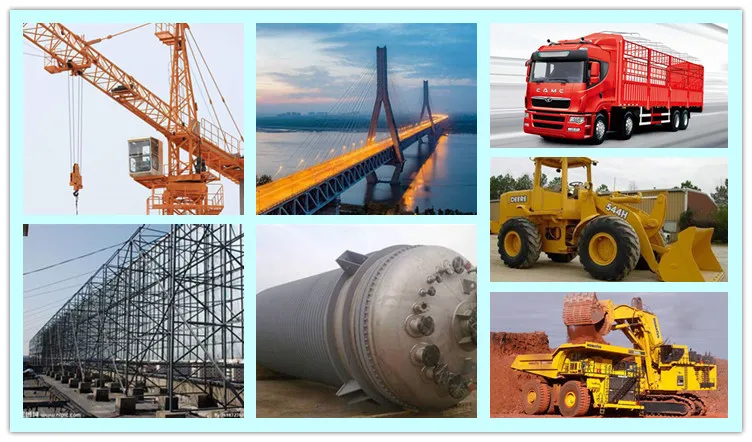
ASME SA387 Grade 11 Class 1 steel is primarily used in high-temperature, high-pressure applications, especially in the oil & gas, petrochemical, and power generation industries, for equipment like pressure vessels, boilers, heat exchangers, piping, and storage tanks, benefiting from its chromium-molybdenum content for enhanced strength, creep resistance, and resistance to oxidation and corrosion, particularly in sour gas environments.16
Equivalents
| BS | EN | ASTM/ASME | DIN |
| 621 B | ––– | A387-11-1 | ––– |
Specifications for ASTM A387 Grade 11 Alloy Steel Plates
| Designation | Nominal Chromium Content (%) |
Nominal Molybdenum Content (%) |
| A387 Grade 11 | 1.25% | 0.50% |
Chemical Requirements for ASTM A387 Grade 11 Alloy Steel Plates
| Element | Chemical Composition (%) | |
| A387 Grade 11 | ||
| Carbon: | Heat Analysis: | 0.05 - 0.17 |
| Product Analysis: | 0.04 - 0.17 | |
| Manganese: | Heat Analysis: | 0.40 - 0.65 |
| Product Analysis: | 0.35 - 0.73 | |
| Phosphorus: | Heat Analysis: | 0.035 |
| Product Analysis: | 0.035 | |
| Sulphur (max): | Heat Analysis: | 0.035 |
| Product Analysis: | 0.035 | |
| Silicon: | Heat Analysis: | 0.50 - 0.80 |
| Product Analysis: | 0.44 - 0.86 | |
| Chromium: | Heat Analysis: | 1.00 - 1.50 |
| Product Analysis: | 0.94 - 1.56 | |
| Molybdenum: | Heat Analysis: | 0.45 - 0.65 |
| Product Analysis: | 0.45 - 0.70 |
Alloy Steel Grade 11 Class 1/2 Sheets, Plates & Coils Mechanical Properties
| SA387 Grade 11 | Tensile Strength (ksi) | Tensile Strength (MPa | Yield Strength (ksi) | Yield Strength (MPa) | Elongation in 200mm (%) | Elongation in 50mm (%) | Reduction of area in % |
| Class 1 | 60-85 | 415-585 | 35 | 240 | 19 | 22 | - |
1 What precautions should be taken when welding ASME SA387 Grade 11 Class 1 steel?
When welding SA387 Grade 11 Class 1 steel (a low-alloy chromium-molybdenum steel), key precautions involve proper preheating (around 250°F/121°C minimum) to prevent cracking, selecting appropriate filler materials (like EB2 group), controlling interpass temperatures, applying Post Weld Heat Treatment (PWHT) (around 1200°F/650°C) to relieve stress, ensuring good ventilation, and using full Personal Protective Equipment (PPE), while cleaning the surface thoroughly.
2 What is ASME SA387 Grade 11 Class 1 material?
ASME SA387 Grade 11 Class 1 is a chromium-molybdenum (Cr-Mo) alloy steel plate, specified for welded boilers and pressure vessels needing high-temperature strength and corrosion resistance, common in oil, gas, and power industries, offering good oxidation/corrosion resistance, especially in sour gas, with Class 1 indicating specific, lower tensile strength requirements than Class 2.9
3 Is ASME SA387 Grade 11 Class 1 carbon steel?
No,ASME SA387 Grade 11 Class 1 is not a carbon steel; it is a low-alloy chromium-molybdenum (Cr-Mo) steel. While it contains carbon (typically between 0.05% and 0.17%), it is specifically categorized as an alloy steel due to the intentional addition of chromium and molybdenum to enhance its performance in high-temperature and high-pressure environments.
4 What temperature is ASME SA387 Grade 11 Class 1 steel?
In the lower end of the temperature range SA 387 Gr 11 (1150 °F min tempering temperature) , and SA 387 Gr 22 (1250 °F min tempering temperature) are used.10 These grades can be specified in either class 1 or 2 and can also be provided in the Normalized & Tempered or Quenched and Tempered.
5 What is the maximum allowable stress value for ASME SA387 Grade11 Class1?
For ASME SA387 Grade 11 Class 1, the maximum allowable stress values are determined by ASME Section II, Part D (Table 1A), and vary significantly based on the operating temperature; for instance, at a typical temperature of $650^\circ\text{F}$ ($345^\circ\text{C}$), the allowable stress is approximately 13.8 ksi (95 MPa), but this value decreases as temperatures rise toward its upper limit of $1000^\circ\text{F}$ ($538^\circ\text{C}$) to account for reduced material strength and creep resistance.
6 What is the P number of ASME SA387 Grade 11 Class 1 steel?
The P-number for ASME SA387 Grade 11 Class 1 steel is 4. this assignment applies to both Class 1 and Class 2 of Grade 11, as they share the same nominal chemical composition of 1.25Cr-0.5Mo-Si.11 This grouping identifies the material as a low-alloy steel containing chromium and molybdenum, typically used for elevated temperature service in pressure vessels.12
7 What is the ASME SA387 Grade11 Class1 standard?
ASME SA387 Grade 11 Class 1 is a chromium-molybdenum alloy steel plate for high-temperature pressure vessels and boilers, offering good creep, corrosion, and oxidation resistance, with lower strength but better elongation than Class 2, making it suitable for refineries and petrochemical plants in sour gas or hydrogen service.13 Key elements are ~1.25% Chromium (Cr) and ~0.5% Molybdenum (Mo), providing strength and stability for demanding environments, typically supplied normalized and tempered.14