

What is the composition of ASTM A387 Grade 11 Class 2 ?
ASTM A387 Grade 11 Class 2 is a chromium-molybdenum alloy steel for high-temperature pressure vessels, featuring 1.00-1.50% Chromium (Cr) and 0.45-0.65% Molybdenum (Mo), with specific limits for Carbon, Manganese, Phosphorus, Sulfur, and Silicon, providing good high-temperature strength and corrosion resistance, with "Class 2" indicating higher tensile strength requirements than Class 1, while the chemical composition remains the same for both classes.

ASTM A387 Grade 11 Class 2 is a chromium-molybdenum alloy steel plate specifically designed for high-temperature pressure vessels and welded boilers. This alloy contains 1.00-1.50% Chromium and 0.45-0.65% Molybdenum, providing excellent creep resistance, heat resistance, and corrosion resistance-including resistance to seawater and iron-related oxidation. Due to its specific chemical balance, these plates are highly effective in gas and heat services, commonly used in the petrochemical and power industries for critical equipment like reactors.
ASTM A387 Grade 11 Class 2 is defined as ASTM A387 Grade 11 steel in the normalized and tempered condition. This heat treatment delivers higher strength compared to Class 1, with a minimum Tensile Strength of 75 ksi and a minimum Yield Strength of 45 ksi.A full bar indicates the highest value in the relevant set, while a half-full bar represents 50% of the highest value, allowing for quick benchmarking of its mechanical performance against other industrial materials.
Key Characteristics
Material: Chromium-Molybdenum (Cr-Mo) Alloy Steel.
Application: Designed for elevated temperature service in pressure vessels (boilers, reactors, heat exchangers).
Composition: Contains 1.00–1.50% Chromium and 0.45–0.65% Molybdenum.
Heat Treatment: Delivered in the normalized and tempered condition, providing superior strength.
Impact: Often specified with Charpy V-Notch tests, e.g., at -52°C.
Benefits
High-Temperature Strength: Excellent creep resistance for service up to around 480°C.
Corrosion Resistance: Good resistance, especially in hydrogen-rich environments.
Performance: Class 2 offers higher strength than Class 1 due to stricter heat treatment.
Industries Served
Oil & Gas
Petrochemical
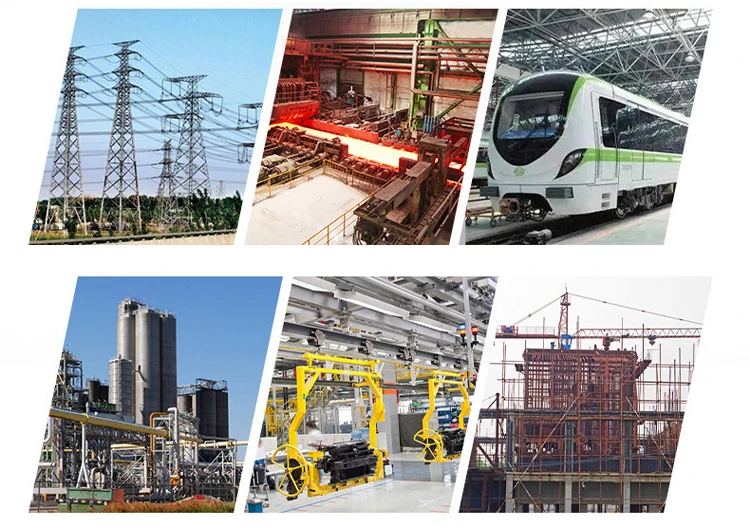
Power Generation
What precautions should be taken when welding ASTM A387 Grade 11 Class 2?
When welding ASTM A387 Grade 11 Class 2 (a 1.25Cr-0.5Mo alloy), key precautions include thorough cleaning, mandatory preheating (around 149°C/300°F), using low-hydrogen electrodes (like E8018-B2), controlling interpass temperature, and applying Post-Weld Heat Treatment (PWHT) (around 690°C/1275°F) to prevent cracking due to its tendency to form brittle martensite, requiring adherence to ASME/AWS codes for specific parameters.
What welding rod for ASTM A387 Grade 11 Class 2 ?
For ASTM A387 Grade 11 Class 2 (a 1.25Cr-0.5Mo alloy), use low-carbon chromium-molybdenum electrodes like E7018-B2L (SMAW/Stick), E8018-B2 or E8018-B3 (for P11 to P22), ER80S-B2 or ER90S-B3 (TIG/MIG), or appropriate flux-cored options like E9XT1-B3C, ensuring matching chemistry, proper preheat (around 150-200°C), and post-weld heat treatment (PWHT) for optimal performance in high-temperature pressure vessels.
What is ASTM A387 Grade 11 Class 2 high speed steel?
ASTM A387 Grade 11 Class 2 is a specific type of chromium-molybdenum (Cr-Mo) alloy steel plate designed for high-temperature service in pressure vessels, boilers, and heat exchangers, featuring excellent creep resistance, corrosion resistance, and high-temperature strength due to its ~1% Chromium and ~0.5% Molybdenum content, with Class 2 having higher strength requirements than Class 1 but slightly less elongation,
Equivalents
| BS | EN | ASTM/ASME | DIN |
| 621 B | ––– | A387-11-2 | ––– |
Chromium & Molybdenum content (according to the ASTM specification):
| Designation | Nominal Chromium Content (%) | Nominal Molybdenum Content (%) |
|---|---|---|
| A387 Grade 11 | 1.25% | 0.50% |
Specifications for ASTM A387 Grade 11 Alloy Steel Plates
| Designation | Nominal Chromium Content (%) |
Nominal Molybdenum Content (%) |
| A387 Grade 11 | 1.25% | 0.50% |
Tensile Requirements for Class 2 Plates
| Designation | Requirement | Grade 22 |
|---|---|---|
| A387 Grade 11 | Tensile strength, ksi [MPA] | 75 to 100 [515 to 690] |
| Yield strength, min, ksi [MPa]/(0.2% offset) | 43 [310] | |
| Elongation in 8 in. [200 mm], min % | 18 | |
| Elongation in 2 in. [50 mm], min, % | 22 | |
| Reduction of area, min % |
Chemical Requirements for ASTM A387 Grade 11 Alloy Steel Plates
| Element | Chemical Composition (%) | |
| A387 Grade 11 | ||
| Carbon: | Heat Analysis: | 0.05 - 0.17 |
| Product Analysis: | 0.04 - 0.17 | |
| Manganese: | Heat Analysis: | 0.40 - 0.65 |
| Product Analysis: | 0.35 - 0.73 | |
| Phosphorus: | Heat Analysis: | 0.035 |
| Product Analysis: | 0.035 | |
| Sulphur (max): | Heat Analysis: | 0.035 |
| Product Analysis: | 0.035 | |
| Silicon: | Heat Analysis: | 0.50 - 0.80 |
| Product Analysis: | 0.44 - 0.86 | |
| Chromium: | Heat Analysis: | 1.00 - 1.50 |
| Product Analysis: | 0.94 - 1.56 | |
| Molybdenum: | Heat Analysis: | 0.45 - 0.65 |
| Product Analysis: | 0.45 - 0.70 |
1. What is ASTM A387 Grade 11 Class 2 material?
ASTM A387 Grade 11 Class 2 is a chromium-molybdenum (Cr-Mo) alloy steel plate for high-temperature pressure vessels, offering higher strength than Class 1 due to stricter heat treatment, with around 1.25% chromium and 0.5% molybdenum for excellent high-temp strength, creep, and oxidation resistance, used in oil, gas, and chemical industries. It's known for applications like reactors and heat exchangers requiring elevated temperatures.
2. Is ASTM A387 Grade 11 Class 2 carbon steel?
No, ASTM A387 Grade 11 Class 2 is not plain carbon steel; it's a chromium-molybdenum (Cr-Mo) alloy steel, specifically designed for high-temperature pressure vessels, with added chromium (around 1-1.5%) and molybdenum (around 0.5%) for enhanced strength, corrosion resistance, and creep resistance, distinguishing it from basic carbon steels. The "Class 2" designation indicates higher strength requirements achieved through specific heat treatment (normalized and tempered) compared to Class 1,
3. What is the P number of ASTM A387 Grade 11 Class 2 ?
The P-Number for ASTM A387 Grade 11 Class 2 alloy steel, used in pressure vessels, is P-Number 4, which designates low alloy steels (Cr-Mo) that fall within specific compositional ranges for welding group classification. This material is characterized by its 1.25% Chromium and 0.5% Molybdenum content, differing from other grades by its mechanical properties (Class 2 having higher strength than Class 1) but sharing the same base chemistry,
4. What are the typical application fields of ASTM A387 Grade 11 Class 2 ?
ASTM A387 Grade 11 Class 2 steel is primarily used for elevated temperature service in pressure vessels, boilers, and heat exchangers, especially within the oil, gas, petrochemical, and power generation industries due to its excellent strength, weldability, and resistance to corrosion and oxidation at high temperatures. Key applications include hydrogenation reactors, hydrocracking units, steam headers, and storage tanks in demanding environments.
5. What is the difference between ASTM A387 Grade 11 Class 2 and ASTM A387 Grade 11 Class 1 ?
ASTM A387 Grade 11 Class 2 is a stronger, tougher version of Grade 11 Class 1, primarily differing in mechanical properties (higher tensile/yield strength) due to potentially different heat treatment, making Class 2 suitable for more demanding high-temperature/pressure applications than Class 1, while both share the same 1.25% Cr-0.5% Mo composition for pressure vessels.
6. What temperature is ASTM A387 Grade 11 Class 2 ?
ASTM A387 Grade 11 Class 2 is designed for elevated temperature service. Its heat treatment involves a minimum tempering temperature of 1150°F (620°C). In service, it is commonly used at temperatures ranging from 316°C (600°F) up to approximately 593°C (1100°F), depending on the design code and allowable stress requirements.
7. What is the hardness of ASTM A387 Grade 11 Class 2 ? ASTM A387 Grade 11 Class 2 steel's hardness isn't a single fixed number but varies with tempering, though it typically has a Brinell hardness of around 170-207 HBW (or roughly 190 HBW as one example), reflecting its higher strength Class 2 designation, with specified minimum tensile strength often around 515-690 MPa (75-100 ksi) after heat treatment for pressure vessels.
If you want to learn more about ASTM A387 Grade 11 Class 2 GNEE's products, you can send an email to info@gneesteels.com . We are more than happy to assist you.


