

What is the difference between ASME SA553 TYPE 1 and ASME SA553 TYPE 2 ?
The primary difference between ASME SA553 Type 1 and Type 2 lies in their nickel content and low-temperature impact testing requirements. Type 1 contains 9% nickel for service down to -320°F [-195°C], while Type 2 contains 8% nickel for service down to -275°F [-170°C], both used for welded cryogenic pressure vessels.
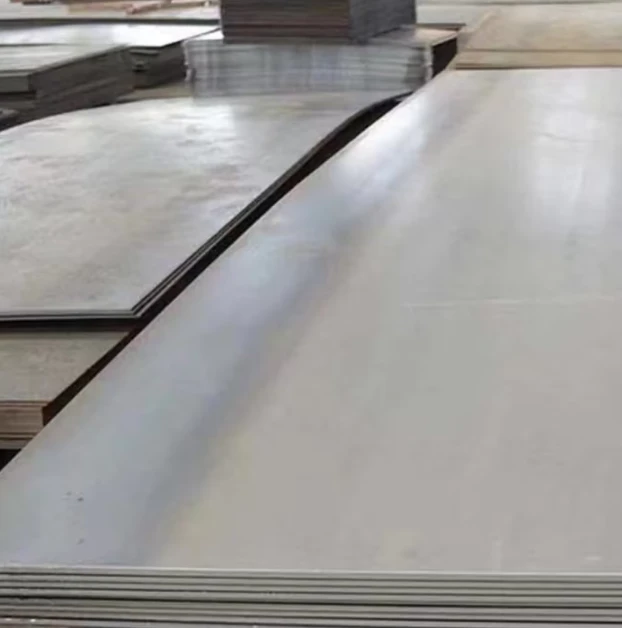
ASME SA553 Type 1 is a specialized pressure vessel steel plate that bridges the gap between high-strength alloy steels and cryogenic performance. It is characterized by its high yield strength (85 ksi minimum) and its resistance to brittle failure. The material undergoes a rigorous Quench and Temper process that results in a tempered martensite structure containing small amounts of "retained austenite." This austenite acts as a metallurgical shock absorber, ensuring that even under the extreme pressure of liquefied gas storage, the vessel will deform rather than shatter if subjected to impact.
Key Characteristics
Retained Austenite: The key to its performance, providing ductility in ultra-cold service.
Strict Purity: Requires very low Phosphorus and Sulfur levels to ensure weld quality.
High Design Stress: Offers excellent allowable stress values under ASME Section VIII.
Homogeneity: Uniform mechanical properties throughout the plate thickness.
Grade Designation
"SA": "S" stands for Section II (Materials) of the ASME Code. "A" indicates it is a Ferrous Material (iron-based).
"553": This is the specific material specification for "Pressure Vessel Plates, Alloy Steel, Quenched and Tempered, 8 and 9 % Nickel."
"Type 1": This identifies the 9% Nickel chemical composition (8.50--9.50%).
Comparison (vs. SA240 Type 304L Stainless)
Tensile Strength: SA553 Type 1 is significantly stronger than 304L stainless steel.
Thickness: Due to higher strength, SA553 can be used in thinner sections than 304L for the same pressure.
Weldability: Stainless steel is easier to weld; SA553 requires more specialized high-nickel fillers.
Magnetic Sensitivity: 304L is non-magnetic; SA553 is magnetic.

Common Applications
Ethylene Storage: Vessels for gases with boiling points above -155F.
Cryogenic ISO Containers: For international transport of liquid gases.
Liquid Nitrogen Dewars: Large-capacity industrial vacuum-insulated tanks.
Satellite Launch Infrastructure: Tanks for cryogenic liquid rocket fuels.
What is the heat treatment process for ASME SA553 Type 1?
ASME SA553 Type 1 undergoes a quenching and tempering heat treatment process. The steel is heated to a high temperature, then rapidly cooled (quenched), followed by tempering at a lower temperature to relieve internal stresses. This process improves the steel's toughness and strength, ensuring it maintains its integrity under high-pressure and low-temperature conditions, making it suitable for critical applications in pressure vessels and reactors.
What is the phosphorus content in ASME SA553 Type 1?
The phosphorus content in ASME SA553 Type 1 is typically limited to 0.035%. Phosphorus can promote brittleness, especially in low-temperature environments, reducing the material's toughness and making it more prone to fracture. By restricting phosphorus, ASME SA553 Type 1 retains the necessary ductility and toughness for applications such as pressure vessels, ensuring that it performs reliably even under extreme mechanical and thermal stresses.
What is the weldability of ASME SA553 Type 1?
ASME SA553 Type 1 has good weldability, although care must be taken during welding. Preheating the material before welding and post-weld heat treatment (PWHT) are often required to prevent cracking and minimize residual stresses. The material's relatively low carbon content improves its ability to be welded without significant risk of cracking, ensuring it remains suitable for critical applications where welding is required for manufacturing or repairs.
ASME SA553 Type I steel chemical composition(%):S
|
Composition |
Type I |
|
|
C≤ |
Heat analyse |
0.13 |
|
Product analyse |
||
|
Mn ≤ |
Heat analyse |
0.90 |
|
Product analyse |
0.98 |
|
|
S ≤ P ≤ |
Heat analyse |
0.035 |
|
Product analyse |
||
|
Si |
Heat analyse |
0.15~0.40 |
|
Product analyse |
0.13~0.45 |
|
|
Ni ≤ |
Heat analyse |
8.50~9.50 |
|
Product analyse |
8.40~9.60 |
|
ASME SA553 Type I Mechanical Properties:
|
Grade |
Tensile Strength |
Yield Strength |
Elongation in 2 in , 50 mm,min,(%) |
|
SA553 |
100-120 (690-825) |
85 (585) |
20 |
1. What is the phosphorus content in ASME SA553 Type 1?
The phosphorus content in ASME SA553 Type 1 is typically limited to 0.035%. Phosphorus can promote brittleness, especially in low-temperature environments, reducing the material's toughness and making it more prone to fracture. By restricting phosphorus, ASME SA553 Type 1 retains the necessary ductility and toughness for applications such as pressure vessels, ensuring that it performs reliably even under extreme mechanical and thermal stresses.
2. What are the mechanical properties of ASME SA553 Type 1?
ASME SA553 Type 1 has a high tensile strength, typically between 70 ksi (485 MPa) and 90 ksi (620 MPa), and a yield strength of approximately 50 ksi (345 MPa). These mechanical properties make it suitable for high-pressure environments. The material also exhibits excellent toughness, particularly at low temperatures, which ensures that it can resist fracture and maintain its structural integrity in critical applications, such as pressure vessels and reactors.
3. What is the carbon content in ASME SA553 Type 1?
The carbon content in ASME SA553 Type 1 typically ranges from 0.12% to 0.18%. This low carbon content helps improve the material's weldability, reducing the risk of cracking during welding processes. Despite the low carbon content, the steel still retains sufficient strength and toughness, making it suitable for applications in high-pressure and low-temperature environments like pressure vessels and heat exchangers.
4. What industries use ASME SA553 Type 1?
ASME SA553 Type 1 is commonly used in industries such as power generation, petrochemical, nuclear energy, and cryogenics. It is widely used for manufacturing pressure vessels, reactors, heat exchangers, and other critical components exposed to high-pressure and low-temperature environments. Its high strength, toughness, and resistance to brittle fracture make it ideal for applications where material failure could result in catastrophic consequences.
5. What is the sulfur content in ASME SA553 Type 1?
The sulfur content in ASME SA553 Type 1 is limited to 0.035%. Sulfur can reduce the material's toughness, particularly at low temperatures, and cause brittle fracture. By controlling sulfur levels, ASME SA553 Type 1 maintains its strength and resistance to brittle fracture, which is essential for critical applications in industries like petrochemical and power generation, where the material faces high mechanical stress and low temperatures.
6. What is the tensile strength of ASME SA553 Type 1?
The tensile strength of ASME SA553 Type 1 typically ranges from 70 ksi (485 MPa) to 90 ksi (620 MPa). This high tensile strength allows the material to withstand significant mechanical stress without failure, making it suitable for pressure vessels and other critical applications. Its ability to resist deformation ensures structural integrity even under extreme pressure conditions, which is essential for safety in industries like nuclear and petrochemical.
7. What is the elongation of ASME SA553 Type 1?
The elongation of ASME SA553 Type 1 is at least 20% in 8 inches (200 mm). This property indicates the material's ability to undergo plastic deformation without breaking, which is important in applications where materials are subjected to stress. A higher elongation allows the steel to absorb more energy before failure, improving its performance in industries that require impact resistance, like in pressure vessels and reactors subjected to rapid stress or mechanical loads.
Get an valued quotation for ASME SA553 Type 1, Contact GNEE Steel


