What is the difference between P690Q and S690Q?
The main difference between P690Q and S690Q (or S690QL) lies in their specific standards and impact toughness, with S690Q/QL being high-strength structural steels (EN 10025-6) offering 690 MPa yield strength after quenching and tempering, while P690Q often refers to similar quench-tempered grades from other standards (like ASTM A514/A710 equivalents), emphasizing high strength for heavy loads, with the 'L' in S690QL denoting enhanced low-temperature toughness, making it ideal for cold environments like offshore/Arctic use.
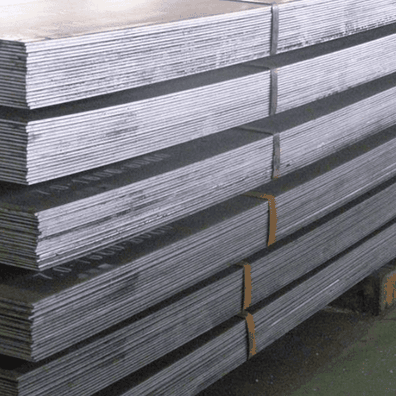
P690Q is a low-alloy steel that attains its mechanical properties via rapid water cooling followed by reheating below the transformation temperature. This creates a tempered martensite structure, allowing the steel to withstand high stress without failure. It is designed for applications where standard carbon steels would be too heavy or prone to fatigue under pressure.
Key Characteristics:
It maintains a low Carbon Equivalent (CEV) typically between 0.45 and 0.65 to ensure weldability. The steel includes alloying elements like Nickel (up to 2.0\) and Chromium (up to 1.5%) to improve through-thickness toughness and hardenability in plates up to 150mm thick.
Decoding the Name:
P: Steels for pressure purposes.
690: Minimum yield strength (690MPa).
Q: Quenched and tempered delivery condition.
Comparison:
Unlike structural S690QL, P690Q is tested for internal soundess using Ultrasonic Testing (Class 3) as standard. S690QL is for mobile machinery, while P690Q is certified for the rigorous thermal-mechanical fatigue found in pressure service.
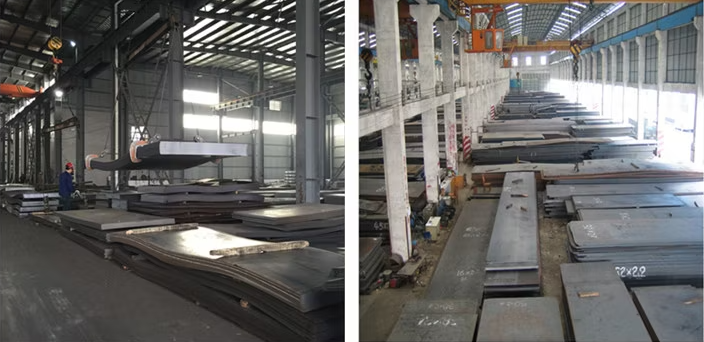
Application:
Development of high-pressure piping systems for steam and chemicals.
Manufacturing of penstocks for hydroelectric power plants.
Engineering of transportable tanks for hazardous industrial chemicals.
What welding consumables are recommended for P690Q?
Low-hydrogen welding consumables with matching or slightly undermatching strength are typically recommended. Consumables should provide good toughness at low temperatures. Selection depends on the welding process, joint design, and required mechanical properties of the welded joint.
Does P690Q require preheating before welding?
Preheating is often required, especially for thicker plates or higher restraint joints. Typical preheat temperatures range from 75°C to 150°C, depending on thickness and hydrogen control measures. Preheating helps reduce cooling rates and minimizes the risk of hydrogen cracking.
What are the advantages of using P690Q?
Key advantages include high yield strength, excellent toughness, good weldability for its strength level, and reduced structural weight. These benefits allow for more efficient designs, lower material usage, and improved performance in demanding load-bearing applications.
Mechnical property for P690Q steel plate:
| Thickness (mm) | |||
| P690Q | ≤ 50 | > 50 ≤ 100 | > 100 |
| Yield strength (≥Mpa) | 690 | 670 | 630 |
| ≤ 100 | > 100 | ||
| Tensile strength (Mpa) | 770-940 | 720-900 | |
Chemical composition for P690Q steel plate (Heat Analysis Max%)
| Main chemical elements composition of P690Q steel plate | |||||||
| C | Si | Mn | P | S | B | N | Cr |
| 0.20 | 0.80 | 1.70 | 0.025 | 0.015 | 0.005 | 0.015 | 1.50 |
| Cu | Mo | Nb | Ni | Ti | V | Zr | |
| 0.30 | 0.70 | 0.06 | 2.50 | 0.05 | 0.12 | 0.15 | |
1. What standard governs P690Q steel?
P690Q is specified under the European standard EN 10025-6, which covers high-yield-strength structural steels in the quenched and tempered condition. This standard defines mechanical properties, chemical composition limits, delivery conditions, and testing requirements to ensure consistent quality and performance.
2. What is the minimum yield strength of P690Q?
The minimum yield strength of P690Q is 690 MPa for plate thicknesses up to 50 mm. As thickness increases, the guaranteed minimum yield strength may slightly decrease, as defined in EN 10025-6. This high yield strength enables engineers to design lighter yet stronger structures.
3. What is the typical chemical composition of P690Q?
P690Q typically contains carbon, manganese, silicon, chromium, nickel, molybdenum, and microalloying elements. The carbon content is relatively low to maintain weldability, while alloying elements improve strength, hardenability, and toughness. Exact limits are defined in EN 10025-6.
4. What is the maximum carbon equivalent (CEV) of P690Q?
The maximum carbon equivalent value (CEV) for P690Q is usually limited to around 0.65, depending on thickness. A controlled CEV helps ensure acceptable weldability while maintaining high strength. Lower CEV values reduce the risk of cold cracking during welding.
5. What thickness range is available for P690Q?
P690Q plates are commonly available in thicknesses ranging from a few millimeters up to about 150 mm, depending on the steel producer. Mechanical property requirements vary slightly with thickness, and buyers should confirm availability and compliance for specific thickness ranges.
6. Can P690Q be cold formed?
Cold forming of P690Q is possible but limited due to its high strength. Larger bending radii are required compared to lower-strength steels. Excessive cold deformation may lead to cracking or loss of toughness, so forming operations should follow manufacturer recommendations and relevant standards.
7. Is P690Q suitable for offshore structures?
Yes, P690Q is suitable for offshore structures due to its high strength and excellent toughness. It can withstand harsh environmental conditions, including low temperatures and dynamic loads. Proper corrosion protection and compliance with offshore standards are still required for long-term durability.
For more details about GNEE's steel products, contact us at info@gneesteels.com. We look forward to working with you.