

What is the hardness of ASTM A387 Grade 11 Class2 ?
ASTM A387 Grade 11 Class 2 steel is typically specified by its tensile and yield strength, not a specific hardness range, but its hardness is generally around 150 to 180 Brinell (HBW), with higher tensile strength (75-100 ksi) than Class 1, suitable for elevated temperature pressure vessels.
ASTM A387 Gr 11 CL 2 is a chromium molybdenum alloy steel plate intended primarily for welded boiler and pressure vessels designed of elevated temperature service. The Cr content 1.25% and the Mo content 0.5%.

ASME SA387 Grade 11 Class 2 is a high-strength Chromium-Molybdenum (Chrome Moly) alloy steel plate specifically designed as a pressure vessel grade for elevated temperature service. Alloyed with 1.25% Chromium and 0.50% Mo, these elements work in tandem to provide enhanced mechanical properties, including superior tensile and yield strength at high working temperatures. In essence, it is a tougher and stronger version of Grade 11 steel, meeting higher mechanical requirements compared to Class 1.
This material is highly effective and widely used in the oil, gas, and petrochemical industries, as well as in chemical processing, power generation, and nuclear facilities. The higher levels of chromium provide excellent corrosion and oxidation resistance, which is essential for storing liquids and gases at high temperatures or in sour gas applications. Furthermore, the material is often ordered with enhanced chemistry to support multiple PWHT (Post Weld Heat Treatment) cycles, ensuring that equipment meets the most stringent design specifications while remaining safe and reliable under extreme thermal stress.
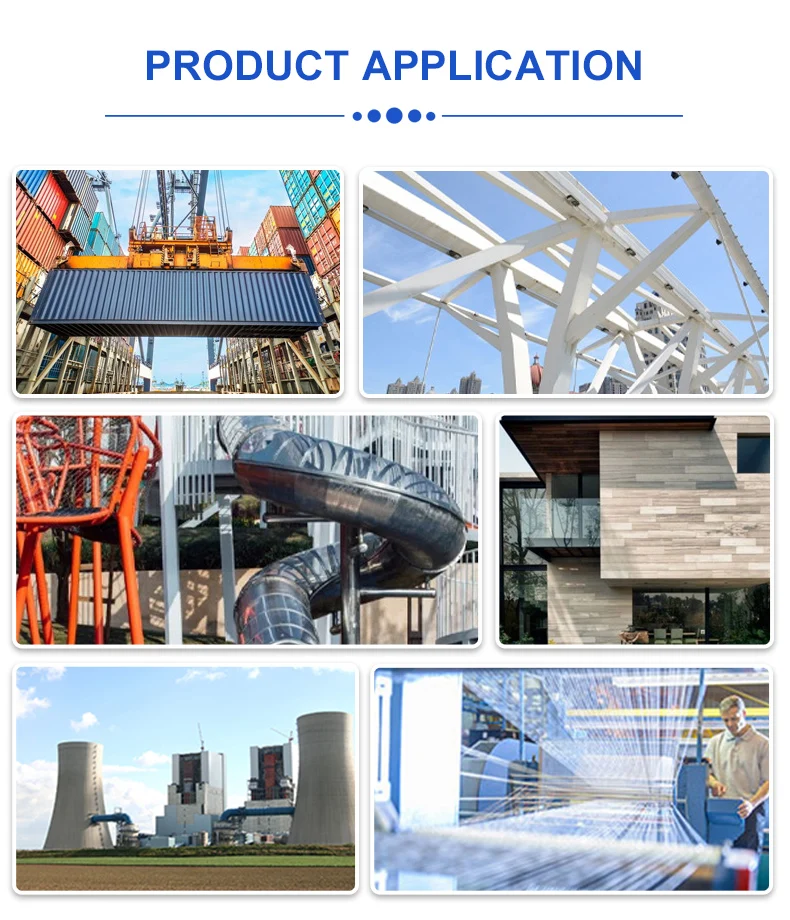
Application: Pressure vessels, boilers, heat exchangers, pipelines in high-temperature environments (around 350°C to 480°C).
What is ASTM A387 Grade 11 Class 2 equivalent to ?
ASTM A387 Grade 11 Class 2 is primarily equivalent to ASME SA387 Grade 11 Class 2 and fits within the 1.25Cr-0.5Mo alloy family, corresponding to ASTM A335 P11 for piping, A182 F11 for forgings, and the European standard EN 10028-2 13CrMo4-5.
What are the primary advantages of ASTM A387 Grade 11 Class2 material?
ASTM A387 Grade 11 Class 2 offers advantages like superior high-temperature strength, excellent creep resistance, and enhanced oxidation/corrosion resistance due to its chromium-molybdenum (Cr-Mo) alloy composition, making it ideal for high-pressure, high-temperature vessels in petrochemical, power, and industrial settings, with Class 2 indicating higher tensile strength and specific toughness requirements.
What is ASTM A387 Grade 11 Class2 material?
ASTM A387 Grade 11 Class 2 is a chromium-molybdenum (Cr-Mo) alloy steel plate designed for high-temperature service, particularly in boilers, pressure vessels, and heat exchangers, offering superior strength and resistance to oxidation/corrosion due to its ~1.25% chromium and ~0.50% molybdenum content, with Class 2 indicating higher strength achieved through specific heat treatment compared to Class 1.
| Property | Specification |
|---|---|
| Grade | ASTM A387 Gr 11 CL.2 Alloy Steel Plates |
| Standard | ASTM A387 / ASME SA387 |
| Width | 1000mm - 4500mm |
| Thickness | 5mm - 150mm |
| Length | 3000mm - 18000mm |
| Impact Tested | -52° C |
| Process | Hot-Rolled (HR) |
|
A387 Gr.11 CL.2Chemical Composition |
|||||||
|
Grade |
The Element Max (%) |
||||||
|
|
C |
Si |
Mn |
P |
S |
Cr |
Mo |
|
A387 Gr.11 Cl.2 |
0.04-0.17 |
0.44-0.86 |
0.35-0.73 |
0.035 |
0.035 |
0.94-1.56 |
0.40-0.70 |
Equivalent Grades for ASME SA387 Grade 11 Alloy Steel Plates Class 2 Plates
| COUNTRY | USA | EUROPEAN | GERMANY | ENGLAND | FRANCE | RUSSIA |
| STANDARDS | ASTM | EN 10028 | DIN | BS | AFNOR 36206 | GOST |
| Grade 11 | A387 | 13CrMoSi5-5 | - | 621B | - | - |
|
Grade |
A387 Gr.11 CL.2Mechanical Property |
|||
|
|
Thickness |
Yield |
Tensile |
Elongation |
|
A387 Gr.11 Cl.2 |
mm |
Min Mpa |
Mpa |
Min % |
|
|
t≦50 |
310 |
515-690 |
18 |
|
50 |
- |
- |
- |
|
|
Equivalent steel grade of A387 Gr.11 Cl.2 |
||||||||
|
Europe |
Belgium |
Germany |
France |
Italy |
Sweden |
India |
Japan |
U.K |
|
|
|
|
|
|
|
|
|
621 gr. A,B |
1 What precautions should be taken when weldingASTM A387 Grade 11 Class 2 ?
To weld ASTM A387 Grade 11 Class 2 successfully, you must implement strict preheating (typically 150°C+) and use low-hydrogen filler metals (like E8018-B2) to prevent cracking, followed by mandatory Post-Weld Heat Treatment (PWHT) to relieve residual stresses and temper the hardened heat-affected zone.
2 What is the composition of ASTM A387 Grade 11 Class2 ?
ASTM A387 Grade 11 Class 2 is a chromium-molybdenum (Cr-Mo) alloy steel with typical ranges of 1.00–1.50% Chromium (Cr) and 0.45–0.65% Molybdenum (Mo), plus small amounts of Carbon (C), Manganese (Mn), Phosphorus (P), Sulfur (S), and Silicon (Si), designed for high-temperature pressure vessels. Its composition provides excellent high-temperature strength, oxidation resistance, and creep resistance, making it ideal for applications in the oil, gas, and chemical industries.
3 What are the differences between ASTM A387 Grade 11 Class2 and ASTM A387 Grade 11 Class1 ?
ASTM A387 Grade 11 Class 2 is a higher-strength version of Class 1, offering superior tensile and yield strength through mandatory normalizing and tempering, whereas Class 1 has lower strength requirements and can be furnished in an annealed state for better ductility.
4 What temperature is ASTM A387 Grade 11 Class 2 ?
ASTM A387 Grade 11 Class 2 is a chromium-molybdenum steel for high-temperature pressure vessels, suitable for service from around 350°C (660°F) up to about 480°C (900°F), with excellent creep resistance, but it's important to check ASME Code stress tables for specific maximum allowable stress at actual operating temperatures, as its strength decreases with heat. It's delivered normalized and tempered, requiring a minimum tempering temperature of 620°C (1150°F).
5 What is the P number of ASTM A387 Grade 11 Class 2 ?
ASTM A387 Grade 11 Class 2, a chromium-molybdenum alloy steel, falls under P-Number 4 according to ASME Section IX welding code, indicating it's a recognized alloy grouping for welding procedure qualifications, often listed with other Group 1 steels in reference charts.
6 What is the hardness of ASTM A387 Grade 11 Class2 ?
ASTM A387 Grade 11 Class 2 steel is typically specified by its tensile and yield strength, not a specific hardness range, but its hardness is generally around 150 to 180 Brinell (HBW), with higher tensile strength (75-100 ksi) than Class 1, suitable for elevated temperature pressure vessels.
7 What are Common Testing Requirements for ASTM A387 Grade 11 Class 2 ?
Common testing for ASTM A387 Grade 11 Class 2 includes tensile tests (strength, yield, elongation) and chemical analysis, ensuring minimum yield strength (e.g., 43 ksi/310 MPa) and specified tensile strength (75-100 ksi/515-690 MPa), along with elongation requirements, plus normalizing and tempering heat treatments for elevated-temperature service, with focus on its 1.25% Cr / 0.50% Mo composition for corrosion resistance.
Contact us at info@gneesteels.comfor pricing, technical support, or customized solutions. We are always ready to support your project.


