

What is the key alloying element in this ASTM A203 Grade B?
The key alloying element in ASTM A203 Grade B is nickel (Ni), typically present in a range of2.1%−2.5%, which is added to improve notch toughness and tensile strength for low-temperature pressure vessel applications. As a "2% nickel steel," it is specifically designed for superior performance in welded boilers and pressure vessels.
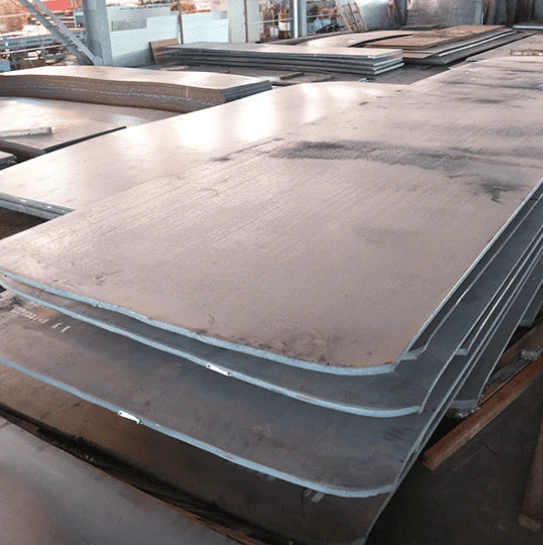
ASTM A203 Grade B is a nickel-bearing ferritic steel plate used for pressure-retaining components. It belongs to the 2.25% Nickel alloy family, which is the industry standard for moderate cryogenic applications. By altering the steel's internal matrix, the nickel content prevents the material from reaching its "brittle point" during normal operation in cold environments. This material is primarily utilized in the "Normalized" condition to ensure a uniform distribution of properties, making it a reliable choice for the construction of stationary storage tanks and industrial boilers that operate under high internal pressures and fluctuating thermal loads.
Key Characteristics
Consistent Microstructure: Usually supplied normalized to achieve a homogeneous pearlitic-ferritic structure across the entire plate thickness.
Impact Reliability: Passes mandatory Charpy V-notch tests to ensure safety against sudden loading in cold service.
Superior Toughness: Specifically engineered to avoid brittle cleavage, a common failure mode in non-alloyed steels at low temperatures.
Weldability Profile: Can be successfully welded using low-hydrogen techniques to maintain the integrity of the heat-affected zone.
Fabrication Versatility: Suitable for both cold and hot forming into cylindrical shells or dished heads.
Grade Designation
ASTM: American Society for Testing and Materials.
A: Prefix for Ferrous (iron-based) materials.
203: The specific standard for Nickel Alloy Steel pressure vessel plates.
Grade B: The higher tensile strength tier (70–90 ksi) within the 2.25% Nickel family.
Comparison (vs. ASTM A203 Grade A)
Carbon Content: Grade B permits a higher carbon limit (up to 0.21% depending on thickness) compared to Grade A (max 0.17%), which is the primary driver for its higher strength.
Mechanical Minimums: Grade B requires a minimum yield of 40 ksi, while Grade A only requires 37 ksi, allowing for higher allowable design stresses in Grade B.
Nickel Consistency: Both grades utilize the same 2.25% Nickel nominal content, meaning their low-temperature impact performance is virtually identical.
Application Focus: Grade A is often used for lighter-duty shells, whereas Grade B is the preferred "High Strength" choice for thicker-walled vessels or higher-pressure ratings.

Common Application
De-ethanizer Columns: Distillation towers in refineries that process hydrocarbons at low temperatures.
Liquid Ammonia Tanks: Storage systems for anhydrous ammonia, typically kept at -33°C.
Pressure Swing Adsorbers: Industrial gas purification vessels that experience rapid pressure and temperature shifts.
Chilled Water Surge Drums: Large-scale buffers for industrial cooling systems in skyscrapers or factories.
Manifolds for Gas Wells: Piping headers located in permafrost regions where ambient temperatures stay below freezing.
What are the key chemical elements in ASTM A203 Grade B?
ASTM A203 Grade B steel contains a significant amount of nickel (3.50-5.00%), which enhances its resistance to corrosion and improves its toughness. Other alloying elements include carbon, manganese, phosphorus, sulfur, and silicon. The carbon content is low to maintain ductility, while manganese helps with strength and hardness. The precise balance of these elements ensures the steel has high toughness and strength, especially in low-temperature environments where it performs exceptionally well.
What is ASTM A203 Grade B steel used for?
ASTM A203 Grade B steel is a 2.25% nickel-alloyed, normalized steel plate primarily used for welded pressure vessels, boilers, and storage tanks in moderate- to low-temperature service. It is commonly used in oil, gas, and chemical industries for low-temperature applications due to its high tensile strength and improved notch toughness.
How does the presence of nickel affect ASTM A203 Grade B?
The addition of approximately 2% nickel to ASTM A203 Grade B steel significantly enhances its, low-temperature toughness, fatigue resistance, and strength. As a nickel-alloy steel, it is primarily used for welded pressure vessels operating at low temperatures, relying on nickel to prevent brittle fracture, refine grain size, and maintain ductility in cold conditions.
A203 Grade B mechanical properties
Tensile Requirements |
ASTM A 203 |
|
|
Grade B |
||
|
ksi |
[MPa] |
|
|
Tensile strength |
||
|
2 in. (50 mm) & under |
70-90 |
[485-620] |
|
over 2 in. (50 mm) |
70-90 |
[485-620] |
|
Yield strength, min. |
||
|
2 in. (50 mm) & under |
40 |
[275] |
|
over 2 in. (50 mm) |
40 |
[275] |
|
Elongation in 8 in. (200 mm), min, % |
17 |
|
|
Elongation in 2 in. (50 mm), min, % |
21 |
|
|
A203 Grade BChemical Composition |
|||||
|
Grade |
The Element Max (%) |
||||
|
C |
Si |
Mn |
P |
S |
|
|
A203 Grade B |
0.17 |
0.13-0.45 |
0.78-0.88 |
0.035 |
0.035 |
1. What is the heat treatment process for ASTM A203 Grade B steel?
The heat treatment process for ASTM A203 Grade B steel generally involves a combination of heating and cooling steps to achieve the desired mechanical properties. The steel is heated to a high temperature to allow for uniform alloying, followed by controlled cooling to ensure strength and toughness. In some cases, additional tempering is performed to fine-tune the steel's mechanical properties, improving its resistance to fatigue and impact. Post-weld heat treatment (PWHT) is also commonly employed to relieve stresses after welding and to prevent cracking.
2. What is the weldability of ASTM A203 Grade B?
ASTM A203 Grade B steel has excellent weldability, which is one of its key advantages in the manufacturing of pressure vessels and other welded structures. Proper welding procedures, including pre-heating and post-weld heat treatment (PWHT), are recommended to prevent welding defects such as cracking. These processes ensure that the welds retain the steel's high strength and toughness. When welded correctly, ASTM A203 Grade B demonstrates good performance in structural integrity and long-term durability, even in extreme service conditions.
3. Can ASTM A203 Grade B be used in offshore applications?
Yes, ASTM A203 Grade B steel is widely used in offshore applications due to its excellent mechanical properties and resistance to low temperatures. Offshore platforms, drilling rigs, and pipelines often operate in harsh environments where materials must withstand not only pressure but also extreme weather conditions and corrosion. ASTM A203 Grade B's high strength, toughness, and ability to resist fatigue make it ideal for these demanding environments, ensuring safety and longevity for offshore infrastructure.
4. What are the common forms available for ASTM A203 Grade B steel?
ASTM A203 Grade B steel is primarily available in the form of plates, which can be further processed into components such as pressure vessel shells, tank walls, or heat exchanger parts. The plates are typically available in various thicknesses, allowing for the construction of large and small-scale pressure vessels. In some cases, the material may also be available in rolled or forged shapes, depending on the specific requirements of the application. This versatility makes it suitable for a wide range of industries, including aerospace, oil, and gas.
5. Is ASTM A203 Grade B suitable for cryogenic applications?
Yes, ASTM A203 Grade B is particularly well-suited for cryogenic applications due to its high nickel content, which significantly improves its toughness at low temperatures. This makes the material resistant to brittle fracture and ensures that it can perform reliably in extremely cold environments, such as those found in the storage and transportation of liquefied gases like LNG. Its strength and toughness remain stable, even at temperatures as low as -196°C (-320°F), making it ideal for cryogenic tanks and vessels.
6. What are the main advantages of ASTM A203 Grade B?
The primary advantages of ASTM A203 Grade B include its high strength, exceptional toughness, and excellent resistance to low temperatures and corrosion. Its nickel content makes it ideal for use in cryogenic applications, where most other steels would become brittle and fail. The material also has good weldability, making it easy to fabricate into complex shapes for pressure vessels, tanks, and other critical infrastructure. These properties make ASTM A203 Grade B particularly valuable in industries such as oil and gas, petrochemical, and offshore construction.
7. How does ASTM A203 Grade B perform in corrosive environments?
ASTM A203 Grade B steel has good corrosion resistance, particularly in marine and offshore environments, due to its high nickel content. The material is resistant to corrosion caused by exposure to saltwater, chemicals, and other harsh substances, making it suitable for use in industries such as oil and gas, marine construction, and petrochemical processing. Its resistance to stress corrosion cracking also enhances its durability, ensuring long-term performance in corrosive environments where other materials might degrade more quickly.
Contact us at info@gneesteels.com for pricing, technical support, or customized solutions. We are always ready to support your project.


