

What is the material equivalent of Q245R ?
Q245R is a Chinese GB 713 standard pressure vessel steel, with its closest international equivalent being ASTM A516 Grade 60. It is a commonly used carbon steel for boilers, pressure vessels, and storage tanks in the petroleum and chemical industries. Other related equivalents or similar grades include ASTM A285 Grade C.
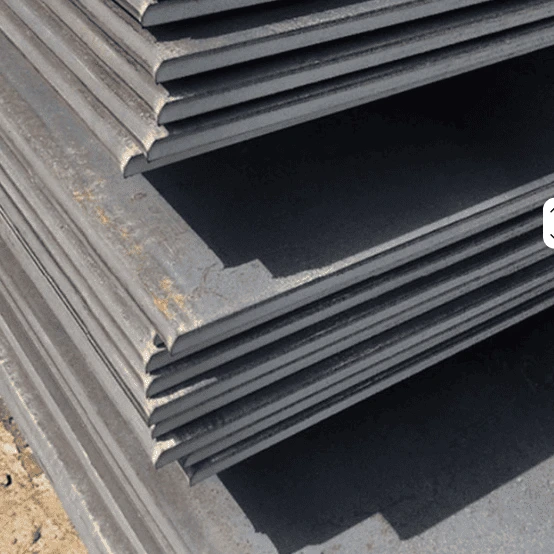
Q245R is an essential "workhorse" material in the Chinese pressure vessel industry, specifically designed for fusion-welded boilers and storage containers. It is classified as a carbon steel with moderate tensile strength, ranging from 400 to 520 MPa. The material is produced using oxygen converters or electric furnaces and is often delivered in the "as-rolled" or "normalized" condition to refine the grain structure. It is the baseline material for designers who need a balance of safety, ease of fabrication, and economic efficiency for non-corrosive service environments where the operating temperature does not exceed the limits of unalloyed steel.
Key Characteristics
Predictable Stress-Strain Behavior: Features a clear yield point, which simplifies calculations for safety factors in engineering design.
High Cold-Bending Performance: Can be rolled into cylindrical shells with a very low risk of surface cracking.
Refined Grain Structure: Standard manufacturing processes ensure a uniform ferritic-pearlitic microstructure.
Compatibility with Protective Linings: Its smooth surface is ideal for the application of glass linings, rubber linings, or anti-corrosion coatings.
Resistance to Brittle Fracture: Designed to absorb energy and deform rather than shattering under sudden impact or over-pressurization.
Grade Designation
Q: Stands for Yield Strength .
245: Minimum yield strength of 245 MPa.
R: Stands for Pressure Vessel .
Comparison (vs. ASTM A516 Grade 60)
Standard Origin: Q245R is a Chinese GB standard; A516 Gr 60 is an American ASTM standard.
Tensile Range: Q245R (400-520 MPa) is roughly equivalent to A516 Gr 60 (415-550 MPa), though the ranges differ slightly.
Chemical Limits: GB standards for Q245R have specific limits on trace elements like Copper and Nickel that differ from ASTM specifications.
Impact Testing: A516 often requires specific temperature-based Charpy tests; Q245R testing temperatures are dictated by the GB/T 713 code classes.
Common Application
Oil and Gas Separators: Horizontal or vertical vessels that divide raw well fluids into gas, oil, and water.
Standard Pressure Cookers/Autoclaves: Large-scale industrial units for food processing or medical sterilization.
Deaerator Tanks: Used in power plants to remove dissolved oxygen from boiler feedwater.
Condensate Return Tanks: Vessels that collect hot water for recycling back into steam systems.
Chemical Buffer Tanks: Used to stabilize flow rates between different stages of a chemical reaction process.
What is the yield strength of Q245R?
The yield strength of Q245R is typically around 245 MPa (35 ksi). This moderate yield strength allows it to withstand significant pressure in low-temperature environments without failure. This makes it an ideal choice for pressure vessels and other structural applications where both strength and toughness are needed under cryogenic conditions.
How does Q245R perform under stress?
Q245R exhibits good performance under stress due to its moderate tensile strength and excellent low-temperature toughness. It maintains structural integrity in moderate stress conditions and is resistant to brittle fracture at low temperatures. This makes it ideal for pressure vessels and tanks that experience both high-pressure and low-temperature conditions.
Is Q245R suitable for cryogenic temperatures?
Q245R is not designed for use in cryogenic temperatures. Its performance at extremely low temperatures, such as those below -40°C (-40°F), is not ideal due to its carbon content, which can cause brittleness. For cryogenic applications, materials such as low-alloy steels or stainless steels with better low-temperature toughness are recommended.
Q245R Chemical composition% of the Product analysis of grade
|
Grade |
C % |
Si % |
Mn % |
Cu % |
Ni % |
Cr% |
Mo % |
V % |
|
Q245R |
0.20 |
0.35 |
0.5-1.10 |
0.30 |
0.30 |
0.30 |
0.08 |
0.05 |
|
Ti % |
Alt % |
P % |
S % |
Nb |
|
|
|
|
|
0.03 |
0.02 |
0.025 |
0.01 |
0.05 |
|
|
|
Q245R Mechanical Property
|
Grade |
Thickness(mm) |
Min Yield |
Tensile |
Elongation |
Min Impact Energy |
|
|
|
|
|
|
|
Degree |
Min J |
|
Q245R |
3-16 |
245Mpa |
400-520 Mpa |
25% |
0 |
34J |
|
16-36 |
235 Mpa |
400-520 Mpa |
25% |
0 |
34J |
|
|
36-60 |
225 Mpa |
400-520 Mpa |
25% |
0 |
34J |
|
|
60-100 |
205 Mpa |
390-510 Mpa |
24% |
0 |
34J |
|
|
100-150 |
185 Mpa |
380-500 Mpa |
24% |
0 |
34J |
|
|
150-250 |
175 Mpa |
370-490 Mpa |
24% |
0 |
34J |
|
1. What is the impact strength of Q245R?
Q245R has a good impact strength, which is important for applications in pressure vessels that may experience high internal pressure. The material is designed to resist fracture and maintain its integrity under stress, which is essential for pressure vessels used in industries like power generation and chemical processing.
2. How does Q245R compare to Q345R?
Q245R and Q345R are both low-alloy steels used in pressure vessel applications, but Q345R has a higher yield strength of 345 MPa. This makes Q345R more suitable for higher pressure or more demanding environments. Q245R, while still a robust material, is typically used for less demanding applications compared to Q345R. Q345R offers better overall strength but may be more expensive.
3. What is the chemical composition of Q245R?
The chemical composition of Q245R steel typically includes carbon (0.18-0.22%), manganese (0.60-1.20%), silicon (0.15-0.30%), phosphorus (≤ 0.035%), sulfur (≤ 0.035%), and a small amount of copper (≤ 0.20%). The balance is iron (Fe). This composition ensures a good combination of strength, weldability, and formability, making Q245R suitable for pressure vessels and boilers.
4. What is the tensile strength range of Q245R?
The tensile strength of Q245R ranges from 410 MPa to 550 MPa (60-80 ksi). This range makes it suitable for pressure vessel applications where both strength and ductility are required. The material can handle moderate tensile stresses while maintaining excellent impact resistance, making it ideal for low-temperature, high-pressure environments.
5. What is the role of manganese in Q245R?
Manganese in Q245R plays a crucial role in improving the steel's toughness and hardness. It also enhances the steel's ability to resist oxidation during heat treatment. Manganese is a key alloying element that helps ensure the material's strength, particularly at higher temperatures, and supports the weldability of Q245R, making it ideal for pressure vessel fabrication.
6. What is the maximum thickness of Q245R?
Q245R steel can typically be used in thicknesses ranging from 6 mm to 50 mm for pressure vessels. For thicker sections, additional heat treatment, such as normalizing or annealing, may be necessary to ensure consistent mechanical properties. The material can be used in a variety of thicknesses depending on the specific requirements of the pressure vessel or boiler construction.
7. Can Q245R be welded?
Yes, Q245R has excellent weldability. It is commonly welded using standard welding techniques such as SMAW, GMAW, and GTAW. Preheating may be required for thicker sections to avoid cracking, particularly in low temperatures. Post-weld heat treatment can also improve the mechanical properties and reduce residual stresses in the welded joints, ensuring strength and integrity.
If you have project requirements for Q245R , we welcome your inquiry. GNEE maintains a large inventory of commonly used high strength steel grades for your selection.For detailed mechanical properties, chemical composition, and technical data, as well as free samples, please contact our factory immediately. We offer competitive prices, stable quality, and professional service. Email: info@gneesteels.com


