

What is the typical chemical composition of P500Q steel?
P500Q steel (EN 1.8873) is a quenched and tempered alloy steel with a typical composition including max 0.18% Carbon (C), max 0.6% Silicon (Si), max 0.3% Copper (Cu), max 0.02% Phosphorus (P), and trace amounts of Vanadium (V), Niobium (Nb), and Titanium (Ti), primarily alloyed with Nickel (Ni) for enhanced properties, making it suitable for pressure vessels and high-strength applications.

P500Q is an ultra-high-strength, fine-grained structural steel designed for pressure purposes. It is governed by the European standard EN 10028-6. This grade is specifically engineered to handle extreme internal pressures while maintaining a high degree of ductility. It undergoes a rigorous Quenching and Tempering (+QT) process to achieve a yield strength that is significantly higher than standard boiler plates.
Key Characteristics
Exceptional Yield Strength: Provides a minimum yield of 500 MPa, allowing for massive pressure retention.
High Tensile Range: Exhibits a tensile strength between 590 and 770 MPa, ensuring structural integrity under load.
Elasticity: Maintains a high modulus of elasticity, essential for predicting deformation in high-stress vessel designs.
Impact Resistance: Guaranteed toughness at -20°C with a minimum absorbed energy of 27J.
Decoding the Name
P: Denotes steel for Pressure purposes.
500: Indicates the minimum Yield Strength of 500 MPa (for thicknesses 50mm).
Q: Signifies the Quenched and Tempered delivery condition.
Comparison
Vs. P355QL1: P500Q is roughly 40% stronger than P355QL1. While P355QL1 focuses on extreme low temperatures (-40°C), P500Q focuses on maximizing pressure capacity at moderate temperatures.
Vs. S500Q: Though both have 500 MPa yield, P500Q is tested for internal purity and high-temperature pressure stability, which the structural grade (S) may lack.
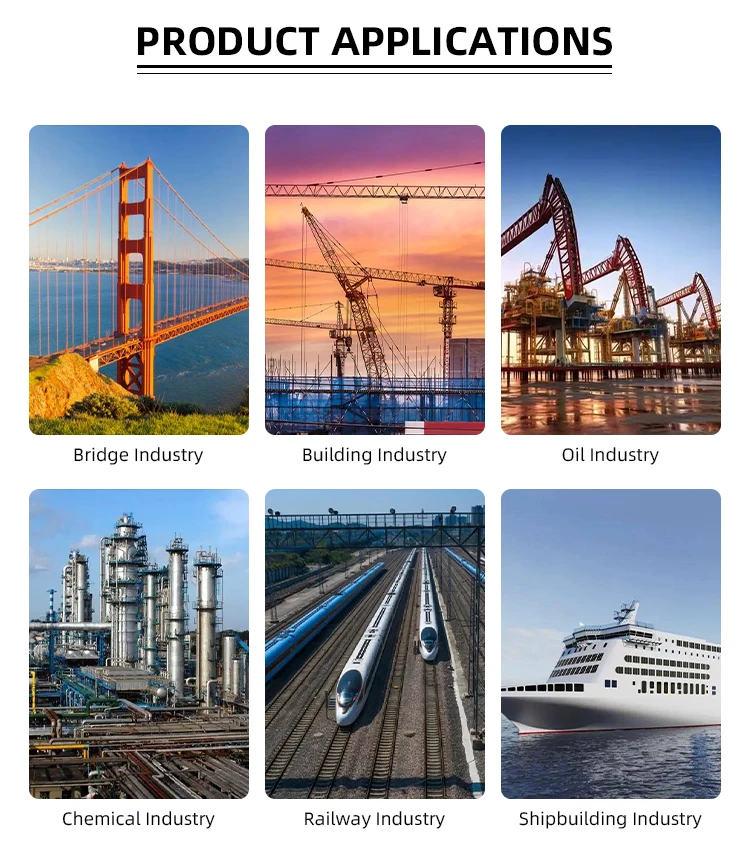
Common Application
High-Pressure Boilers: Used in power plants where steam pressure exceeds the capacity of standard grades.
LPG/LNG Transport: Used in the shells of transport tankers where weight reduction is critical.
Chemical Reactors: Large-scale vessels that house exothermic reactions under intense pressure
Thickness: 6MM to 300MM,
Width: 1500mm to 4050mm,
Length: 3000mm to 15000mm
Is P500Q considered a weldable material?
Yes, P500Q (EN 10028-6 P500Q) is specifically a weldable fine-grain steel designed for pressure equipment and high-temperature applications, known for its good weldability due to its quenched and tempered (Q&T) condition, making it suitable for critical welded structures.
What are the primary welding risks for P500Q?
Welding P500Q (likely a type of steel) carries core risks like electric shock, intense UV/IR radiation burns (arc eye/skin), fires/explosions from sparks/hot slag, and respiratory hazards from metal fumes/gases (manganese, chromium, etc.), impacting eyes, skin, lungs, and nerves, requiring strict PPE (helmets, gloves, ventilation) for safety, as common to most arc welding but intensified by specific material fumes.
Is preheating required when welding P500Q?
Yes, preheating is generally required when welding P500Q (a type of high-strength/abrasion-resistant steel), as it's crucial for preventing hydrogen-induced cracking, reducing thermal stress, and achieving proper metallurgical structure, though specific temperatures depend on thickness, code, and welding procedure. P500Q's chemistry and thickness demand slower cooling rates, which preheating provides, preventing brittleness in the Heat Affected Zone (HAZ).
P500Q Grade Chemical Composition:
|
Standard |
C % max |
Si max |
Mn max |
P max |
S max |
Mo max |
Ni max |
Cr max |
|
P500Q |
0.18 |
0.6 |
1.7 |
0.025 |
0.015 |
0.7 |
1.5 |
1 |
| pecification | Details |
|---|---|
| Material | P500Q Steel |
| Thickness Range | 10mm to 350mm |
| UT Testing | Yes, to ensure material integrity and safety |
| Cutting Method | Precision Cutting Services |
| Corrosion Resistance | Excellent for harsh, corrosive environments |
| Tensile Strength | High tensile strength for high-pressure applications |
| Yield Strength | Strong resistance to deformation under stress |
| Standard Compliance | ISO 9001:2015, ASME, EN 10028-6 |
1What is the fundamental definition of P500Q steel?
P500Q steel is a European standard (EN 10028-6) weldable, fine-grain structural steel designed for high-temperature applications, known for its Quenching & Tempering (Q) heat treatment, providing good strength and toughness, with "P" for pressure vessel/plate and "500" indicating a minimum yield strength of 500 MPa. Its designation signifies excellent formability and weldability for critical components like boilers and pressure vessels, offering enhanced mechanical properties.
2What does 500 mean In P500Q steel ?
In P500Q steel (EN 10028-6), the "500" signifies a minimum yield strength of 500 Megapascals (MPa), a key mechanical property indicating its load-bearing capacity, while the "Q" denotes quenching and tempering (Q&T), a heat treatment process for enhanced strength, and also implies Charpy impact testing at -20°C with 27 Joules of energy. This grade is a weldable, fine-grain steel used for high-temperature applications like pressure vessels.
3Which industrial standard governs the production of P500Q?
The P500Q designation refers to a grade of steel plate, primarily governed by the European standard EN 10028-6, which specifies pressure vessel steel plates, with "Q" indicating a quenched and tempered delivery condition for improved strength, often requiring compliance with regulations like the Pressure Equipment Directive (PED) 97/23/EC for CE marking.
4What is the typical delivery condition for P500Q?
For P500Q steel, the typical delivery condition is +QT (Quenched and Tempered), as it's a high-strength, weldable fine-grain steel for pressure vessels and boilers, meaning it undergoes water quenching and tempering to achieve its excellent mechanical properties, though as-rolled delivery with simulated testing is also possible, notes ASM International and JOIN-WIN STEEL.
5What are the typical carbon limits for P500Q?
For P500Q steel (EN 10028-6), a common carbon limit is ≤ 0.16%, often paired with quenching and tempering (Q) for low-temperature, high-strength pressure vessel applications, though specific requirements can vary by manufacturer and standard, with some even aiming for lower carbon equivalents like <0.13% for better weldability.
6What is the tensile strength range for P500Q grade?
The tensile strength for P500Q (EN 1.8873) steel varies by thickness, but generally falls in the range of 590-770 MPa (86-112 ksi) for thicknesses up to 100mm, and slightly lower, 540-720 MPa (78-104 ksi), for thicknesses between 100-150mm, after quenching and tempering (+QT).
7What Is The Difference Between P500Q And P500QL1 steel ?
The main difference between P500Q and P500QL1 steel lies in their impact toughness requirements, specifically the test temperature for Charpy V-notch impact tests, with the 'L1' designation indicating a lower, more demanding test temperature for improved brittle fracture resistance, crucial for cold-weather applications, while 'Q' signifies quenched and tempered, and 'L' (in QL) also points to low-temp toughness. Both are high-strength, weldable steels, but P500QL1 offers superior performance in extremely cold conditions compared to P500Q.
Full specification and details are available on request. The above information is provided for guidance purposes only. For specific design requirements please contact our technical sales staff


