

What is the weldability of ASME SA533 Grade B?
ASME SA533 Grade B is a manganese-molybdenum-nickel alloy steel with excellent, straightforward weldability, specifically designed for thick-walled pressure vessels and nuclear applications. It can be welded using common industrial methods, including submerged arc (SAW) and electroslag welding (ESW), even in heavy sections.
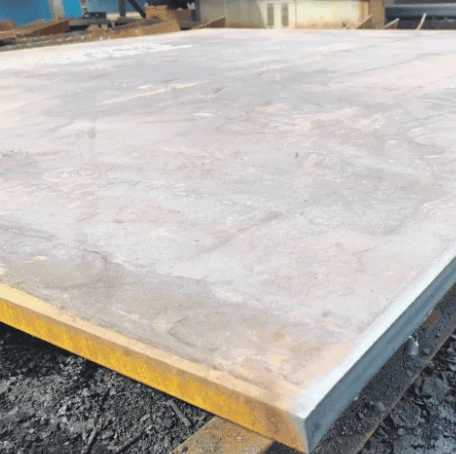
ASME SA513 Grade B is a critical infrastructure material that undergoes a lifespan of roughly 60 years in one of the most hostile environments on earth. It is a Manganese-Molybdenum-Nickel alloy steel that provides the primary structural strength for a nuclear power plant's reactor circuit. Because of the extreme thickness and safety requirements, only a few specialized mills in the world are capable of producing this grade to the required levels of purity and through-thickness mechanical uniformity.
Key Characteristics
Long-Term Reliability: Proven track record in the global nuclear fleet.
Weld-Joint Efficiency: Responds perfectly to submerged arc welding (SAW) for thick joints.
Zero-Defect Standard: Subjected to 100% volumetric inspection.
Creep Resistance: Good stability at the constant operating temperatures of a reactor.
Grade Designation
"SA": ASME Section II (Ferrous Material) identifier.
"533": The specification for Manganese-Molybdenum-Nickel alloy plates.
"Grade B": Specifies the Mn-Mo-Ni chemical balance
Comparison (vs. SA537 Class 2)
Strength: SA533 (80 ksi) is stronger than SA537 (60 ksi yield).
Thickness: SA537 is limited to 4"; SA533 can go up to 12"+.
Alloy System: SA537 is a carbon-manganese steel; SA533 is a nickel-alloy steel.
Price: SA533 is significantly more expensive due to Nickel and Molybdenum.
Common Applications
Vessel Closure Heads: The removable top of the reactor vessel.
Bottom Heads: The hemispherical base of the RPV.
Safety Injection Tanks: Vessels that hold emergency cooling water.
Heavy-Wall Industrial Separators: For high-pressure offshore gas processing.
What is the weldability of ASME SA533 Grade B?
Yes, ASME SA533 Grade B is weldable. However, due to its alloy content, specific welding procedures should be followed to ensure high-quality welds. Preheating and post-weld heat treatment (PWHT) may be required, especially for thicker plates, to relieve residual stresses and reduce the risk of cracking. The use of appropriate filler materials is also important to maintain the material's mechanical properties in the welded area.
What is the tensile strength of ASME SA533 Grade B?
The tensile strength of ASME SA533 Grade B is typically between 70 ksi and 90 ksi (485–620 MPa). This high tensile strength ensures that the material can withstand significant mechanical stress, making it ideal for use in applications such as pressure vessels, heat exchangers, and other critical components where strength and durability are essential.
What is the phosphorus content in ASME SA533 Grade B?
The phosphorus content in ASME SA533 Grade B is limited to a maximum of 0.035%. Low phosphorus content is essential for ensuring that the steel remains ductile and does not become brittle, particularly when exposed to high pressures and low temperatures. Controlling the phosphorus content helps prevent the formation of harmful inclusions that can compromise the material's mechanical properties.
| ASME SA533 Grade B -Chemical Composition | |
| Element | Grade B Class 2 (GrB Cl2) |
| Carbon (C) | ≤ 0.25 |
| Silicon (Si) | 0.15–0.40 |
| Manganese (Mn) | 1.15–1.50 |
| Phosphorus (P) | ≤ 0.012 |
| Sulfur (S) | ≤ 0.015 |
| Vanadium (V) | ≤ 0.01 |
| Nickel (Ni) | 0.40–0.70 |
| Copper (Cu) | ≤ 0.10 |
| Molybdenum (Mo) | 0.45–0.60 |
| ASME SA533 Grade B – Tensile Requirements | |
| Property | Grade B Class 2 (GrB Cl2) |
| Yield Strength (ReL, MPa) | ≥ 485 MPa (70 ksi) |
| Tensile Strength (Rm, MPa) | 620–795 MPa (90–115 ksi) |
| Elongation (min) | 16% (in 2 inches or 50 mm) |
1. What is the silicon content in ASME SA533 Grade B?
The silicon content in ASME SA533 Grade B typically ranges from 0.15% to 0.35%. Silicon is used to improve the steel's deoxidation and contribute to the material's overall strength and resistance to high-temperature oxidation. The controlled silicon content helps enhance the material's performance in high-pressure environments, making it more durable for use in industrial applications like pressure vessels and reactors.
2. What is the sulfur content in ASME SA533 Grade B?
The sulfur content in ASME SA533 Grade B is typically limited to 0.035%. Low sulfur content is crucial for ensuring the steel's toughness and preventing the formation of harmful sulfide inclusions that could weaken the material or cause defects during welding. This is especially important in pressure vessels and other high-stress applications where material integrity is critical.
3. What are the mechanical properties of ASME SA533 Grade B?
The mechanical properties of ASME SA533 Grade B include a tensile strength ranging from 70 to 90 ksi (485–620 MPa). The material also offers a yield strength of approximately 50 ksi (345 MPa) and elongation of at least 20% in 8 inches (200 mm). These properties make SA533 Grade B suitable for use in applications requiring high strength and impact resistance, particularly in pressure vessels and boilers.
4. What is the impact toughness requirement for SA533 Grade B?
ASME SA533 Grade B must meet specific toughness requirements, which are ensured through impact testing. The material is required to withstand a minimum energy absorption of 20 ft-lbs (27 J) at temperatures of -50°F (-46°C). This ensures that the steel can maintain its structural integrity and resist brittle fracture even under cold conditions, making it suitable for use in critical, high-stress environments.
5. What is the carbon content of ASME SA533 Grade B?
The carbon content of ASME SA533 Grade B typically ranges from 0.12% to 0.18%. The relatively low carbon content improves the steel's weldability and reduces the risk of cracking during welding, while still maintaining the material's strength and toughness. This allows it to be used in a variety of critical applications, including pressure vessels and other high-stress environments.
6. What is the heat treatment process for ASME SA533 Grade B?
ASME SA533 Grade B is typically heat-treated by quenching and tempering. The material is heated to a high temperature, quenched to achieve a hardened structure, and then tempered to reduce brittleness while retaining strength. This heat treatment process improves the material's overall mechanical properties, such as tensile strength, yield strength, and toughness, making it suitable for high-stress and low-temperature applications.
7. What is the manganese content in ASME SA533 Grade B?
The manganese content in ASME SA533 Grade B typically ranges from 0.60% to 1.30%. Manganese is a key alloying element that improves the material's strength, hardness, and toughness. It also helps in deoxidation during steel production and increases the material's resistance to wear and deformation. The manganese content plays a crucial role in the performance of SA533 Grade B in demanding applications.
Full specification and details are available on request. The above information is provided for guidance purposes only. For specific design requirements please contact our technical sales staff


