

What is the welding performance of Q345R?
Q345R is a low-alloy, high-strength pressure vessel steel with excellent welding performance, characterized by good ductility, toughness, and resistance to cold cracking. It is highly suitable for welding with methods like SAW and MAG, typically producing joints with tensile strengths exceeding 565 MPa and high impact energy. It exhibits good toughness in both the base metal and heat-affected zone.

Q345R is a type of low-alloy steel primarily designed for manufacturing pressure vessels, such as boilers and storage tanks, that operate under high temperature and pressure conditions. It is defined under the Chinese GB 713-2014 standard, which specifies the requirements for steel plates used in pressure vessel construction. This steel grade is widely used in industries that require materials capable of withstanding high pressures and temperatures, such as chemical, petrochemical, and power generation industries.
Key Characteristics of Q345R:
Yield Strength: 345 MPa - this means the steel can withstand up to 345 megapascals of force before it starts to permanently deform.
Tensile Strength: 470–630 MPa - showing high resistance to breakage under stress.
Elongation: Greater than 20% - indicating a high level of ductility and ability to stretch without cracking.
Impact Toughness: It maintains good toughness even in low temperatures, which is essential for pressure vessels that may be exposed to colder environments.
Weldability: Q345R is highly weldable without much risk of cracking or defects in welded joints, ensuring reliable structural integrity.
Corrosion Resistance: Though not as corrosion-resistant as stainless steel, it performs well in typical industrial conditions and can be used with protective coatings.
Grade Designation:
Q345R is part of the GB 713-2014 standard for pressure vessel steel plates in China.
The "Q" refers to the yield strength of 345 MPa, while the "R" indicates it is designed for pressure vessel applications.
The material falls within a class of low-alloy steels optimized for strength and toughness in high-temperature environments.
It differs from lower grades like Q235 (lower yield strength) and Q345 (general-purpose structural steel) due to its specialized focus on pressure vessels.
Comparison:
Q345R vs. Q460:
Q460 has a higher yield strength (460 MPa) compared to Q345R, offering even greater structural strength for highly demanding applications.
While Q460 is used for heavy-duty structural components, Q345R is specifically tailored for pressure vessels and thermal processing applications, where strength, toughness, and resistance to high pressure are crucial.Q345R offers greater strength and is specifically formulated for high-pressure environments, making it ideal for pressure vessels and boilers.
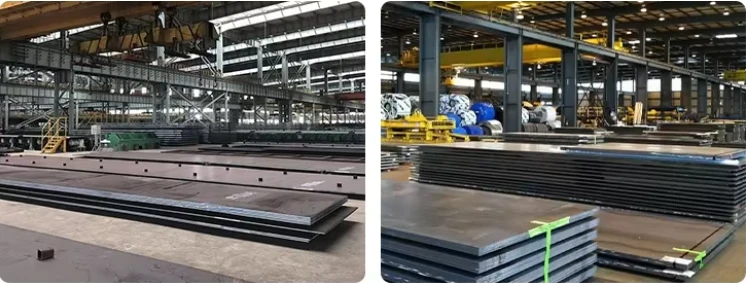
Common Applications of Q345R:
Pressure Vessels: Used extensively in industries such as petrochemical, chemical, and oil and gas for storing and processing fluids under pressure.
Boilers: Essential in the manufacture of high-pressure steam boilers, often found in power generation plants.
Storage Tanks: Used in large storage tanks for hazardous materials, ensuring the tanks can handle internal pressure without failing.
Heat Exchangers: Employed in the design of heat exchangers for energy transfer, especially in industries with high-temperature fluids.
Piping Systems: Vital for piping systems that carry high-pressure fluids, including steam, hot water, and chemical compounds, especially in industrial plants.
What is the impact toughness of Q345R?
Q345R has good impact toughness, particularly at low temperatures, making it resistant to cracking and brittle failure in harsh operating environments, which is essential for pressure vessels exposed to fluctuating temperatures.
What standards does Q345R comply with?
Q345R is primarily governed by the Chinese GB 713 standard, which specifies the material requirements for steel plates used in pressure vessels. It is also compatible with international standards such as ASME and ASTM for pressure vessel applications.
What is the tensile strength of Q345R?
The tensile strength of Q345R ranges from 470 MPa to 630 MPa, which indicates its ability to withstand high stress before breaking. This makes it suitable for applications involving high-pressure environments.
The mechanical properties of Q345R vary based on plate thickness:
| Thickness (mm) | Yield Strength (MPa) | Tensile Strength (MPa) | Elongation (%) | Impact Test Temp (°C) | Min. Absorbed Energy (J) |
|---|---|---|---|---|---|
| ≤16 | ≥345 | 510-640 | ≥21 | 0 | ≥41 (longitudinal) |
| >16-36 | ≥325 | 500-630 | ≥21 | 0 | ≥41 |
| >36-60 | ≥315 | 490-620 | ≥21 | 0 | ≥41 |
| >60-100 | ≥305 | 490-620 | ≥20 | 0 | ≥41 |
| >100-150 | ≥295 | 480-610 | ≥20 | 0 | ≥41 |
| >150-250 | ≥285 | 470-600 | ≥20 | 0 | ≥41 |
Main chemical elements composition
| C | Si | Mn | P | S | Alt(min.) |
| ≤0.20 | ≤0.55 | 1.20-1.60 | ≤0.025 | ≤0.015 | ≥0.020 |
1. What is Q345R?
Q345R is a low-alloy steel designed for use in pressure vessels, boilers, and other equipment subjected to high temperature and pressure. It meets the Chinese GB 713 standard and offers good weldability, high strength, and resistance to deformation under pressure, making it ideal for industrial applications.
2. Is Q345R suitable for low-temperature environments?
Yes, Q345R is designed to perform well in low-temperature conditions. Its impact toughness remains high even at low temperatures, making it a reliable choice for pressure vessels and equipment that may operate in colder climates.
3. What is the chemical composition of Q345R?
Q345R typically contains carbon (C), manganese (Mn), silicon (Si), phosphorus (P), sulfur (S), and trace amounts of other elements like copper (Cu) and nickel (Ni). The precise composition ensures the steel's strength, weldability, and toughness at high pressures and temperatures.
4. What is the elongation of Q345R?
Q345R typically has an elongation of over 20%. This means it can stretch more than 20% of its original length before breaking, which contributes to its ductility and resistance to cracking under pressure.
5. What industries use Q345R?
Q345R is used across various industries including petrochemical, power generation, and manufacturing. It is especially favored in the production of pressure vessels, storage tanks, boilers, and piping systems that require materials capable of withstanding high temperatures and pressures.
6. Can Q345R be used in the construction of boilers?
Yes, Q345R is commonly used in the construction of high-pressure boilers, particularly in power generation plants. Its high strength, toughness, and heat resistance make it ideal for the demanding conditions found in boiler systems.
7. What is the welding procedure for Q345R?
Q345R can be welded using traditional methods such as arc welding, gas tungsten arc welding (TIG), and gas metal arc welding (MIG). Preheating may be required for thicker sections to avoid welding defects like cracks.
For more details about GNEE's steel products, contact us at info@gneesteels.com. We look forward to working with you.


