

What is the maximum allowable stress value for S890Q ?
S890Q is a high-strength structural steel with a minimum yield strength of 890 MPa (129 ksi) and tensile strength typically between 940-1100 MPa, but the allowable stress depends on the specific design code (like Eurocode or AISC), safety factors, thickness, and application, usually found by dividing yield strength by a safety factor (e.g., around 500-600 MPa for general structural design), so always check the relevant design code for your project.

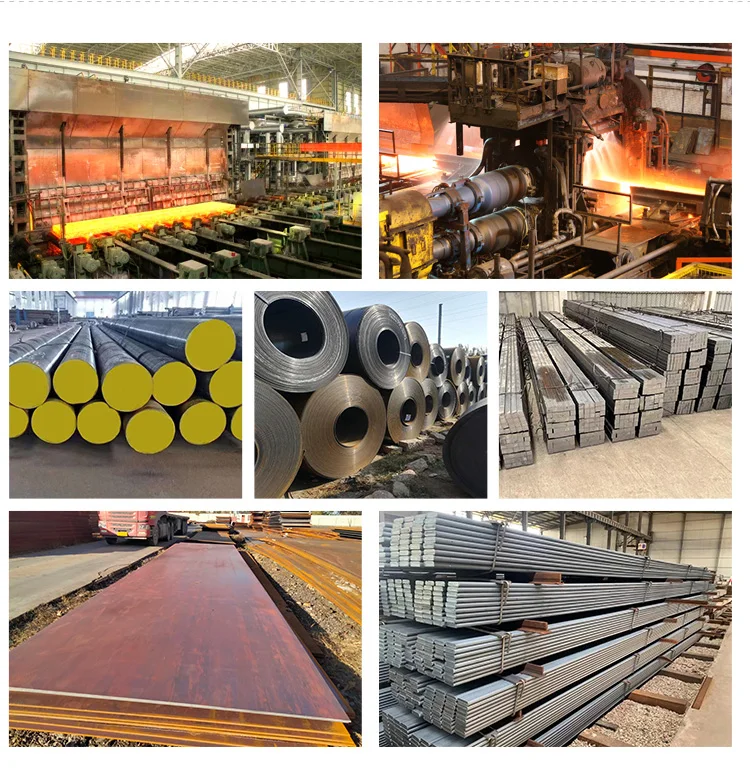
S890Q steel sheet also named as S890Q high strength low alloy steel plate under steel specification EN 10025-6 which is for hot rolled structural steels with high yield strength and tensile strength in quenched and tempered delivery condition.Quenching operation which consists of cooling a ferrous steel plate more rapidly than in still air.Tempering heat treatment applied to a ferrous steel plate generally after quench hardening or other heat treatment to bring the properties to the required level.
S890Q high strength steel sheet hot rolled steel sheet for structure
Grade S890Q is Alloy special steel with specified minimum values of impact energy at temperatures not lower than -20 ° C.
It's Hot rolled steel plate of structural steels. Technical delivery conditions for flat products of high yield strength structural steels in the quenched and tempered condition.
Key Characteristics:
High Strength: Minimum yield strength of 890 N/mm² (MPa).
Quenched & Tempered (Q): Heat-treated for enhanced strength and toughness, making it weldable.
Fine-Grained: Refers to its microstructure, contributing to its toughness.
High-Performance Applications: Ideal for extreme load conditions in construction, vehicles, lifting equipment, and offshore structures.
Notation Breakdown:
S: Structural steel.
890: Minimum yield strength in MPa.
Q: Quenched and tempered delivery condition.
Production Size: Thickness: 4mm- 400mm; Width: 1000mm- 4000mm; Length: 4000mm- 12000mm.
Production ability:10000 Tons Per Month.
Production Way: Hot Rolled, Quenched( Q).
Techanical Details:
Heat Treatment: Normalized, Quenched, Tempered, HIC, Impact Test,..( Optional if not provided in rules)
What is the composition of S890Q ?
S890Q is a high-strength, weldable fine-grained structural steel (EN 10025-6 standard) quenched and tempered for high-load applications, with a typical composition including maximums for Carbon (C), Phosphorus (P), Sulfur (S), and smaller additions of Silicon (Si), Manganese (Mn), Chromium (Cr), Molybdenum (Mo), Nickel (Ni), Vanadium (V), Copper (Cu), Aluminum (Al), Niobium (Nb), and Titanium (Ti) to achieve properties like 890 MPa yield strength. Key elements are generally limited to ~0.20% C, ~0.80% Si, ~1.70% Mn, ~0.025% P, and ~0.015% S, with alloying elements like Mo, Cr, Ni, and V providing strength.
What is the maximum allowable stress value for S890Q ?
S890Q is a high-strength structural steel with a minimum yield strength of 890 MPa (129 ksi) and tensile strength typically between 940-1100 MPa, but the allowable stress depends on the specific design code (like Eurocode or AISC), safety factors, thickness, and application, usually found by dividing yield strength by a safety factor (e.g., around 500-600 MPa for general structural design), so always check the relevant design code for your project.
What are the typical application fields of S890Q ?
S890Q is a high-strength, quenched and tempered structural steel used in applicationsdemanding extreme loads, such as heavy machinery (mining, construction, lifting equipment), transportation, bridges and trestles, and the offshore industry (wind turbine supports, drilling rigs). Its high yield strength (890 MPa) and excellent weldability make it ideal for highly stressed components in sectors like engineering, automotive, and agriculture.
S890Q Grade steel chemical composition %
|
Grade |
C max |
Si max |
Mn max |
P max |
S max |
Nb max |
V max |
Zr max |
Ti max |
Cr max |
Ni max |
Mo max |
Cu max |
N max |
B max |
|
S890Q Grade F |
0.20 |
0.80 |
1.70 |
0.020 |
0.010 |
0.06 |
0.12 |
0.15 |
0.05 |
1.50 |
2.0 |
0.70 |
0.50 |
0.015 |
0.005 |
Mechnical property for S890Q steel plate:
| Thickness (mm) | |||
| S890Q | ≥ 3 ≤ 50 | > 50 ≤ 100 | > 100 |
| Yield strength (≥Mpa) | 890 | 830 | 830 |
| Tensile strength (Mpa) | 940-1100 | 880-1100 | 880-1100 |
1What is S890Q high speed steel?
S890Q is a European standard (EN 10025-6) high-strength, fine-grain structural steel known for its very high yield strength (minimum 890 MPa) after being quenched and tempered, making it ideal for heavy-duty, load-bearing structures like construction equipment, bridges, and offshore rigs, offering excellent strength, toughness, and good weldability for its strength class, unlike traditional high-speed steels used for cutting tools.
2What is the P number of S890Q ?
For S890Q high-strength structural steel, the P-number in welding (per ASME/AWS standards) typically places it in P-Number 1 (P1), as it's a low-alloy, quenched and tempered steel, often grouped with other carbon steels, though sometimes specific P-numbers like P91 might apply for higher-alloy versions, but standard S890Q falls into the general P1 category for its basic composition.
3What are the primary advantages of S890Q ?
S890Q's primary advantages are its exceptional high yield strength (≥890 MPa) and excellent toughness, enabling significant weight reduction, cost savings (due to less material, transport), greater design freedom (thinner elements, longer spans), and improved performance in heavy-load applications like cranes, bridges, and heavy machinery, despite needing careful handling during welding due to its high strength.
4What is the hardness of S890Q ?
S890Q is a high-strength structural steel with a minimum yield strength of 890 MPa, delivered in a quenched and tempered (Q) condition, but its specific hardness (Brinell or Rockwell) isn't a single fixed number; it's typically very high, often around 260-320 HBW (Brinell) or higher, depending on the exact thickness and supplier, reflecting its extreme strength, with values generally exceeding 900 MPa tensile strength.
5What welding rod for S890Q ?
For welding S890Q high-strength steel, you need a high-strength filler metal matching its yield strength (890 MPa), with common choices including TIG rods like ER120S-1 (AWS A5.28, EN ISO 16834-A: W 89 5 I1 Mn4Ni2CrMo) or stick electrodes such as E9018-M or equivalent high-strength low-alloy (HSLA) types, designed for quenched & tempered steels, ensuring excellent toughness and mechanical properties, often with Nickel/Molybdenum/Chromium alloying. Always follow codes (like AWS/ASME) and manufacturer guidelines for preheat/PWHT.
6What are common testing requirements for S890Q ?
Common testing for S890Q steel involves mandatory tensile tests (yield/tensile strength, elongation) and Charpy V-notch impact tests (typically at -20°C for 30J) per heat/batch, conforming to EN 10025-6, along with heat analysis, with optional ultrasonic testing (UT) or product analysis. Tests are done on longitudinal specimens (impact) or transverse (tensile for thinner plates), ensuring mechanical properties and chemical composition meet standards for this high-strength, quenched & tempered steel used in heavy machinery and structures.
7What is S890Q equivalent to?
S890Q is a European high-yield strength structural steel (EN 10025-6) with a minimum yield strength of 890 MPa, often equivalent to Chinese Q890 steel, and is used for heavy-duty applications, with variations like S890QL (for -50°C impact) and S890QL1 (for -60°C impact) also available, similar in function to other quenched and tempered (Q&T) high-strength steels.
Full specification and details are available on request. The above information is provided for guidance purposes only. For specific design requirements please contact our technical sales staff


