

What is the heat treatment process for ASME SA537 Class 3?
ASME SA537 Class 3 steel plates undergo a quenching and tempering (Q&T) heat treatment process to achieve high strength and improved toughness for pressure vessel applications. The material is heated to an austenitizing temperature, quenched in water or oil, and then tempered at a minimum temperature of1150∘F(620∘C).

ASME SA537 Class 3 represents the peak of carbon-manganese-silicon steel technology within the ASME Boiler and Pressure Vessel Code. By utilizing a liquid quench and temper thermal cycle, this grade bridges the gap between low-cost carbon steels and high-cost alloy steels. It is favored by design engineers because its high allowable stress values permit a reduction in the required wall thickness of vessels. This "weight-saving" capability not only reduces the total cost of materials but also simplifies logistics, reduces foundation loads, and decreases the amount of welding filler metal required during the fabrication of large-scale industrial equipment.
Key Characteristics
Thermal Stability: Maintains its mechanical properties during long-term exposure to design temperatures up to 700F
Low Transition Temperature: Features a low ductile-to-brittle transition temperature (DBTT), vital for safety in arctic or cryogenic-adjacent service.
Surface Quality: The Q&T process results in a cleaner, more stable surface oxide layer than as-rolled plates.
Fatigue Resistance: The tempered structure provides an excellent endurance limit under cyclic pressure fluctuations.
Grade Designation
ASME: American Society of Mechanical Engineers.
SA: Prefix for Ferrous material specifications.
537: The specific numeric standard for heat-treated C-Mn-Si plates.
Class 3: Indicates the specific Quenched and Tempered strength tier.
Comparison (ASME SA537 Class 3 vs. SA537 Class 1)
Cooling Method: Class 1 is air-cooled (Normalized); Class 3 is liquid-quenched and tempered.
Yield Strength: Class 3 (55–60 ksi) provides a higher elastic limit than Class 1 (50 ksi), depending on plate thickness.
Toughness: Class 3 offers superior notch toughness at lower temperatures due to the quenching process.
Fabrication: Class 3 requires more precise welding heat input control to maintain the properties gained from tempering compared to the more Class 1.
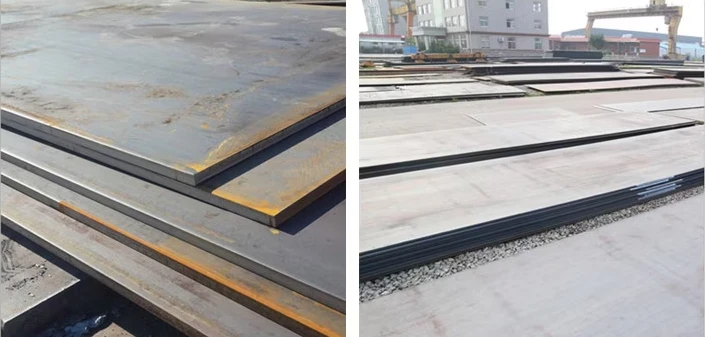
Common Application
High-Pressure Steam Drums: Critical components in power plant boilers for separating steam from water.
Ammonia Storage Tanks: High-integrity vessels used in the fertilizer and chemical industries.
Offshore Production Separators: Vessels on oil platforms used to separate oil, gas, and water under pressure.
CO2 Capture Vessels: Pressure tanks used in Carbon Capture and Storage (CCS) facilities.
Hydraulic Accumulators: High-pressure cylinders used for energy storage in large-scale machinery.
What industries use ASME SA537 Class 3?
ASME SA537 Class 3 is widely used in industries where high-pressure, high-temperature conditions are common. These include petrochemical, nuclear, oil & gas, and power generation industries. The material is ideal for pressure vessels, heat exchangers, reactors, and other equipment that must withstand severe service conditions. Its high toughness and strength make it suitable for extreme operating environments like those found in refineries or nuclear plants.
Is ASME SA537 Class 3 suitable for low-temperature applications?
Yes, ASME SA537 Class 3 is highly suitable for low-temperature applications due to its enhanced toughness after heat treatment. The material is designed to resist brittle fracture and maintain its strength even in sub-zero or cryogenic conditions. This makes it ideal for use in industries like nuclear reactors, cryogenic storage tanks, and offshore oil platforms, where temperatures can drop significantly without compromising the structural integrity of the components.
What is the chemical composition of ASME SA537 Class 3?
The chemical composition of ASME SA537 Class 3 typically includes Carbon (0.17–0.21%), Manganese (0.60–0.90%), Silicon (0.15–0.30%), and low levels of Phosphorus (≤ 0.035%) and Sulfur (≤ 0.035%). The controlled composition ensures good weldability, formability, and resistance to cracking under high-pressure, high-temperature conditions. The material is designed to meet stringent standards for both mechanical properties and performance under extreme conditions.
|
Grade/ Material |
Element |
Composition( Max-A, Min-I) |
|
SA537 Class 3 |
C |
A:0.24 |
|
Mn |
0.70-1.35 |
|
|
Si |
0.15-0.50 |
|
|
P |
0.035 |
|
|
S |
0.035 |
Mechanical Properties( Mpa)
|
Grade/ Material |
Tensile Test |
Ksi/MPa |
|
SA537 Class 3 |
Tensile Strength |
80-100/550-690 |
|
Yield Strength |
I:55/380 |
|
|
Elongation |
I:22% |
|
|
Impact Test( if any) |
|
1What is ASME SA537 Class 3?
ASME SA537 Class 3 is a specification for pressure vessel plates made from heat-treated carbon steel. These plates are used in pressure vessel and boiler construction, particularly in industries like petrochemical, power generation, and nuclear. The material undergoes normalizing and tempering, as well as additional post-heat treatments to improve its toughness, making it ideal for high-pressure and high-temperature environments.
2Can ASME SA537 Class 3 be welded?
Yes, ASME SA537 Class 3 is weldable, but proper procedures must be followed to avoid issues like cracking. Preheating is often recommended, especially for thicker sections, and post-weld heat treatment (PWHT) may be required to relieve residual stresses and ensure the welded joints retain their desired mechanical properties. It's crucial to select the right filler materials that match the chemical composition of the base metal for a successful weld.
3What thicknesses are available for ASME SA537 Class 3 plates?
ASME SA537 Class 3 plates are typically available in thicknesses ranging from 3/16" (5 mm) to 4" (100 mm). However, these thicknesses may vary depending on the manufacturer and specific project requirements. The material can be rolled to meet the needs of various pressure vessel designs, ensuring it provides optimal strength and toughness for a range of high-pressure, high-temperature applications.
4What are the advantages of ASME SA537 Class 3 over other materials?
The primary advantage of ASME SA537 Class 3 is its superior toughness and strength under extreme conditions. The additional post-heat treatment enhances the material's performance in high-pressure and high-temperature environments. Compared to other materials like SA516 Grade 70, which offers general-purpose strength, SA537 Class 3 is better suited for critical applications, including nuclear reactors and high-temperature pressure vessels, where impact resistance and fracture toughness are essential.
5What are the standard specifications for ASME SA537 Class 3?
ASME SA537 Class 3 conforms to ASME Boiler and Pressure Vessel Code (BPVC), Section II, Part A, which outlines the material's mechanical properties, chemical composition, and heat treatment requirements. This ensures that the material meets the stringent standards necessary for use in high-pressure systems, pressure vessels, and boilers. Manufacturers must adhere to these specifications to ensure the material's reliability and suitability for critical industrial applications.
6What is the heat treatment process for ASME SA537 Class 3?
The heat treatment process for ASME SA537 Class 3 involves normalizing and tempering, followed by post-heat treatments. Normalizing helps refine the grain structure, improving the steel's strength and uniformity. Tempering further enhances toughness by reheating the material to a lower temperature after it has been quenched. The post-heat treatments help ensure resistance to brittle fracture and improve overall mechanical performance under extreme conditions.
7What are the mechanical properties of ASME SA537 Class 3?
ASME SA537 Class 3 offers excellent mechanical properties, including a tensile strength between 70-90 ksi (480-620 MPa), a yield strength of at least 36 ksi (250 MPa), and an elongation of 20% minimum in 8 inches. It also has superior toughness, making it suitable for critical applications, especially where impact resistance is needed, such as low-temperature environments or high-stress pressure vessel designs.
For more details about GNEE's steel products, contact us at info@gneesteels.com. We look forward to working with you.


