

What welding rod for ASME SA387 | Grade 5 Class 1 ?
For welding ASME SA387 Grade 5 Class 1 (a Chrome-Moly steel), you need low-alloy steel electrodes matching the base metal's chemistry, typically E8018-B2 (SMAW stick) or matching ER80S-B2 (GMAW/GTAW wire), often requiring preheat and post-weld heat treatment (PWHT) due to the Chromium (Cr) and Molybdenum (Mo) content for high-temperature service, with low-hydrogen (LH) variants crucial for preventing cracking.
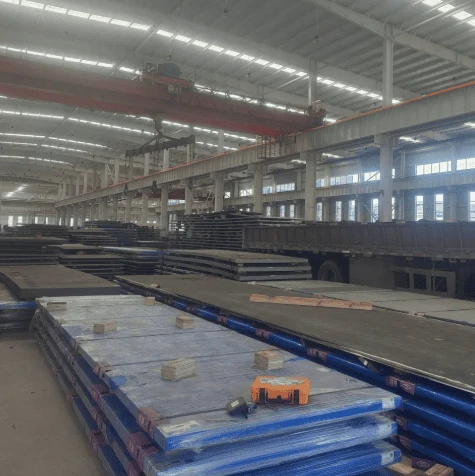
Alloy steel SA 387 GR. 5 CL. 1 represents a specialized type of chrome molybdenum steel plate meticulously designed for deployment within steel pressure vessels that endure high temperatures and challenging environments. These plates adhere to the stringent guidelines of ASME SA387, an industry-standard specification governing the manufacturing of welded chromium-molybdenum steel plates. Their prevalence is particularly pronounced in applications demanding performance under elevated temperatures.
The core composition of this alloy steel integrates molybdenum and chromium. Added molybdenum confers exceptional tensile strength to the base steel and bestows it with commendable resistance against creep, while chromium provides the necessary resistance against corrosion and oxidation. The plates in the category of Alloy steel SA 387 GR. 5 CL. 1/ 2 exhibit a distinct contour and uniform structure, thus yielding superior performance within industrial contexts.
A marked durability characterizes these plates, a quality attained through meticulous heat treatment such as annealing or normalizing and tempering procedures. These processes are employed to instill the plates with a robust surface constitution and refined grain structure. Consequently, ASME SA387 plates exhibit heightened resilience, longevity, and stability. While Class 1 typically offers higher ductility, both classes are engineered to maintain structural integrity under extreme thermal conditions.
SA387/ASTM A387 GR 5 CLASS 1 / 2 Plate Specification
Width: 1000mm-4500mm
Thickness: 5mm-150mm
Length: 3000mm-18000mm
Supply Condition : As Rolled, Normalized Rolling, Furnace Normalizing, Vacuum Degassing, Simulated Post-Weld Heat Treatment or as per customer requirement.
Impact tested : -52° C
Process of Manufacturing : Hot-Rolled (HR)
What Common Testing Requirements ASME SA387 | Grade 5 Class 1 ?
For ASME SA387 Grade 5 Class 1, common testing includes chemical analysis, tensile testing (strength, yield, elongation), and impact testing, alongside visual inspection for surface defects, all performed after required heat treatment (like Normalizing & Tempering) to ensure suitability for high-temperature pressure vessel applications, with supplementary tests like Ultrasonic Testing (UT) also available.
What is the hardness of ASME SA387 | Grade 5 Class 1 ?
ASME SA387 Grade 5 Class 1 steel is primarily specified by tensile and yield strength (75-100 ksi tensile, 45 ksi min yield), but hardness requirements are often set by the end-user or project specifications, typically around 200-235 BHN (Brinell Hardness Number) maximum after post-weld heat treatment (PWHT) for base material and welds, ensuring ductility and weldability for boiler/pressure vessel applications.
What is the maximum allowable stress value for ASME SA387 | Grade 5 Class 1 ?
The maximum allowable stress for ASME SA-387 Grade 5 Class 1 varies significantly with temperature, but it's generally calculated from its minimum yield strength (around 310 MPa or 45 ksi) or tensile strength (515-690 MPa or 75-100 ksi), with values in ASME Section II, Part D, typically set as the lesser of one-third of the tensile strength or two-thirds of the yield strength, adjusted for creep at higher temperatures, requiring a direct lookup in the official ASME code tables for specific design temperatures.
Equivalents
| BS | EN | ASME | DIN |
| ... | ... | SA387-5-1 | ... |
Tensile Requirements for ASME SA387 Grade 5 Alloy Steel Plates Class 1 Plates
| Designation: | Requirement: | Grade 5 |
|
SA387 Grade 5 |
Tensile strength, ksi [MPA] | 75 to 100 [515 to 690] |
| Yield strength, min, ksi [MPa]/(0.2% offset) | 45 [310] | |
| Elongation in 8 in. [200mm], min % | ... | |
| Elongation in 2 in. [50mm], min, % | 18 | |
| Reduction of area, min % | 45 (measured on round specimen) |
Chemical Requirements for ASME SA387 Grade 5 Alloy Steel Plates
| Element | Chemical Composition (%) | |
| SA 387 Grade 5 | ||
| Carbon: | Heat Analysis: | 0.15 max |
| Product Analysis: | 0.15 max | |
| Manganese: | Heat Analysis: | 0.30 - 0.60 |
| Product Analysis: | 0.25 - 0.66 | |
| Phosphorus: | Heat Analysis: | 0.035 |
| Product Analysis: | 0.035 | |
| Sulphur (max): | Heat Analysis: | 0.030 |
| Product Analysis: | 0.030 | |
| Silicon: | Heat Analysis: | 0.50 max |
| Product Analysis: | 0.55 max | |
| Chromium: | Heat Analysis: | 4.00 - 6.00 |
| Product Analysis: | 3.90 - 6.10 | |
| Molybdenum: | Heat Analysis: | 0.45 - 0.65 |
| Product Analysis: | 0.40 - 0.70 |
1What is the best way to cut ASME SA387 | Grade 5 Class 1?
For cutting ASME SA387 Grade 5 Class 1, the best methods often involve Plasma Cutting, Oxy-Fuel Cutting, or Waterjet Cutting, depending on thickness and desired edge quality; Waterjet offers precision for thinner sections, Plasma is fast for thicker plates, while Oxy-Fuel is cost-effective for very thick material, always considering the need for potential preheating and post-cut stress relief (PWHT) for critical applications like pressure vessels.
2Is ASME SA387 | Grade 5 Class 1 carbon steel?
No, ASME SA387 Grade 5 Class 1 is chrome-molybdenum alloy steel, not plain carbon steel; it's specifically designed for weldable pressure vessels at elevated temperatures, with chromium and molybdenum added for corrosion resistance and strength at high heat, though it's based on a carbon steel composition.
3What is ASME SA387 | Grade 5 Class 1 material ?
ASME SA387 Grade 5 Class 1 is a type of chromium-molybdenum (Cr-Mo) alloy steel plate designed for fabricating weldable pressure vessels and boilers used in high-temperature, high-pressure applications, offering excellent high-temp strength, corrosion resistance, and resistance to embrittlement, commonly found in oil, gas, and power generation industries.
4What are the primary advantages of ASME SA387 | Grade 5 Class 1 material ?
ASME SA387 Grade 5 Class 1 offers key advantages for high-temperature pressure vessels, primarily its excellent high-temperature strength, oxidation resistance, and corrosion resistance due to added Chromium (Cr) and Molybdenum (Mo). This makes it ideal for demanding environments like petrochemical and power generation, providing long service life, durability, good weldability, and reduced maintenance, making it a cost-effective choice over time despite potentially higher initial costs.
5What are the typical application fields of ASME SA387 | Grade 5 Class 1 material ?
ASME SA387 Grade 5 Class 1 is a chromium-molybdenum alloy steel used for welded boilers and pressure vessels in elevated temperature services, primarily in the Oil & Gas, Petrochemical, and Power Generation industries for equipment like heat exchangers, pipelines, storage tanks, and reactors, benefiting from its strength and resistance to high heat and corrosion.
6What are the differences between ASME SA387 | Grade 5 Class 1 and ASME SA387 | Grade 5 Class 2 ?
ASME SA387 Grade 5 Class 1 and Class 2 have the same chemical composition (Cr-Mo), but Class 2 offers higher mechanical strength, specifically greater tensile and yield strength, while typically having lower elongation (ductility) compared to Class 1, making Class 2 preferred for higher-stress, high-temperature pressure vessel applications despite potentially lower weldability.
7What precautions should be taken when weldingween ASME SA387 | Grade 5 Class 1 ?
When welding ASME SA387 Grade 5 Class 1 alloy steel for high-temperature pressure vessels, key precautions involve proper preheat and post-weld heat treatment (PWHT) to manage chromium-molybdenum content, using compatible filler metals, ensuring cleanliness (no oil/grease), controlling heat input, maintaining ventilation (fume extraction), using appropriate PPE, and conducting thorough NDT/mechanical testing, all while following ASME codes for this specific alloy used in demanding environments.
If you have project requirements for ASME SA387 | Grade 5 Class 1 , we welcome your inquiry. GNEE maintains a large inventory of commonly used high strength steel grades for your selection.For detailed mechanical properties, chemical composition, and technical data, as well as free samples, please contact our factory immediately. We offer competitive prices, stable quality, and professional service. Email: info@gneesteels.com


