

Wear-resistant plate has excellent comprehensive wear resistance and hot and cold processing performance. Its hardness can still remain above 58HRC at 300℃. Therefore, it is widely used in working temperatures below 300℃ and dn value of 2.4×106mm.r/ aero engine main shaft bearings around min. When the working temperature is greater than 200°C, the retained austenite in the steel decomposes and causes dimensional changes, affecting the normal use of parts. When the wear-resistant plate is quenched under normal heating specifications, the retained austenite content is high, so it must be tempered multiple times after quenching to reduce the retained austenite content to the minimum. Therefore, an appropriate heat treatment process should be selected to control the microstructure and residual austenite content of the wear-resistant plate, reduce its dimensional change rate and grinding stress during use, and ensure the high precision, long life and high reliability of the bearing.
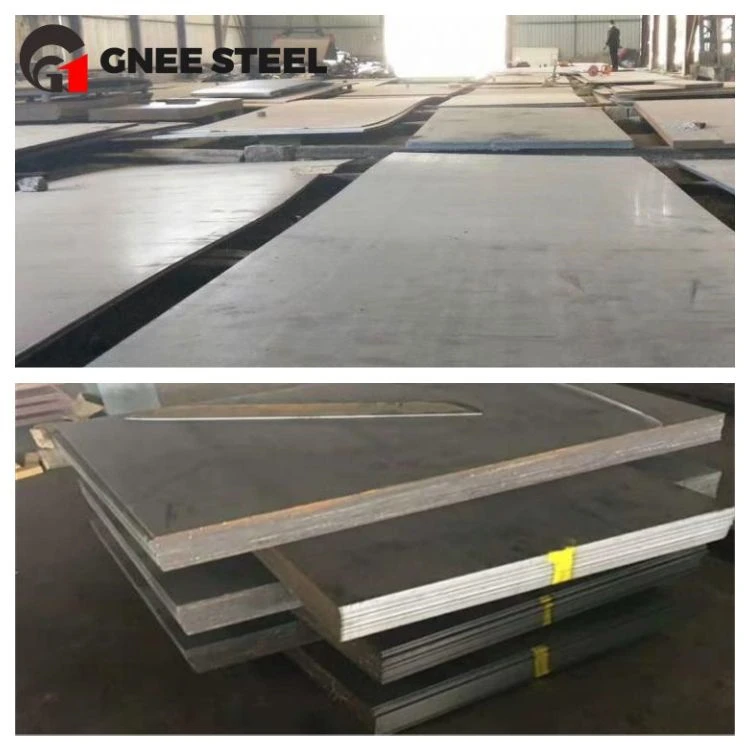
The test material is JFE-C400 wear-resistant plate, which is prepared by the "double vacuum" smelting process of vacuum induction + vacuum self-consumption (VIM + VAR), and is quenched in a VOQ2-65 double-chamber vacuum quenching furnace. The quenching agent is selected Vacuum quenching oil. A total of 16 specimens (4 for each process) were prepared for microstructure, hardness, retained austenite and fracture toughness tests.
Observe the microstructure on a Quanta600 scanning electron microscope and a PhilipsCM200 transmission electron microscope; use the CrKα ray method to measure the martensite and austenite diffraction peaks respectively. The 4 peaks are combined in pairs to obtain 4 retained austenite content values, and the average value is taken; Fracture toughness (KIC) testing was performed on the MTS810-100kN electro-hydraulic servo material testing machine, and fatigue crack parameters were preformed.
In order to study the effect of different heat treatment processes on the residual austenite in the wear-resistant plate, a cold treatment process was added after quenching the wear-resistant plate, and the residual austenite content in the wear-resistant plate after different heat treatment processes was tested. It can be seen that as the quenching temperature increases, High, the residual austenite content in the wear-resistant plate increases. Because the retained austenite of this bearing steel is prone to transformation during high-temperature use, resulting in volume changes and affecting the size of the steel. Therefore, reducing the residual austenite content can ensure the dimensional stability of the products and improve the service life and reliability of the parts. The KIC value of the fracture toughness of wear-resistant plates after different heat treatment processes decreases as the quenching temperature increases. As the quenching temperature increases, the amount of solid solution carbon in martensite increases, the martensite becomes coarser, the number of twins in the substructure increases, and the brittleness increases. The conclusions of the experimental study are as follows:

(1) After being treated by different heat treatment processes, the microstructure of the wear-resistant plate is tempered martensite + carbide (primary carbide, remaining carbide and precipitated carbide) + a small amount of retained austenite. The higher the quenching temperature The higher the value, the coarser the martensite.
(2) The residual austenite content in the wear-resistant plate increases with the increase of quenching temperature; when the quenching temperature is the same, adding a cold treatment process before tempering can effectively reduce the residual austenite content to improve dimensional stability.
(3) The KIC value of the fracture toughness of the wear-resistant plate decreases as the quenching temperature increases; but when the quenching temperature is 1100°C, its brittleness decreases due to the increase in the amount of retained austenite.
(4) The optimal heat treatment process for wear-resistant plates is 660℃×30min→850×40min→1070℃×55min+540℃×120min (3 times).


