

EN 10120 P310NB (Material No. 1.0437) is a specialized fine-grain carbon steel plate defined by the European standard EN 10120:2017 (Steel sheet and strip for welded gas cylinders). It is a mid-to-high strength grade engineered specifically for fabricating welded pressure vessels and high-pressure gas cylinders, offering an optimal balance of mechanical strength, weldability, and cold formability.
This grade replaces former national standards such as DIN 17155 (17Mn4), BS 5045 (Type C), and NFA 36-211 (BS3). It is the third grade in a four-grade series under EN 10120, positioned between P265NB and P355NB.
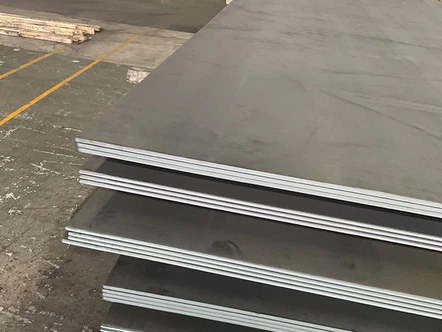
P310NB Steel Plate
Grade Designation Explanation of P310NB Steel Plate
P: Pressure – Indicates its primary use for pressure-containing equipment.
310: Minimum Yield Strength (ReH) ≥ 310 MPa.
N: Normalized – The material is supplied in normalized or normalized-rolled condition.
B: Fine-grain – Achieved through microalloying with elements like Nb and Ti.
Chemical Composition
P310NB is a low-carbon, microalloyed steel. Its chemistry is carefully controlled to ensure excellent weldability, toughness, and consistent mechanical properties after normalization.
| Element | C (max) | Si (max) | Mn (min) | P (max) | S (max) | Al (total, min) | Nb (max) | Ti (max) | N (max) |
|---|---|---|---|---|---|---|---|---|---|
| Value | 0.20 | 0.50 | 0.70 | 0.025 | 0.015 | 0.020 | 0.050 | 0.030 | 0.009 |
Key Roles of Elements:
- Low Carbon (≤0.20%): Minimizes hardenability and cold-cracking susceptibility, ensuring superior weldability.
- Manganese (≥0.70%): Provides solid-solution strengthening and improves toughness.
- Niobium (Nb) & Titanium (Ti): Primary grain-refiners and precipitation-strengtheners, ensuring fine grain size and stable properties.
- Low Phosphorus & Sulfur: Reduces segregation and improves ductility, toughness, and resistance to lamellar tearing.
Mechanical Properties (Normalized Condition, +N)
| Property | Specification | Notes |
|---|---|---|
| Yield Strength (ReH) | ≥ 310 MPa | Minimum design strength for pressure calculation. |
| Tensile Strength (Rm) | 460 – 550 MPa | Standard strength range. |
| Elongation (A) | - t ≤ 3mm: ≥ 21%- 3mm < t ≤ 5mm: ≥ 28% | Higher ductility for thinner gauges, critical for cold forming. |
| Impact Toughness | Excellent (not specified numerically) | Fine-grain structure ensures good low-temperature toughness. |
| Normalizing Temperature | 890 – 930 °C | Mandatory post-weld heat treatment for finished cylinders. |
Core Properties & Advantages of P310NB Steel Plate
Exceptional Weldability
EN 10120 P310NB is engineered with a carefully optimized chemical composition to deliver exceptional weldability, making it one of the most reliable grades for manufacturing welded gas cylinders and pressure vessels. Its low carbon content and controlled alloying elements minimize hardening in the heat‑affected zone (HAZ), reducing the risk of welding defects and simplifying fabrication procedures.
This grade is fully compatible with all mainstream industrial welding methods, supporting high automation and consistent production quality.
- SMAW (Shielded Metal Arc Welding)
- SAW (Submerged Arc Welding)
- GMAW (Gas Metal Arc Welding)
- GTAW (Gas Tungsten Arc Welding)
Due to its low carbon equivalent (CEV), P310NB typically requires only low or even no preheating under normal thickness and ambient conditions. This significantly lowers production cost, shortens cycle time, and reduces energy consumption. Meanwhile, the risk of cold cracking, hydrogen-induced cracking, and brittle fracture in welded joints is greatly minimized.
After welding, components made from P310NB can undergo post-weld normalization heat treatment at 890–930°C. This process restores a uniform fine-grained microstructure across both base metal and weld metal. As a result, welded joints maintain nearly full tensile strength, yield strength, and toughness, ensuring structural integrity under cyclic pressure and long-term service.
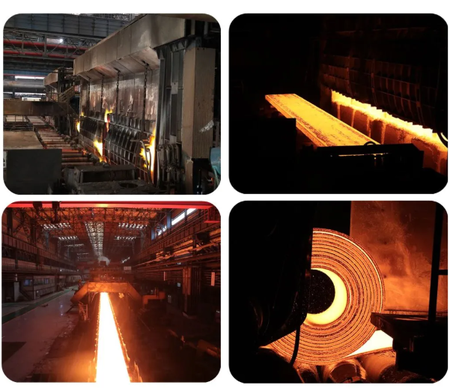
Excellent Cold Formability
P310NB offers excellent cold formability, which is critical for the deep drawing, roll forming, and spinning processes used to produce cylindrical shells, dished heads, and neck sections of gas cylinders. Its balanced ferrite‑pearlite microstructure and fine grain size provide high ductility and uniform deformation without cracking or excessive thinning.
The material exhibits superior deep-drawing and spinning performance, allowing manufacturers to form complex shapes in a single or minimal number of operations. This improves production efficiency and dimensional stability for high‑precision cylinder bodies.
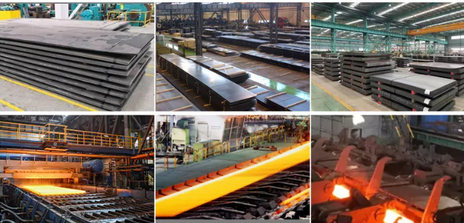
High Structural Integrity
P310NB provides high structural integrity through its controlled fine-grained microstructure, typically reaching ASTM grain size No. 6 or finer. This refined microstructure greatly enhances impact resistance, notch toughness, and resistance to fatigue failure under repeated pressure cycles.
In gas service environments - including those containing moisture, hydrogen, or mild corrosive media - P310NB demonstrates excellent resistance to stress corrosion cracking (SCC) and hydrogen-induced cracking. This is essential for long-term reliability in industrial gas, LPG, and compressed gas storage systems.
The material maintains stable mechanical properties across a wide service temperature range from ‑40°C up to 350°C, ensuring consistent strength and toughness even in low‑temperature outdoor applications or moderate‑temperature industrial environments. Its resistance to creep and thermal aging further supports safe operation under thermal cycling.
Typical Applications
P310NB is the material of choice for medium-to-high pressure welded gas cylinders and pressure vessels.
Industrial Gas Cylinders
- High-pressure cylinders for permanent gases: O₂, N₂, Ar, CO₂.
- Liquefied petroleum gas (LPG), propane, and butane cylinders.
- Fire extinguisher cylinders and CNG (Compressed Natural Gas) storage vessels.
Pressure Vessels
- Small-to-medium chemical reactors, heat exchangers, and accumulators.
- Portable pressure tanks and hydraulic reservoirs.
Typical Manufacturing Flow:Steel Plate → Cold Forming (Rolling/Spinning) → Welding → Stress Relieving/Normalization → Hydrostatic Testing.

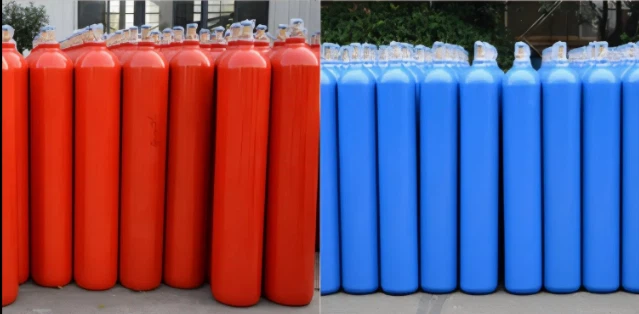
Supply Range & Dimensions of P310NB Steel Plate
Thickness: Commonly 3mm – 16mm (standard for cylinders); up to 100mm for pressure vessel plates.
Width: 1500mm – 3800mm.
Length: 3000mm – 12000mm.
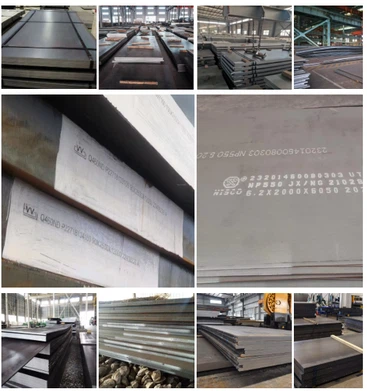
Forms: Hot-rolled plates (Plate), cut sheets, and coils (Coil).
Surface: Black, shot-blasted, or pickled.
Conclusion
EN 10120 P310NB (1.0437) is a premium, performance-optimized steel for safety-critical pressure equipment. It masterfully balances a 310MPa yield strength with industry-leading weldability and formability, underpinned by a fine-grained microstructure for exceptional toughness and reliability.
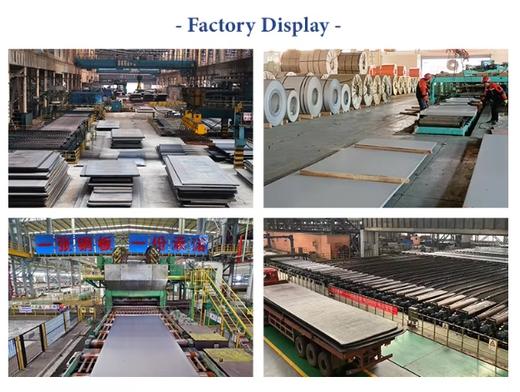
At GNEE, we operate a state-of-the-art manufacturing facility that ensures every batch of steel plate we produce maintains consistent grain structure and superior surface quality. By choosing a direct manufacturer like GNEE, you benefit from factory-direct pricing and rigorous quality control that middleman traders cannot offer.
What does P310NB stand for in EN 10120?
P = Pressure use; 310 = minimum yield strength ≥310 MPa; N = normalized condition; B = fine-grain steel.
Which standard does P310NB comply with?
EN 10120, the European standard for steel plate and strip used for welded gas cylinders.
What is the material number of P310NB?
1.0437.
What is P310NB mainly used for?
Welded gas cylinders, industrial gas tanks, LPG cylinders, fire extinguishers, and small pressure vessels.
What temperature range can P310NB serve in?
From −40°C up to 350°C with stable mechanical properties.
Is P310NB resistant to stress corrosion cracking (SCC) in gas service?
Yes, it performs well in corrosive gas environments and resists SCC effectively.
Is P310NB suitable for high-pressure gas cylinders?
Yes, it is a typical grade for medium-to-high pressure welded gas cylinders.


