

P245NB (Material Number 1.0111) is a non-alloy, weldable quality steel definedunder EN 10120, specifically designed for manufacturing welded gas cylinders andpressure vessels, commonly used in thicknesses up to Smm. It features a minimum yield strength of 255MPa.
The designation "P245NB" breaks down as follows:
• P: Pressure purposes.
• 245: Minimum yield strength of 245 MPa.
• N: Normalized (or formed by normalizing rolling).
• B: Specified for gas cylinders (in certain standards) or simply a grade variant.
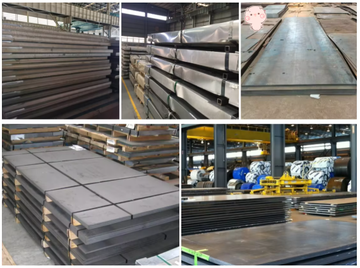
P245NB steel
Chemical Composition of P245NB steel
The chemical composition ensures good weldability and ductility while maintaining strength at elevated temperatures.
| element | C | Si | Mn | P | S | Al | Nb | Ti | N |
|---|---|---|---|---|---|---|---|---|---|
| P245NB | 0.16 | 0.25 | 0.30 | 0.025 | 0.015 | ≥0.020 | 0.05 | 0.03 | 0.009 |
Low carbon, low phosphorus and sulfur, and micro-alloying (Nb/Ti/Al for grain refinement) ensure high plasticity, high toughness, and excellent weldability.
Mechanical Properties of P245NB steel
At room temperature, P245NB exhibits the following characteristics:
| Property | Value |
| Yield Strength (Re) |
≥245 MPa |
| Tensile Strength (Rm) | 390 – 530 MPa |
| Elongation (A5) |
≥23% |
| Impact Energy (KV) | 27 J (at -20°C) or 40 J (at 0°C) |
The yield strength decreases as the operating temperature increases (a critical factor for boiler and pressure vessel design).
Core Features of P245NB steel
Excellent Cold Formability
As a grade with lower strength in the EN10120 standard, the core advantage of P245NB lies in high ductility and excellent cold working formability. Its performance design is fully matched with cold forming processes such as deep drawing, rolling and bending of gas cylinder shells, which can be processed without high-temperature preheating, effectively reducing production energy consumption and scrap rate.
Key Data Support: According to the requirements of EN10120 standard, the elongation after fracture (A₅) of P245NB at room temperature shall meet ≥26% when t<3mm and ≥34% when t≥3mm (t is the thickness of steel plate), which is much higher than the elongation requirement of ordinary structural steel (generally ≥20%), with sufficient ductility reserve.
At the same time, its yield strength is controlled between 245-355MPa, with moderate strength, which is not easy to produce defects such as cracking, wrinkling and excessive springback during cold forming, and has high forming dimensional accuracy.
|
Steel Plate Thickness t (mm) |
Elongation After Fracture A₅ (%) ≥ |
Yield Strength ReH (MPa) |
Suitable Cold Forming Processes |
Forming Defect Rate (Reference Value) |
|
1.5-3.0 |
26 |
245-355 |
Deep Drawing, Spinning, Bending |
≤0.5% |
|
3.0-8.0 |
34 |
Rolling, Bending, Stamping |
Rolling, Bending, Stamping |
≤0.3% |
Practical Application Scenarios: It can smoothly complete the integrated processing of cylinder rolling and head deep drawing of household LPG cylinders (thickness 3.0-5.0mm). After forming, the cylinder roundness error is ≤0.8mm/m, which fully meets the dimensional accuracy requirements of gas cylinder manufacturing and is suitable for automatic continuous forming production lines.
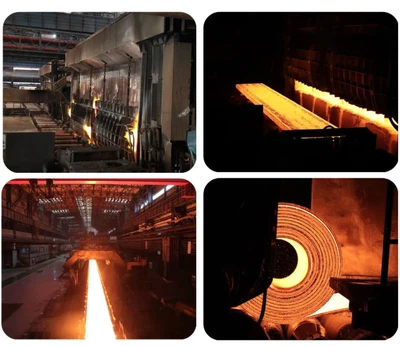
Excellent Weldability Of P245NB Steel
Excellent Weldability
P245NB adopts a strict low-carbon design, combined with low phosphorus and sulfur control and microalloying optimization, with excellent weldability. High-strength and high-toughness welded joints can be obtained without complex preheating or post-weld heat treatment, which fully meets the safe use standards of welded gas cylinders (the strength and toughness requirements of welded joints in EN10120).
The carbon content of P245NB is ≤0.16%, carbon equivalent (CEV) is ≤0.38%, phosphorus is ≤0.025%, and sulfur is ≤0.015%. The content of harmful elements is extremely low, which fundamentally reduces the hardening tendency and cold crack risk of the heat-affected zone (HAZ) during welding.
After welding, the hardness of the heat-affected zone is ≤220HB, which matches well with the base metal hardness (130-170HB). The tensile strength of the welded joint is ≥360MPa, which is consistent with the base metal tensile strength (360-450MPa), and the joint elongation is ≥24%, ensuring that the welded part does not fail under long-term pressure.
|
Item |
Standard Requirement/Measured Value |
Description |
|
Carbon Content (C) |
≤0.16% (Measured ≤0.15%) |
Low-carbon design reduces welding hardening tendency |
|
Carbon Equivalent (CEV) |
≤0.38% |
No preheating is required for welding when CEV ≤0.40% |
|
Weld Heat-Affected Zone (HAZ) Hardness |
≤220HB |
Avoid HAZ embrittlement and prevent crack generation |
|
Welded Joint Tensile Strength |
≥360MPa |
Matched with base metal strength to ensure joint reliability |
|
Suitable Welding Processes |
Resistance Welding, Arc Welding, Submerged Arc Welding |
Suitable for mainstream gas cylinder welding methods with high welding efficiency |
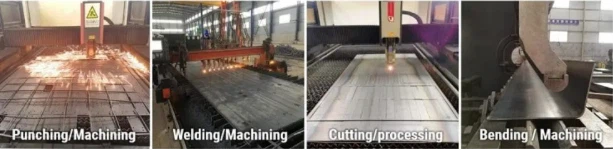
Fine-Grain Toughness
P245NB achieves a stable fine-grain structure by adding microalloying elements such as aluminum, niobium and titanium, combined with controlled rolling and normalizing processes, which significantly improves the low-temperature toughness and impact resistance of the material.
The fine-grain structure can effectively prevent crack initiation and propagation, and still maintain good ductility and toughness under low-temperature environment or instantaneous impact load, avoiding the risk of brittle fracture, which fully meets the safety toughness requirements of steel for welded gas cylinders in EN10120.
According to EN10120 standard, the impact energy (KV) of P245NB at -20℃ is ≥27J, and the grain size is controlled at grade 6 or finer (according to GB/T 6394-2017 standard). The fine-grain structure not only improves toughness, but also further optimizes the uniformity of material performance, making the mechanical properties of each part of the gas cylinder shell consistent, avoiding local performance weakness.
|
Item |
Standard Requirement/Measured Value |
Significance |
|
Grain Size |
Grade 6 or Finer |
Improve toughness and prevent brittle fracture |
|
Impact Energy KV (-20℃) |
≥27J (Measured ≥32J) |
Ensure low-temperature toughness and impact resistance |
|
Microalloying Elements |
Al≥0.020%, Nb≤0.05%, Ti≤0.03% |
Refine grains and stabilize material performance |
|
Delivery Status |
Normalized (N) or Controlled Rolling Normalized |
Ensure stable fine-grain structure and performance |
Equivalent Grades of P245NB steel
P245NB is the European designation. Depending on the country or the specific application (tubes vs. plates), its equivalents are:
| Standard | Equivalent Grade |
| ASTM/ASME (USA) | ASTM A106 Grade B / A516 Grade 60 |
| DIN (Germany) | St 41.8 / DIN 17175 |
| JIS (Japan) | STPG 370 / SG 255 |
| GB (China) | 20G / Q245R |
| AFNOR (France) | TU 42 C |
| UNI (Italy) | C20 |
Common Applications
- Pressure Vessels: Construction of tanks and boilers that hold gases or liquids under pressure.
- Gas Cylinders: Specifically used for seamless gas cylinders.
- Oil and Gas: Pipelines for transporting hot fluids.
- Power Generation: Heat exchanger tubes and steam headers.
- Chemical Industry: Components for processing plants operating at moderate temperatures.

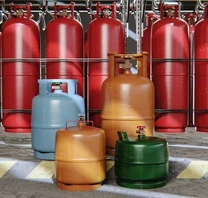
What is P245NB steel grade?
P245NB is a low-carbon fine-grain steel specifically designed for welded gas cylinders, compliant with the European EN 10120 standard. It is a pressure vessel grade with excellent cold formability, weldability and fine-grain toughness, widely used in the manufacture of low-pressure gas storage containers.
What standard does P245NB comply with?
P245NB strictly complies with the EN 10120 standard, which is the European standard for "Steel sheet and strip for welded gas cylinders". This standard specifies the chemical composition, mechanical properties, delivery conditions and quality requirements of steel used for welded gas cylinders.
What is the material number (W.Nr.) of P245NB?
The material number (Werkstoffnummer) of P245NB is 1.0111, which is the German standard number used to uniquely identify this steel grade in industrial applications.
What does "P245NB" stand for in EN 10120?
Each letter and number in P245NB has a specific meaning: "P" stands for Pressure (pressure application), "245" represents the minimum yield strength of 245 MPa, "N" means Normalized (normalized or normalized rolling), and "B" indicates Fine grain (fine-grain structure to ensure welding toughness).
Is P245NB a pressure vessel steel?
Yes, P245NB is a pressure vessel steel. It is specially developed for the manufacture of welded gas cylinders and low-pressure vessels, and its mechanical properties and quality requirements fully meet the safety standards for pressure-bearing equipment.


