

ASME SA387 Grade 22 Class 2 Steel Plates
We supply ASME SA387 Grade 22 Class 2 plates to global fabricators serving the oil, gas and petrochemical industry.
These industries require a pressure vessel grade steel which works well in elevated temperatures and our material serves this purpose well. And with good corrosion and oxidation resistance, SA387 Grade 22 Class 2 plates are a good option for sour gas environments too.
Gnee steel stock SA387 Grade 22 carbon alloy plates and are able to dispatch worldwide.

ASME SA387 Grade 22 Class 2 Alloy Steel Plates
Overview and Material Properties
ASME SA387 Grade 22 Class 2 is a high-quality chromium-molybdenum alloy steel specifically designed for use in weldable boilers and pressure vessels operating at elevated temperatures.
Temperature Resistance: Capable of working continuously at temperatures up to 600°C.
Enhanced Strength: The addition of molybdenum increases both the tensile strength and the material's performance at high temperatures.
Corrosion & Oxidation Resistance: Due to its specific lattice strain and chemical composition, it offers exceptional resistance to oxidation and corrosion, effectively preventing degradation from iron solutions and heat mediators.
Structural Integrity: This alloy is recognized for its excellent weldability, durability, and leak-proof characteristics, making it ideal for precision-engineered fabrications.
Key Applications
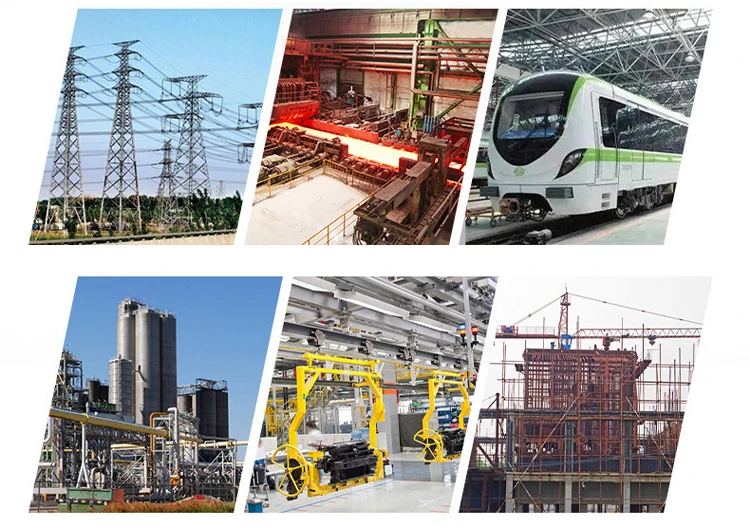
The versatile properties of Alloy 387 make it a primary choice across several heavy industries:
Energy & Chemical: Oil and gas (onshore and offshore), petrochemical, gas processing, and chemical industries.
Power & Heat Recovery: Pressure vessels, welded boilers, heat exchangers, high-temperature ducting, and valves.
Industrial Equipment: Flanges, pipe clamps, and liners for chutes, tubs, and bins.
Infrastructure & Marine: Construction, bridges, shipbuilding, and structural purposes.
Manufacturing: Truck body wear liners, arc plate cyclones, and use within the paper, pulp, and food processing sectors.
What is the composition of ASME SA387 Grade 22 Class2 ?
ASME SA387 Grade 22 Class 2 is a chromium-molybdenum alloy steel for pressure vessels, characterized by ~2.0-2.5% Chromium (Cr) and ~0.9-1.1% Molybdenum (Mo), with controlled Carbon (C), Manganese (Mn), Phosphorus (P), Sulfur (S), and Silicon (Si) levels, providing high strength and temperature resistance.
What are the differences between ASME SA387 Grade 22 Class2 and ASME SA387 Grade 22 Class1 ?
ASME SA387 Grade 22 Class 1 and Class 2 have the same chemical composition (Cr-Mo alloy) but differ in mechanical properties, specifically tensile and yield strength, with Class 2 having higher strength (75-100 ksi tensile, 45 ksi min yield) than Class 1 (60-85 ksi tensile, 30 ksi min yield). Class 1 offers better formability due to lower strength, while Class 2 provides greater load-bearing capacity for high-temperature pressure vessel service.
How does ASME SA387 Grade 22 Class2 differ from ASME SA387 Grade 11 Class 2?
ASME SA387 Grade 22 Class 2 differs from Grade 11 Class 2 primarily in its chemical composition, specifically higher chromium and molybdenum content, making Grade 22 stronger and suitable for even higher temperatures, while both are alloy steels for pressure vessels, with the "Class 2" designation meaning they meet stricter tensile strength and heat treatment requirements, noted by its higher yield/tensile strength compared to Class 1. Grade 11 has ~1.25% Cr / 0.50% Mo, whereas Grade 22 has ~2.25% Cr / 1.00% Mo, providing superior high-temperature performance for Grade 22.
Equivalents for ASME SA387 Grade 22 Alloy Steel Plates
| BS | EN | ASTM/ASME | DIN |
| 622-515B | 10 CRMO910 | SA387-22-2 |
10 CRMO910
|
Specifications for ASME SA387 Grade 22 Alloy Steel Plates
| Designation | Nominal Chromium Content (%) |
Nominal Molybdenum Content (%) |
| SA387 Grade 22 | 2.25% | 1.00% |
Tensile Requirements for ASME SA387 Grade 22 Alloy Steel Plates Class 2 Plates
| Designation: | Requirement: | Grade 22 |
| SA387 Grade 22 | Tensile strength, ksi [MPA] | 75 to 100 [515 to 690] |
| Yield strength, min, ksi [MPa]/(0.2% offset) | 45 [310] | |
| Elongation in 8 in. [200mm], min % | ... | |
| Elongation in 2 in. [50mm], min, % | 18 | |
| Reduction of area, min % | 45 (measured on round specimen) 40 (measured on flat specimen) |
Chemical Requirements for ASME SA387 Grade 22 Alloy Steel Plates
| Element | Chemical Composition (%) | |
| SA387 Grade 22 | ||
| Carbon: | Heat Analysis: | 0.05 - 0.15 |
| Product Analysis: | 0.04 - 0.15 | |
| Manganese: | Heat Analysis: | 0.30 - 0.60 |
| Product Analysis: | 0.25 - 0.66 | |
| Phosphorus: | Heat Analysis: | 0.035 |
| Product Analysis: | 0.035 | |
| Sulphur (max): | Heat Analysis: | 0.035 |
| Product Analysis: | 0.035 | |
| Silicon: | Heat Analysis: | 0.50 max |
| Product Analysis: | 0.50 max | |
| Chromium: | Heat Analysis: | 2.00 - 2.50 |
| Product Analysis: | 1.88 - 2.62 | |
| Molybdenum: | Heat Analysis: | 0.90 - 1.10 |
| Product Analysis: | 0.85 - 1.15 |
1What is ASME SA387 Grade 22 Class2 equivalent to ?
ASME SA387 Grade 22 Class 2 is equivalent to ASTM A387 Grade 22 Class 2, and internationally matches EN 10CrMo910 (or 10 CrMo 9-10) and BS 622-515B, all signifying a 2.25% Chromium, 1% Molybdenum alloy steel for pressure vessels in high-temperature service.
2What are the typical application fieldsof ASME SA387 Grade 22 Class2 ?
ASME SA387 Grade 22 Class 2, a chromium-molybdenum alloy steel, is primarily used in welded pressure vessels, boilers, and heat exchangers for high-temperature service, especially in the oil, gas, and petrochemical industries. Its excellent high-temperature strength, weldability, and resistance to oxidation and corrosion (including sour gas) make it ideal for components like reactors, pipelines, superheaters, and storage tanks in demanding environments.
3What are the primary advantages of ASME SA387 Grade 22 Class2 ?
ASME SA387 Grade 22 Class 2 offers superior performance in high-temperature, high-pressure applications, primarily due to its excellent chromoly alloy composition, providing exceptional corrosion/oxidation resistance (especially in sour gas), high tensile/yield strength at elevated temperatures, good weldability, and strong creep resistance, making it ideal for pressure vessels, boilers, and heat exchangers in oil, gas, and petrochemical industries.
4What are Common Testing Requirements for ASME SA387 Grade 22 Class2 ?
Common testing for ASME SA387 Grade 22 Class 2 includes tensile testing (strength, yield, elongation), chemical analysis (Cr, Mo, C, Mn, etc.), and often Charpy V-Notch impact tests, hardness tests, and ultrasonic examination (UT), all ensuring it meets specifications for pressure vessels with high-temp service, focusing on properties like 75-100 ksi tensile strength and 45 ksi yield strength.
5What precautions should be taken when welding ASME SA387 Grade 22 Class2 ?
When welding SA387 Grade 22 Class 2 (a <1% Cr-Mo alloy steel for high temp), key precautions involve meticulous cleaning, controlled preheat (around 100-200°C), low-hydrogen consumables, controlled interpass temperatures, and essential Post-Weld Heat Treatment (PWHT) at ~690°C to prevent cracking and temper embrittlement, managing residual stress and maintaining mechanical properties. Proper PPE, ventilation, and low restraint are also critical safety and quality measures.
6What is SA 387 GR 22 material?
SA 387 Grade 22 Steel Plate
The SA 387 Grade 22 Steel is a pressure vessel steel made up of high-quality raw material and high technology. Commonly used for high-temperature tasks based on its high heat tolerance this steel plate can be exposed up to 600° while maintaining superb oxidation and corrosion resistance.
7What temperature is ASME SA387 Grade 22 Class2 ?
ASME SA387 Grade 22 Class 2 is a chromium-molybdenum alloy steel designed for high-temperature service, effective up to around 600°C (1112°F), offering excellent strength, weldability, and corrosion resistance in high-heat environments like boilers and pressure vessels, always delivered normalized and tempered. It's characterized by 2.25% Chromium and 1% Molybdenum, providing superior performance compared to carbon steels in demanding industrial applications.
If you want to learn more about ASME SA387 Grade 22 Class2 GNEE's products, you can send an email to info@gneesteels.com. We are more than happy to assist you.


