

ASTM A387 Grade 11 Class 1 Alloy Steel Plates Specification
ASTM A387 Grade 11 Class 1 is a chromium-molybdenum (Cr-Mo) alloy steel plate used for high-temperature, high-pressure applications like welded boilers and pressure vessels in power, petrochemical, and refinery industries, offering good creep resistance, strength, and corrosion resistance due to its ~1.25% Cr and ~0.5% Mo content, with Class 1 having higher elongation than Class 2 but lower tensile strength for the same chemistry.

ALLOY STEEL ASTM A387 Grade 11 Class 1 incorporates an array of elements, some of which are common across various alloys, while additional elements are introduced, the concentration of which is contingent upon the specific alloy composition.
This diversity underscores the critical role these plates play in distinct industries. The preeminence of ALLOY STEEL ASTM A387 Grade 11 Class 1 plates is evident in their strategic employment within the oil and gas sectors, the petrochemical industry, and numerous other industrial domains. In contexts where gases and liquids endure elevated temperatures, these plates emerge as a steadfast solution, fortified to withstand extreme thermal conditions.
Key Characteristics:
Material Type: Cr-Mo Alloy Steel.
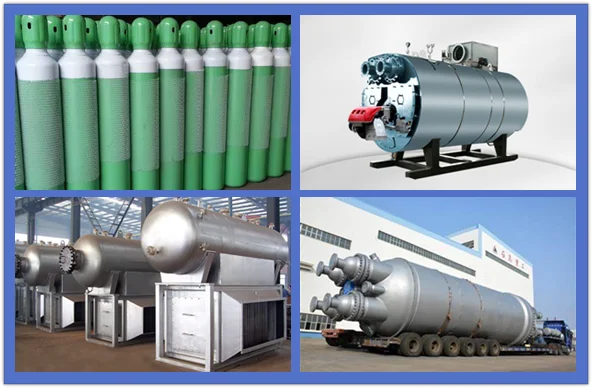
Application: Welded boilers and pressure vessels for elevated-temperature service.
Composition: Contains ~1.00-1.50% Chromium and ~0.45-0.65% Molybdenum, plus other elements like Silicon and Manganese.
Condition: Supplied in the normalized and tempered condition.
Tensile Strength (Class 1): Lower range of 415-580 MPa (60-85 ksi).
Key Properties: Good weldability, high strength, excellent oxidation/corrosion resistance, and resistance to pitting and stress corrosion cracking in high-temp/sour gas environments.
Usage: Widely used in the petrochemical industry for reactors and hydrogenation units.
What is the guaranteed minimum Charpy V-notch impact energy at 0°C (or specified temperature) after S-PWHT for ASTM A387 Grade 11 Class 1?
For ASTM A387 Grade 11 Class 1 steel after S-PWHT (Stress Relieved Post-Weld Heat Treatment), the minimum Charpy V-notch energy isn't a fixed number but depends on the specific project requirements (like boiler codes or vessel standards) and material thickness, though typical minimums often fall around 20-27 Joules (15-20 ft-lbs) at specified lower temperatures (e.g., 0°C or lower), with stricter codes demanding higher energy absorption or testing at colder temperatures to ensure adequate toughness for service conditions.
What is the chemical composition for ASTM A387 Grade 11 Class 1?
ASTM A387 Grade 11 Class 1 is a chromium-molybdenum alloy steel for pressure vessels, characterized by significant chromium (1.00-1.50%) and molybdenum (0.45-0.65%), with limited carbon (0.05-0.17%), manganese (0.40-0.65%), silicon (0.15-0.40% for product analysis, 0.15-0.40% for heat), phosphorus (≤0.035%), and sulfur (≤0.035%), providing high-temperature strength and corrosion resistance.
Which Ultrasonic Testing (UT) standard will be applied for ASTM A387 Grade 11 Class 1?
For ASTM A387 Grade 11 Class 1 steel plates, the primary ultrasonic testing (UT) standard often referenced is ASTM A578, particularly ASTM A578/A578M, for basic plate examination, while specific project requirements or ASME code editions dictate the exact procedure for pressure vessels, often incorporating general standards like ASTM E114, E214, or E2373, with calibrated reference blocks. The choice depends on the specific defect type (e.g., laminations) and application, but A578 (often Level B or C) sets the baseline for these alloy plates.
Equivalents
| BS | EN | ASTM/ASME | DIN |
| 621 B | ––– | A387-11-1 | ––– |
Specifications for ASTM A387 Grade 11 Alloy Steel Plates
| Designation | Nominal Chromium Content (%) |
Nominal Molybdenum Content (%) |
| A387 Grade 11 | 1.25% | 0.50% |
Tensile Requirements for ASTM A387 Grade 11 Alloy Steel Plates Class 1 Plates
| Designation: | Requirement: | Grade 11 |
| A387 Grade 11 | Tensile strength, ksi [MPa] | 75 to 100 [515 to 690] |
| Yield strength, min, ksi [MPa]/(0.2% offset) | 43 [310] | |
| Elongation in 8 in. [200mm], min % | 18 | |
| Elongation in 2 in. [50mm], min, % | 22 | |
| Reduction of area, min % | ––– |
Chemical Requirements for ASTM A387 Grade 11 Alloy Steel Plates
| Element | Chemical Composition (%) | |
| A387 Grade 11 | ||
| Carbon: | Heat Analysis: | 0.05 - 0.17 |
| Product Analysis: | 0.04 - 0.17 | |
| Manganese: | Heat Analysis: | 0.40 - 0.65 |
| Product Analysis: | 0.35 - 0.73 | |
| Phosphorus: | Heat Analysis: | 0.035 |
| Product Analysis: | 0.035 | |
| Sulphur (max): | Heat Analysis: | 0.035 |
| Product Analysis: | 0.035 | |
| Silicon: | Heat Analysis: | 0.50 - 0.80 |
| Product Analysis: | 0.44 - 0.86 | |
| Chromium: | Heat Analysis: | 1.00 - 1.50 |
| Product Analysis: | 0.94 - 1.56 | |
| Molybdenum: | Heat Analysis: | 0.45 - 0.65 |
| Product Analysis: | 0.45 - 0.70 |
1What is ASTM A387 Grade 11 Class 1 material ?
ASTM A387 Grade 11 Class 1 is a chromium-molybdenum (Cr-Mo) alloy steel plate for high-temperature pressure vessels and boilers, featuring around 1.25% Chromium and 0.5% Molybdenum for excellent oxidation and corrosion resistance, typically supplied normalized and tempered with lower tensile strength requirements than Class 2, ideal for petrochemical, oil, and gas applications needing good weldability and strength in hot service.
2What is ASTM A387 Grade 11 Class 1 equivalent to ?
ASTM A387 Grade 11 Class 1 is equivalent to ASME SA387 Grade 11 Class 1 in the US and internationally for pressure vessels, with European equivalents including BS 622-515B, EN 10CrMo910, and DIN 10CrMo910, all being chromium-molybdenum alloy steels designed for elevated temperature service. Its key properties are its 1.25% Chromium and 0.5% Molybdenum content, offering excellent high-temp strength and corrosion resistance.
3What are the typical application fields of ASTM A387 Grade 11 Class 1?
ASTM A387 Grade 11 Class 1 steel is primarily used for welded pressure vessels, boilers, heat exchangers, piping, and equipment in the oil & gas, petrochemical, chemical, and power generation industries, where it handles elevated temperatures, high pressures, and corrosive/hydrogen-rich environments due to its chromium and molybdenum content, providing good corrosion resistance and strength.
4What are the primary advantages of ASTM A387 Grade 11 Class 1?
ASTM A387 Grade 11 Class 1's primary advantages are its excellent high-temperature strength, creep resistance, and corrosion resistance (especially to oxidation and sour gas) due to its chromium-molybdenum alloy composition, making it ideal for pressure vessels and boilers in harsh, hot environments, offering good weldability, durability, and reliability under heavy loads.
5What precautions should be taken when welding ASTM A387 Grade 11 Class 1?
When welding ASTM A387 Grade 11 Class 1, critical precautions include thorough cleaning, using low-hydrogen electrodes (like E8018-B2), implementing preheat, controlling interpass temperatures, performing post-weld heat treatment (PWHT), ensuring good ventilation, and wearing proper PPE, to prevent cracking, maintain mechanical properties, and avoid hazardous fumes, focusing on low diffusible hydrogen to mitigate cold cracking risks common in chrome-moly steels.
6What are Common Testing Requirements ASTM A387 Grade 11 Class 1?
For ASTM A387 Grade 11 Class 1, common testing includes Tensile Tests (Strength, Yield Strength, Elongation) and often Charpy V-Notch Impact Tests, all performed after heat treatment (Normalized & Tempered), with specific mechanical values like 60-85 ksi Tensile Strength and minimum 18% Elongation, ensuring suitability for elevated temperature pressure vessel service.
7What temperature is ASTM A387 Grade 11 Class 1?
ASTM A387 Grade 11 Class 1 is a chromium-molybdenum alloy steel for high-temperature pressure vessels, typically used in the 350°C to 480°C (660°F to 900°F) range, offering good oxidation and hydrogen corrosion resistance, with its specific maximum use temperature depending on the governing ASME code (like ASME VIII Div 1 or 2), but generally suitable for elevated service due to its composition.
For more details about GNEE's steel products, contact us atinfo@gneesteels.com. We look forward to working with you.


