

P245NB steel (EN 10120) is primarily designed for gas cylinders and pressure vessels, offering good cold-forming properties. While suitable for normal operating conditions, its suitability for low-temperature applications requires careful consideration; it is not commonly rated for severe cryogenic environments, though some specifications may support, at minimum, -20°C if agreed, as noted for similar pressure vessel steels.
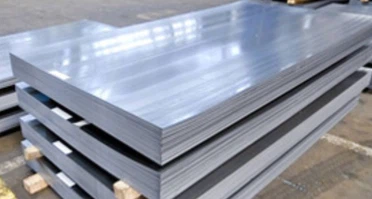
P245NB Steel
Understanding P245NB Steel Composition and Properties
P245NB steel is a low-carbon steel with a maximum carbon content of 0.16%. It contains small amounts of silicon (Si ≤ 0.25%), manganese (Mn ≤ 0.3%), and other trace elements such as phosphorus (P ≤ 0.025%), sulfur (S ≤ 0.015%), and nitrogen (N ≤ 0.009%).
| element | C | Si | Mn | P | S | Al | Nb | Ti | N |
|---|---|---|---|---|---|---|---|---|---|
| P245NB | 0.16 | 0.25 | 0.30 | 0.025 | 0.015 | ≥0.020 | 0.05 | 0.03 | 0.009 |
The presence of these elements, particularly manganese, contributes to the steel's strength and ductility. Manganese is known to improve the toughness of steel, especially at lower temperatures, by inhibiting the formation of brittle phases and promoting the formation of more ductile microstructures.
Low-Temperature Performance of P245NB Steel
The primary concern when using steel in low-temperature environments is its tendency to undergo a ductile-to-brittle transition (DBT). This transition occurs when the steel's toughness decreases significantly as the temperature drops, leading to an increased risk of brittle fracture. However, P245NB steel's low carbon content and the presence of manganese make it less susceptible to this transition compared to higher carbon steels.
Impact of Alloying Elements on Low-Temperature Toughness
Manganese (Mn): Manganese is a key element in improving the low-temperature toughness of steel. It acts as a solid solution strengthener and helps to refine the grain structure, which enhances the steel's ability to absorb energy during fracture. This results in improved impact toughness at lower temperatures.
Nickel (Ni) (Indirect Influence): While P245NB steel does not contain significant amounts of nickel, it's worth noting that nickel is a potent element for improving low-temperature toughness in steels. In higher-grade low-temperature steels, such as 9Ni steel, nickel is added in substantial quantities to achieve exceptional toughness at cryogenic temperatures. Although P245NB does not rely on nickel for its low-temperature performance, the principles of alloy design for low-temperature toughness are relevant.
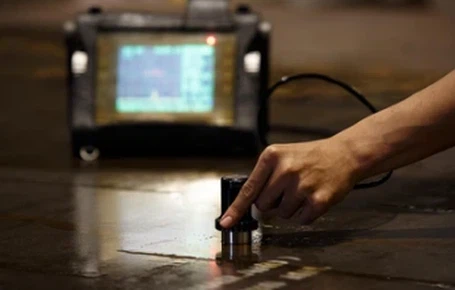
Effects of Normalizing on Low-Temperature Toughness
The microstructure of P245NB steel, typically consisting of ferrite and pearlite, is influenced by its heat treatment. Normalizing or normalizing rolling, which are common heat treatment processes for P245NB, result in a fine-grained microstructure that enhances the steel's toughness. Fine-grained steels generally exhibit better low-temperature toughness due to the increased number of grain boundaries that can impede crack propagation.
- Homogenization: Eliminates microstructure inhomogeneities generated during hot rolling or cold forming, resulting in a uniform ferrite + pearlite microstructure.
- Grain Refinement: Re-austenitization forms fine equiaxed grains, leading to a lower ductile-brittle transition temperature.
- Elimination of Work Hardening: Releases internal stresses and dislocation densities generated during cold forming, restoring the material's plasticity reserves.
- Optimization of Precipitation Distribution: Ensures uniform distribution of Nb(C,N) precipitates, avoiding localized stress concentrations.
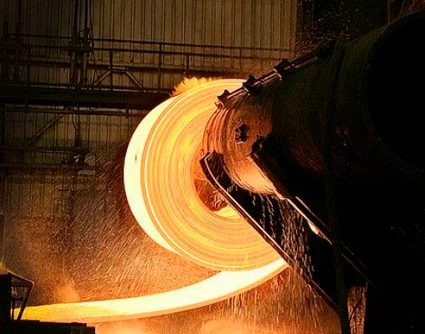
The Impact of Welding on Low-Temperature Performance
The welding process affects the low-temperature toughness of steel. The low-carbon design and microalloying scheme of P245NB give it excellent weldability, maintaining good low-temperature toughness in the heat-affected zone (HAZ) even under high heat input welding conditions.To maintain the low-temperature performance of P245NB welded joints, the following measures are recommended:
- Control heat input: ≤2.0 kJ/mm is recommended to avoid excessive grain coarsening.
- Low-hydrogen process: Use low-hydrogen welding rods (H≤5 mL/100g).
- Preheating: Preheat to 50-75°C when the plate thickness is >25mm or the ambient temperature is <5°C.
- Post-weld normalizing: Perform overall normalizing treatment after manufacturing to restore HAZ toughness.
Application Examples and Standard Compliance
Typical Application Scenarios
P245NB is suitable for manufacturing gas cylinders in the following cryogenic environments:
Liquefied Petroleum Gas (LPG) Cylinders: Outdoor use in winter, ambient temperatures down to -20°C
Industrial Gas Cylinders: Storage and transportation of gases such as oxygen, nitrogen, and argon
Refrigerant Storage Tanks: Some refrigerant applications involve cryogenic conditions
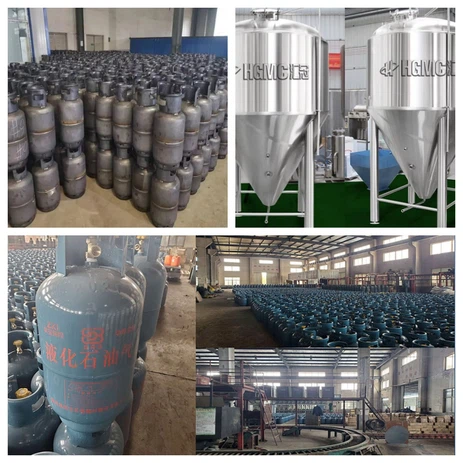
Typical Application Scenarios Of P245NB Steel
Standard Compliance
According to EN 10120 standard, the design and manufacturing requirements of P245NB ensure its safety within the expected operating temperature range. The standard's stringent regulations on chemical composition, mechanical properties, and processing performance provide institutional guarantees for the low-temperature reliability of this steel grade.
Are you still unsure which grade is best for your upcoming project? Don't leave your material selection to chance. Contact GNEE today for a detailed technical consultation and a competitive quote on P245NB steel plates. Our team of experts is ready to help you optimize your production and ensure the highest safety standards for your products.
Contact now to get the request free sample & technical support
What is the delivery condition of P245NB?
The standard delivery condition of P245NB is Normalized (N) or Controlled Rolling Normalized. The normalized treatment ensures that the material has a uniform fine-grain structure and stable mechanical properties.
Is P245NB supplied in normalized condition?
Yes, most P245NB products are supplied in normalized condition. Normalization treatment (heating to 850-950℃, cooling in air) can refine grains, eliminate internal stress and ensure the stability of material performance.
Can P245NB be further heat treated?
Yes, P245NB can be further heat treated if necessary, such as tempering or annealing, to adjust its hardness and toughness, but in most gas cylinder manufacturing scenarios, the normalized delivery state can meet the requirements without additional heat treatment.
What tests are required for P245NB according to EN 10120?
According to EN 10120, P245NB must undergo chemical composition analysis, mechanical property tests (tensile test, impact test, hardness test) and surface quality inspection to ensure that it meets the standard requirements.
Does P245NB require ultrasonic testing (UT)?
It depends on the thickness and application scenario. For P245NB steel plates with thickness >8mm or used for high-safety gas cylinders, ultrasonic testing (UT) is usually required to detect internal defects and ensure product quality.


