

Products Description
In the design and manufacturing of LPG and industrial gas cylinders, yield strengthis one of the most critical mechanical parameters of HP series steels (such as HP295, HP325, HP345). It directly influences safety, wall thickness, weight, forming behavior, and long-term durability.
HP265, HP295, HP325, and HP345 are four core grades of welded gas cylinder steel defined under the GB 6653 (Chinese National Standard). The "HP" prefix stands for Hàn Píng , meaning "Welded Cylinder," and the number indicates the minimum yield strength (MPa). These steels are purpose-engineered for manufacturing pressure vessels like LPG (liquefied petroleum gas) cylinders, acetylene cylinders, and other portable gas containers.
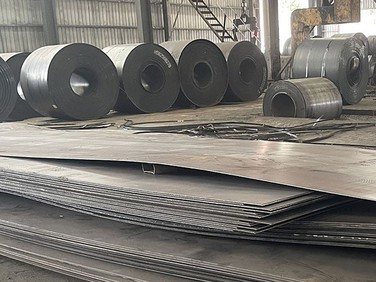
Steel plates for welded gas cylinders
At GNEE, we assist our clients in selecting the optimal grade based on their specific vessel design and safety requirements. Our technical team has decades of experience in the steel industry, ensuring you receive the most reliable advice.
What Is Yield Strength and Why It Matters?
Yield strength is the stress at which steel begins to plastically deform (permanent deformation).
In gas cylinders:
- Below yield strength → cylinder returns to original shape
- Above yield strength → permanent deformation → risk of failure
👉 For pressure vessels like LPG cylinders, yield strength defines:
- Maximum allowable stress
- Structural integrity under internal pressure
- Safety margin against bursting
Typical Yield Strength of HP Series Steel
| Steel Grade | Yield Strength (MPa) | Tensile Strength (MPa) | Elongation (%) | Typical Application |
|---|---|---|---|---|
| HP295 | ≥295 | 440–560 | ≥26 | Household LPG cylinders |
| HP325 | ≥325 | 480–610 | ≥24 | Medium-pressure cylinders |
| HP345 | ≥345 | 510–640 | ≥22 | High-pressure / export cylinders |
As yield strength increases:
- Strength improves
- But ductility and formability slightly decrease
Impact of Yield Strength on Cylinder Design
Safety Margin and Pressure Resistance
Higher yield strength increases resistance to:Internal pressure,Impact loading,Overfilling stress
👉 However:
Safety is not just "higher = better"
Requires proper design factor (usually 2.5–3.5)
Key Insight:
HP295 → sufficient for low-pressure LPG (~1.6 MPa)
HP345 → better for higher pressure or harsh environments
Forming and Deep Drawing Performance
| Grade | Formability | Risk of Cracking | Manufacturing Difficulty |
|---|---|---|---|
| HP295 | ⭐⭐⭐⭐⭐ | Low | Easy |
| HP325 | ⭐⭐⭐⭐ | Medium | Moderate |
| HP345 | ⭐⭐⭐ | Higher | More demanding |
HP295 = ideal for mass production
HP345 = requires better tooling & process control
Welding Performance
Yield strength affects welding sensitivity:
- Higher strength steels
- More sensitive to heat input
- Higher risk of cracking or residual stress
| Grade | Weldability | Heat Control Requirement |
|---|---|---|
| HP295 | Excellent | Low |
| HP345 | Good | High |
This is why HP295 is widely used:
Lower welding defect rate
Higher production efficiency
Application-Based Selection Guide
Choose HP295 when:
Producing household LPG cylinders ranging from 12kg up to 50kg, which represent the most widely used conventional gas cylinder specifications in the global market. This grade fully meets the design pressure, safety margin and service life requirements of daily civil LPG storage and transportation, and is the most mature and commonly used material in the industry.
Prioritizing excellent formability, stamping performance and cost efficiency at the same time. HP295 has moderate yield strength, good elongation and bending performance, is not easy to crack during deep drawing and forming, and has low requirements for stamping and welding equipment, effectively reducing the defective rate and production cost.
Running high-volume, mass-production lines that pursue stability, consistency and low overall cost. Its process adaptability is extremely strong, which can support long-term high-speed production, reduce equipment loss and process adjustment time, and is more friendly to large-scale supply chains and delivery cycles.

Choose HP325 when:
You need moderate weight reduction and material saving on the basis of ensuring safety. Under the same pressure level, HP325 can appropriately reduce the wall thickness compared with HP295, so as to lighten the cylinder weight, lower transportation and handling costs, and improve product competitiveness.
A balanced combination of strength, ductility, weldability and formability is required. It has higher pressure-bearing capacity than HP295, but does not bring excessive difficulty in processing. It can well adapt to medium and high pressure gas cylinders and large-size cylinder products, and achieve a better balance between performance and manufacturing cost.
You want to upgrade product performance slightly without completely changing the existing production layout, and improve product added value and application scenarios while maintaining process stability.

Choose HP345 when:
Producing high-pressure industrial gas cylinders, such as oxygen, nitrogen, argon, high-pressure liquefied gas and other special gas storage vessels, which have higher requirements for pressure resistance, fatigue resistance and structural stability under long-term repeated inflation and deflation.
Exporting products to regions or markets with stricter safety standards, certification requirements and technical specifications, and need to meet higher-level pressure vessel testing, material performance review and regulatory compliance. Its high strength index can better adapt to the rigorous certification system of Europe, America, Southeast Asia and other countries.
Simultaneous demand for lightweight design and high-strength performance. For large-capacity, vehicle-mounted, mobile or portable high-pressure cylinders, HP345 can achieve thinner wall thickness and lighter weight while ensuring high safety, making the products more portable, efficient and in line with the advanced design concepts of high-end pressure vessels.

| Factor | Low Yield Strength (HP295) | High Yield Strength (HP345) |
|---|---|---|
| Safety | Stable, ductile | High pressure resistance |
| Weight | Heavier | Lighter |
| Cost | Lower | Higher |
| Forming | Easy | Difficult |
| Welding | Easy | Sensitive |
| Production Efficiency | High | Moderate |
Why Choose GNEE as the Manufacturer for HP?
Manufacturer Advantage: As a direct factory, we control the entire production process from smelting to final cutting.
Quality Assurance: Our products undergo rigorous testing, including ultrasonic testing, tensile tests, and impact tests.
Global Reach: We have exported HP345 and HP295 steel to over 60 countries, understanding the specific regulatory needs of different regions.
Customization: We offer customized thicknesses, widths, and lengths to minimize waste in your production line.
❌ "Higher yield strength is always better"
✔ Not true:
May increase production defects
Raises manufacturing cost
How much weight can be reduced with higher strength steel?
Typically:10–20% weight reduction depending on design
What is the biggest risk of high yield strength steel?
Reduced ductility
Increased cracking during forming/welding
How to balance strength and manufacturability?
Choose based on pressure level + production capability
Not just mechanical strength
What is the minimum yield strength required for a standard LPG cylinder?
For household LPG cylinders (working pressure ~2.5 MPa, safety factor 3), HP295 (295 MPa minimum yield) is the industry standard. HP245 may be adequate for smaller cylinders, but HP295 provides better safety margin and is widely available.
How does yield strength affect the hydrostatic test pressure?
Hydrostatic test pressure is typically 1.5-2.0 × working pressure. The test pressure must remain below the yield strength of the material (with appropriate margin). Higher yield strength allows higher test pressures without permanent deformation.
Can I use HP345 for the same wall thickness as HP295 to get extra safety?
Yes - this is called "over-design." However, it increases cost without proportional benefit. The safety factor is already incorporated into the design code. Using higher strength steel at the same thickness simply increases the margin beyond code requirements.
Does yield strength decrease over the life of a cylinder?
Generally no - yield strength may actually increase due to strain aging, particularly for cylinders that experience significant forming during manufacturing. The concern is embrittlement, not strength loss.


