

HP295 is a pressure vessel steel grade specifically engineered for the manufacturing of welded gas cylinders, including LPG tanks, industrial gas containers, and fire extinguisher shells. The designation "HP" stands for "Hàn Píng" (welded cylinder) in Chinese, while "295" denotes the minimum yield strength of 295 MPa
As a professional steel manufacturer, GNEE supplies HP295 and a wide range of gas cylinder steels, helping global clients select the most suitable material for their applications.
What Is HP295 Steel?
HP295 is a hot-rolled steel coil/plate produced under the Chinese national standard GB/T 6653, specifically developed for welded gas cylinder manufacturing. It belongs to a family of cylinder steels that includes HP235, HP265, HP295, and HP325, with increasing strength levels corresponding to higher numbers.
The "Workhorse" Material of the Cylinder Industry
Over decades of industrial evolution, HP295 has become the undisputed "workhorse" material for LPG cylinder production worldwide. Its success stems from a unique metallurgical design that achieves an optimal balance between three critical properties:
Strength – Withstanding internal pressures up to 18 bar (working pressure) and 30 bar (test pressure)
Ductility – Deforming plastically rather than fragmenting under extreme over-pressurization
Weldability – Enabling high-speed automated welding without preheating or cracking
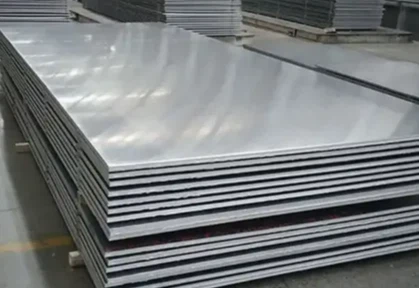
HP295 steel
Chemical Composition
| Element | Content (%) | Purpose |
|---|---|---|
| Carbon (C) | ≤ 0.20 | Ensures good weldability; low carbon reduces cold cracking susceptibility |
| Silicon (Si) | ≤ 0.35 | Deoxidizer; improves strength |
| Manganese (Mn) | 0.80 - 1.50 | Increases strength and toughness; improves hardenability |
| Phosphorus (P) | ≤ 0.025 | Kept low to prevent embrittlement and maintain ductility |
| Sulfur (S) | ≤ 0.015 | Minimized to improve impact toughness and reduce hot cracking |
| Aluminum (Als) | ≥ 0.015 | Grain refiner and deoxidizer |
- Low Carbon Equivalent – The ≤0.20% carbon content reduces the carbon equivalent (Ceq), making the steel highly weldable even at high production speeds
- Manganese Addition – Mn content up to 1.50% provides solid solution strengthening while maintaining excellent formability
- Strict P/S Control – Low phosphorus and sulfur are essential for impact toughness, especially at low temperatures where cylinders may be used in arctic or high-altitude conditions
Mechanical Properties
HP295 must meet stringent mechanical requirements to ensure safe cylinder performance:
| Property | Symbol | Requirement | Significance |
|---|---|---|---|
| Yield Strength | ReL or σs | ≥ 295 MPa | Minimum stress to cause permanent deformation; determines pressure rating |
| Tensile Strength | Rm or σb | 440 - 570 MPa | Maximum stress before fracture; provides safety margin |
| Elongation | A or δ5 | ≥ 26% | Measures ductility; higher values indicate better formability |
| Cold Bend (180°) | d = 2a | No cracks | Verifies ability to undergo severe forming without failure |
| Yield Ratio | ReL/Rm | ≤ 0.80 | Lower values mean more plastic warning before failure |
| Impact Energy (0°C) | KV2 | ≥ 27 J | Ensures toughness in cold service conditions |
Why HP295 Is the Preferred Choice for High Pressure Storage Cylinders & Tanks Manufacturing
Superior Strength-to-Weight Ratio
Compared to standard structural steels like Q235 (yield strength ~235 MPa), HP295 offers approximately 25% higher strength. This allows manufacturers to:
- Reduce wall thickness – From 3.5mm+ with Q235 to 2.5-3.0mm with HP295
- Decrease cylinder weight – Approximately 15-20% weight reduction
- Lower material costs – Less steel per cylinder
- Improve portability – Lighter cylinders are easier to handle and transport
| Feature | Standard Steel (Q235) | HP295 Steel | Benefit |
|---|---|---|---|
| Yield Strength | ~235 MPa | ≥295 MPa | Higher pressure rating |
| Typical Wall Thickness | 3.5mm+ | 2.5-3.0mm | 15-20% weight reduction |
| Dimensional Stability | Prone to creep | Excellent | No bulging over time |
| Fatigue Life | Standard | High | 10-15 years service life |
Exceptional Ductility and Formability
For cylinder manufacturing, steel must undergo severe deformation during the deep drawing process used to form cylinder end caps (heads) and bodies. HP295 delivers with:
- Elongation ≥ 26% – Indicating excellent plastic deformation capacity
- High plastic strain ratio (r-value) – Resists wall thinning during deep drawing
- No yield point elongation – Provides stable deformation without stretcher strains
This exceptional ductility serves a critical safety function: if an LPG cylinder is exposed to fire or extreme over-pressurization, HP295 will plastically deform and swell rather than shatter. This "leak-before-break" behavior is a lifesaving characteristic required by international safety standards.
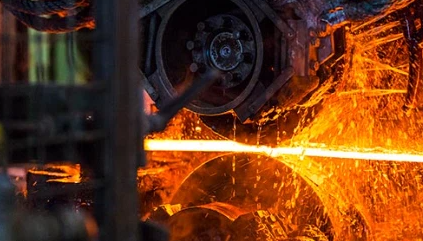
Outstanding Weldability for Automated Production
Key Weldability Features:
- Low carbon equivalent – Minimal risk of hydrogen-induced cold cracking
- No preheating required – Reduces cycle time and energy costs
- Compatible with multiple processes – Works with MAG (CO₂+Ar), SAW (submerged arc welding), and plasma welding
Typical Welding Parameters (from actual production):
Circumferential welds: Automatic Gas Metal Arc Welding with CO₂+Ar shielding
Stress relief heat treatment: 650°C ± 20°C for 11 minutes
No preheating or post-heating required for most applications
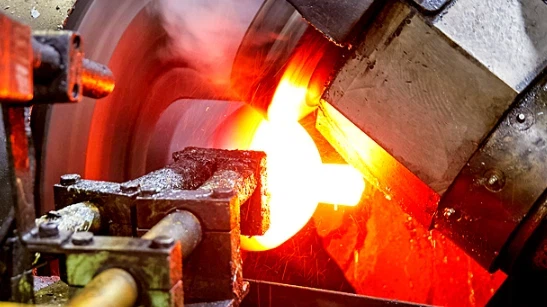
Impact Toughness and Environmental Durability
Low-Temperature Toughness
The low phosphorus and sulfur content, combined with fine-grain microstructure (achieved through aluminum grain refinement), ensures HP295 maintains ductility even at sub-zero temperatures – critical for cylinders used in arctic regions or high-altitude areas.
Fatigue Resistance
Each fill-empty cycle creates cyclic stress in the cylinder wall. HP295's metallurgical stability prevents the formation of "stress risers" that could lead to crack initiation after thousands of cycles.
Coating Adhesion
HP295's smooth, clean surface provides excellent adhesion for protective paint systems (typically 50-120 micron powder coating or stoving alkyd paint), ensuring corrosion protection for 15+ years.
Typical Application Areas
- Household LPG Cylinders: The most common application, such as 12.5kg or 15kg liquefied petroleum gas cylinders.
- Industrial Gas Cylinders: Used for storing oxygen, nitrogen, argon, carbon dioxide, and acetylene.
- Automotive Gas Tanks: LPG fuel tanks for vehicle conversions.
- Firefighting Equipment: Housings for portable fire extinguishers.
- Small Pressure Vessels: Such as air compressor storage tanks.


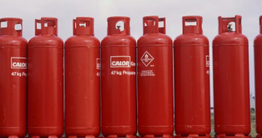
Looking for a reliable supplier of HP295steel? Contact GNEE today for expert guidance, competitive pricing, and fast delivery. Let us help you choose the perfect gas cylinder steel for your project and boost your business efficiency.
Contact now to get the request free sample & technical support
Is HP295 Steel Suitable For Welding?
Yes, HP295 Steel Has Good Weldability Due To Its Relatively Low Carbon Content And Controlled Impurity Levels. It Can Be Used With Common Welding Methods Such As Manual Arc Welding, Submerged Arc Welding, And Gas Shielded Welding, While Maintaining Stable Weld Quality And Reducing The Risk Of Cracks.
What Applications Is HP295 Steel Used For?
HP295 Steel Is Mainly Used For Manufacturing Liquefied Petroleum Gas Cylinders, Industrial Gas Cylinders Such As Oxygen And Nitrogen Containers, As Well As Other Medium To High-Pressure Gas Storage Vessels. Its Higher Strength Makes It Particularly Suitable For Applications With Stricter Safety Requirements.
What Thickness And Size Ranges Are Available For HP295 Steel?
HP295 steel is typically available in thicknesses ranging from 1.5 mm to 20 mm, with widths from 1000 mm to 2500 mm, and lengths that can be customized according to production needs. For gas cylinder manufacturing, thinner specifications are more commonly used.
What Are The Advantages Of HP295 Steel Compared To HP265?
Compared with HP265, HP295 steel provides higher yield strength and better pressure resistance, which increases the safety margin of gas cylinders. Although it may have slightly higher forming resistance, it remains suitable for standard manufacturing processes with proper control.


