

HP345 specialized hot-rolled steel coils are the high-performance benchmark formanufacturing welded gas cylinders and pressure vessels. Under the GB 6653 standardthe "HP" designation explicitly refers to "welding gas cylinders" (from the Chinese Pinyinhanjie qiping), while "345" indicates its minimum yield strength of 345MPa.
Addressing the urgent demand for steel materials characterized by high strength, exceptional uniformity, and excellent formability in the mass production of gas cylinders, the high-quality, specialized HP345 hot-rolled steel coil has emerged as a pivotal upgrade material for the modern gas cylinder manufacturing industry.
Understanding the Material Definition and Standard Positioning of HP345
HP345 is a grade of low-alloy hot-rolled steel coil specifically developed for the mass-production stamping and roll-forming processes of gas cylinders. In its designation, "HP" stands for "High Pressure" or signifies its specific application in "Gas Cylinders," while "345" denotes a minimum yield strength of 345 MPa (in compliance with the requirements of standards GB/T 14160 and ISO 9809-1). In terms of chemical composition, mechanical properties, dimensional tolerances, and surface quality, this material significantly outperforms general-purpose structural steels.
HP345 strictly adheres to the technical specifications for specialized gas cylinder steels. Through micro-alloying design (involving additions such as Nb, V, and Ti) and Thermomechanical Control Process (TMCP) technology, it achieves a microstructure characterized by fine grains, low inclusion levels, and high purity-thereby satisfying the rigorous requirements for gas cylinder hydrostatic burst tests, fatigue tests, and mass stamping operations.
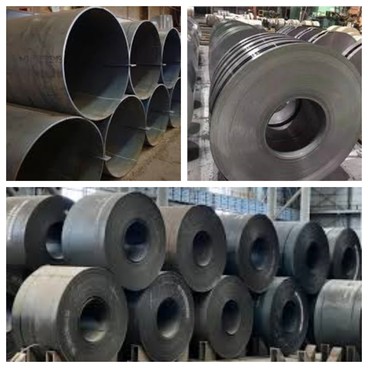
HP345 High-Quality Specialized Hot-Rolled Coils
Key Performance Advantages of HP345 Steel Coils
High Strength Coupled with Excellent Ductility
HP345 features a yield strength of ≥345 MPa, a tensile strength ranging from 470 to 630 MPa, and an elongation (A50) of ≥24%. This strength grade ensures that gas cylinders maintain their resistance to deformation under high-pressure operating conditions, while simultaneously retaining sufficient cold-formability margins to prevent cracking or excessive springback during stamping or rolling processes.
Superior Suitability for Stamping and Rolling
Gas cylinder production typically follows process routes such as "hot-rolled coil → leveling → circular blanking → deep drawing/spin forming" or "rolled sheet → welding." In its hot-rolled state, HP345 exhibits a uniform mechanical anisotropy ratio (Δr value ≤ 0.15), which facilitates the single-step forming of large-diameter circular blanks and helps to reduce the scrap rate.
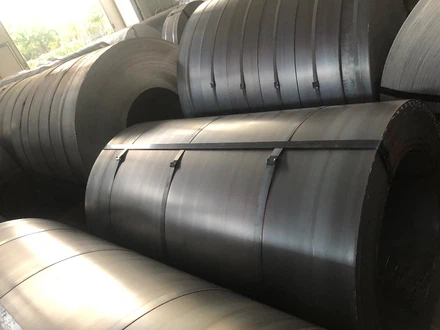
Key Performance Advantages of HP345 Steel Coils
High Purity and Low Defect Rate
Through processes involving refining, vacuum degassing, and electromagnetic stirring, the rating of non-metallic inclusions in HP345 steel (specifically fine-series inclusions of types A, B, C, and D) is controlled to below Grade 1.0, while the sulfur and phosphorus contents are limited to ≤0.010% and ≤0.020%, respectively. This extremely low inclusion content significantly mitigates the risk of stress concentration and fatigue cracking in gas cylinders subjected to cyclic pressure loads.
Uniform Wall Thickness Tolerance and Surface Quality
The full-width thickness tolerance of HP345 hot-rolled coils can be controlled within ±0.10 mm (depending on the specific specifications). The surface is free from defects such as rolled-in scale, scratches, or heavy skin, thereby meeting the stringent requirements for subsequent automated welding and anti-corrosion coating applications.
Process Design Optimized for Mass Production
The manufacturing process for HP345 has been meticulously designed to fully accommodate the characteristics of mass production within the gas cylinder industry-specifically, the requirements for "high efficiency, low material consumption per unit, and high consistency."
Customized Coil Weight and Width: Standard coil weights can reach 25–30 tons, with widths ranging from 900 to 1600 mm. This configuration facilitates continuous operation on large-scale blanking lines, thereby minimizing the frequency of coil changes.
Stable Coil-to-Coil Performance:The process employs a comprehensive, closed-loop quality control system spanning the entire production chain (from steelmaking through coiling). This ensures that variations in mechanical properties-measured across the head, middle, and tail sections of a single coil-do not exceed ±20 MPa.
Weldability and Compatibility with Heat Treatment:The Carbon Equivalent (CEV) of HP345 is precisely controlled within the range of 0.38–0.42%, offering excellent adaptability for both Gas-Shielded Arc Welding and Submerged Arc Welding. Furthermore, the material maintains its structural stability even after undergoing normalizing or tempering treatments subsequent to hot stamping.
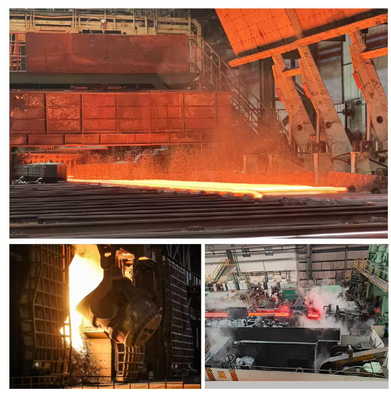
Comparison with Standard Hot-Rolled Steel Coils
|
Indicators |
HP345 |
Ordinary Q345B |
|---|---|---|
|
Fluctuation Range of Yield Strength |
±20 MPa |
±45 MPa |
|
Inclusion Control |
≤Grade 1.0 |
Grade 1.5–2.5 |
|
Stamping Cracking Rate |
<0.5% |
1.5–3.0% |
|
Fatigue Life (Number of Cycles) |
≥12,000 Cycles |
6,000–8,000 Cycles |
|
Applicable Processes |
High-speed Stamping + Automatic Welding |
Low-speed or Modified Processes |
Conclusion
HP345 is a high-quality, specialized hot-rolled steel coil developed to address critical pain points associated with traditional steel for gas cylinders-specifically, poor strength consistency, low stamping yields, and insufficient fatigue life. It not only meets the demands for high-volume, high-efficiency, and high-safety production of high-pressure gas cylinders, but also embodies the technological trend of steel materials evolving from generalized applications toward "scenario-specific specialization."
For enterprises committed to enhancing the quality of their gas cylinder products, reducing overall manufacturing costs, and expanding their export certifications, HP345 offers a mature, reliable, and cost-effective technical pathway.
As a professional manufacturer and exporter, GNEE has over 18 years of experience supplying high-quality gas cylinder steel plates and coils to more than 150 countries.We provide OEM/ODM solutions, strict quality control, and fast delivery to help customers optimize procurement costs and performance.
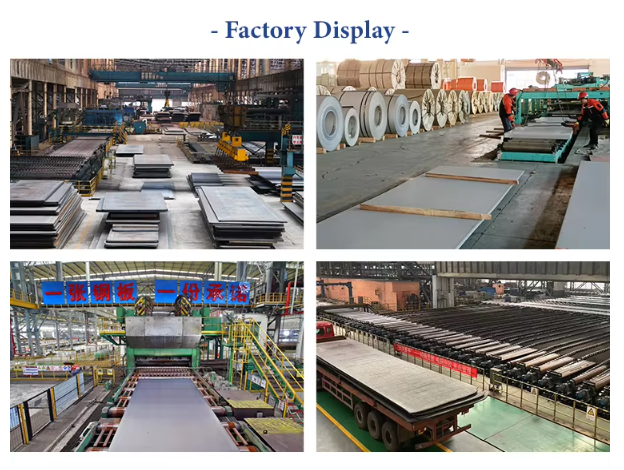
Contact now to get the HP345 steel votrt
What is the key advantage of HP345's formability?
HP345's excellent formability balances high strength and ductility, enabling it to withstand deep drawing for cylinder convex ends and flanging for valve installation, ensuring uniform wall thickness, smooth surfaces, and minimal production defects/waste.
What is the minimum elongation of HP345?
The minimum elongation (δ5) of HP345 is ≥21%, which supports its good formability in gas cylinder manufacturing.
Can HP345 withstand deep drawing for cylinder convex ends?
Yes, HP345 has excellent deep-drawing performance (deep drawing ratio ≥1.8) and can easily withstand the deep drawing force required for forming cylinder convex ends, a key process in gas cylinder production.
Is HP345 suitable for flanging operations in valve installation?
Absolutely. HP345 has good cold-bending capabilities and can undergo flanging operations for valve and fitting attachments without cracking.
What is the carbon equivalent (Ceq) of HP345?
The carbon equivalent of HP345 is strictly controlled at ≤0.45%, which minimizes the risk of cold cracking in the HAZ.
Does HP345 require pre-heating before welding?
For most cylinder thicknesses (≤10mm), HP345 does not require pre-heating, simplifying the welding process and improving efficiency.
Which welding methods are suitable for HP345?
HP345 is compatible with mainstream industrial welding methods, including MIG (Gas Metal Arc Welding), TIG (Gas Tungsten Arc Welding), and SAW (Submerged Arc Welding).
What is the welding speed of HP345 for MIG welding?
The MIG welding speed of HP345 is 30–50 cm/min, higher than HP295 (25–40 cm/min), suitable for mass production.


