

HP345 is widely recognized as the top‑performing material for welded gas cylinders due to its well‑balanced combination of strength, weldability, fatigue resistance, and safety performance. It is specially designed to withstand high internal pressure, repeated filling cycles, and harsh working environments, making it far more reliable than general structural steels such as Q345 or lower‑grade cylinder steels like HP295.
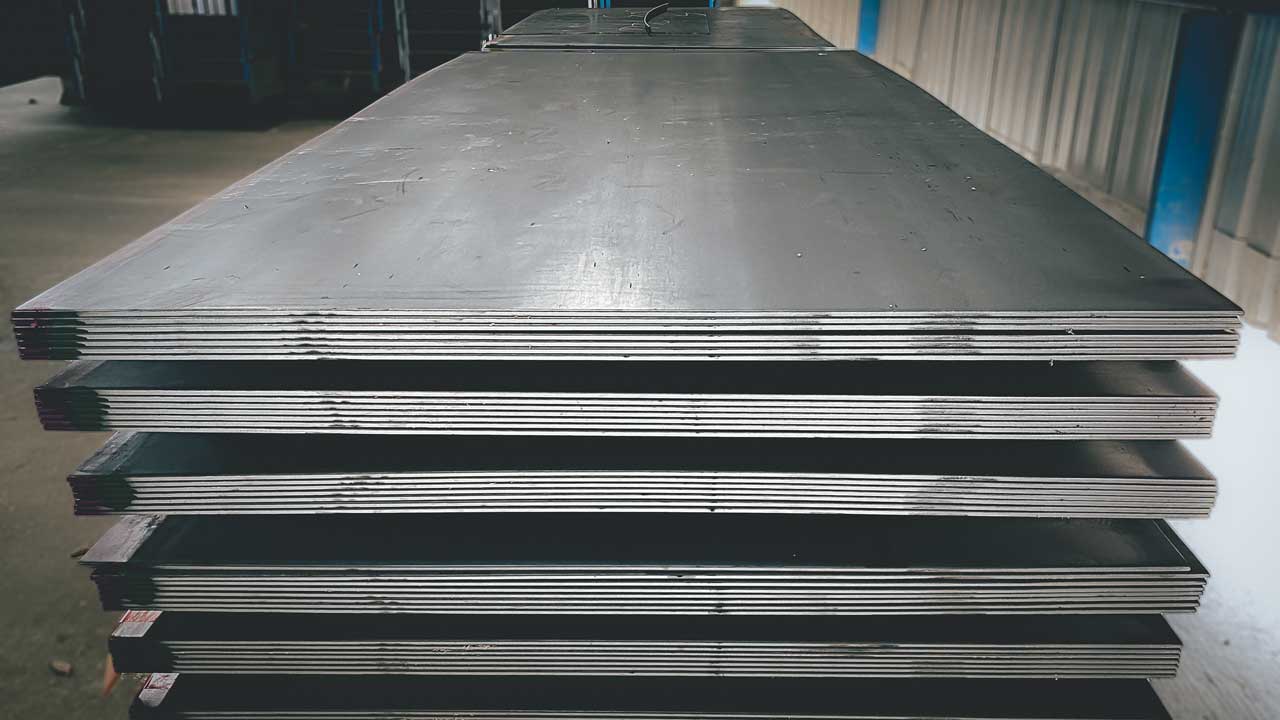
HP345 Steel plate
HP345 steel is ideal for welded gas cylinders due to its superior high-strength (345MPa yield), exceptional weldability without preheating, and high toughnessmaking it safer and more efficient than traditional materials. Its optimized compositionensures excellent pressure resistance for LPG/industrial tanks while reducing productiona costs and ensuring high-volume manufacturing quality.
Superior Chemical Composition: The Foundation of Excellence
HP345 is a high-strength low-alloy (HSLA) steel meticulously engineered with a balanced chemical design. Its composition is optimized to achieve a perfect harmony of strength, ductility, and weldability.
Key Chemical Elements (Max. wt%):
| Element | C | Si | Mn | P | S | Als | V+Ti (Micro-alloy) |
|---|---|---|---|---|---|---|---|
| HP345 | ≤0.20 | ≤0.35 | ≤1.50 | ≤0.035 | ≤0.035 | ≥0.015 | ≤0.050 |
Low Carbon (≤0.20%): The low carbon content is critical for ensuring excellent weldability, minimizing the risk of cold cracking in the heat-affected zone (HAZ) and maintaining high toughness after welding.
Moderate Manganese (≤1.50%): Manganese acts as the primary solid-solution strengthener, significantly improving strength and toughness without sacrificing ductility.
Ultra-Low Impurities (P, S ≤0.035%): Strict control of phosphorus and sulfur reduces internal defects and brittleness, enhancing the steel's cleanliness and overall reliability.
Vanadium-Titanium Micro-alloying (V+Ti): The addition of trace amounts of vanadium and titanium is the core technology. These elements form fine, dispersed carbides and nitrides (precipitation strengthening) and refine the grain structure (grain-boundary strengthening), dramatically boosting strength while preserving ductility and impact resistance.
Outstanding Mechanical Properties: Strength & Safety Combined
HP345 delivers a unique combination of high strength and excellent plasticity, a balance that is paramount for pressure vessels. Its mechanical properties far exceed the minimum requirements of the national standard.
Key Mechanical Properties:
| Property | Yield Strength (Rp0.2) | Tensile Strength (Rm) | Elongation (A) | Yield Ratio (Rp/Rm) | Charpy Impact (20°C) | Cold Bend (180°) |
|---|---|---|---|---|---|---|
| Standard | ≥345 MPa | 510–620 MPa | ≥21% (t≥3mm) | ≤0.80 | ≥27 J | d=2a, no cracks |
| Typical | 360–390 MPa | 530–580 MPa | 23–27% | 0.68–0.75 | ≥40 J | Perfect pass |
High Strength (≥345 MPa): The high yield strength allows for the design of lighter, thinner-walled cylinders that can withstand the same internal pressure. This reduces material cost, transportation weight, and handling effort while maintaining structural integrity.
Low Yield Ratio (<0.80): A low yield ratio is a defining safety feature. It indicates a large plastic deformation zone between yielding and fracture. In the event of an accidental overpressure or impact, the steel deforms plastically instead of fracturing abruptly, providing a critical safety buffer.
Excellent Toughness (≥27 J): HP345 maintains high impact energy absorption even at low temperatures (down to -40°C), preventing brittle fracture-a catastrophic failure mode in pressure vessels.
Superior Ductility (≥21% Elongation): High elongation ensures excellent formability during the deep drawing and shaping of cylinder heads and bodies, reducing the risk of cracking during manufacturing.

Perfect Weldability: The Cornerstone of Welded Cylinders
For welded gas cylinders, weldability is non-negotiable. HP345 is specifically designed to excel in this aspect.
Low Carbon Equivalent (CEV): Thanks to its low carbon and optimized alloy content, HP345 has a low carbon equivalent, typically below 0.42%. This significantly reduces hardenability in the HAZ, preventing the formation of brittle martensite and minimizing pre-heat and post-weld heat treatment requirements.
Stable Welded Joints: The weld seam and HAZ maintain strength and toughness close to the base metal. The low impurity level ensures clean, defect-free welds with high integrity, capable of withstanding long-term cyclic pressure loads.
Compatibility with Standard Welding Processes: It is readily weldable using common industrial methods (e.g., submerged arc welding, MIG/MAG), ensuring high production efficiency and quality consistency.

Perfect Weldability of HP345 steel
HP345 vs Other Grades: The Unrivaled Leader
| Grade | Yield Strength (MPa) | Key Limitation | Application |
|---|---|---|---|
| HP245/265 | 245/265 | Low strength, thicker/ heavier cylinders | Low-pressure, small cylinders |
| HP295 | ≥295 | Lower toughness, higher yield ratio | Standard LPG cylinders |
| HP325 | ≥325 | Moderate strength, limited safety margin | Medium-pressure applications |
| HP345 | ≥345 | No critical limitations | High-pressure, industrial, heavy-duty |
Why HP345 is Better:
It offers the highest strength-to-weight ratio in the series, combined with the lowest practical yield ratio and best low-temperature toughness. This makes it the only choice for critical industrial gas cylinders storing media like liquid chlorine, ammonia, sulfur dioxide, and acetylene, where failure is not an option
Long-Term Durability & Corrosion Resistance
Structural Stability: The fine, stable microstructure resists aging and fatigue failure over decades of cyclic filling and discharging.
Corrosion Performance: While all carbon steels require protection, HP345's clean, low-sulfur composition provides a better base for protective coatings (painting, galvanizing), ensuring longer service life in various environmental conditions.
Conclusion: The Ultimate Choice for Safety & Performance
HP345 is the best steel for welded gas cylinders because it achieves an unparalleled balance of properties. It delivers the high strength needed for lightweight, high-pressure design; the low yield ratio and high toughness essential for maximum safety; the superb weldability required for reliable fabrication; and the excellent formability for efficient manufacturing.
GNEE shall provide a Quality Certificate compliant with the GB/T 6653 standard, containing at least the following information:
- Supplier Name and Trademark
- Standard Number and Grade
- Heat/Batch Number, Dimensions/Specifications, and Weight
- Rapid Delivery and Guaranteed Stock Availability
- Extensive ready-to-ship inventory capabilities (covering various specialty steel grades)
- Efficient and professional logistics and transportation team
- Ultra-short lead times provided for urgent projects

Contact now to get the HP345 steel votrt
Is HP345 compatible with global manufacturing standards?
Yes. HP345 is fully certified to strict international and regional standards including ISO 4706, EN 13322, and GB 6653, as well as widely recognized certifications such as DOT and TPED. This full compliance ensures that HP345 can be safely used for welded gas cylinder production in global markets without any compliance risks.
Can HP345 be used for all types of welded gas cylinders?
HP345 is primarily optimized for high‑pressure welded gas cylinders rated from 15 to 30 MPa, covering applications such as CNG vehicle cylinders, industrial gas storage cylinders, and medical gas cylinders. It also performs excellently in medium‑pressure applications, delivering better overall performance than HP295 and conventional Q345 steel.
Does HP345 require special welding equipment or training?
No. HP345 works smoothly with all mainstream welding processes commonly used in cylinder manufacturing, including MIG, TIG, and submerged arc welding (SAW). Thanks to its low carbon equivalent and excellent weldability, HP345 requires minimal or no preheating during production. No extra equipment or specialized operator training is necessary, so manufacturers can directly use their existing production lines without modification.
Why is HP345 better than ordinary carbon steel?
It offers higher strength, better toughness, improved weldability, and longer fatigue life.
Does HP345 require special processing?
No special processes are required beyond standard industrial practices, though controlled rolling improves performance.
Can HP345 reduce cylinder weight?
Yes. Its higher strength allows thinner walls, reducing overall weight.
Is HP345 safe for long-term use?
Yes. Its fatigue resistance and toughness ensure reliable long-term performance.


