

Products Description
In the field of gas storage and transportation, extreme pressure means higher safety margins and more stringent material requirements. HP345, a high-strength special steel designed specifically for high-pressure welded gas cylinders, achieves a perfect balance between high strength and high toughness through precise composition design, advanced process control, and scientific performance matching, making it an ideal choice for medium- and high-pressure, large-capacity gas cylinder.
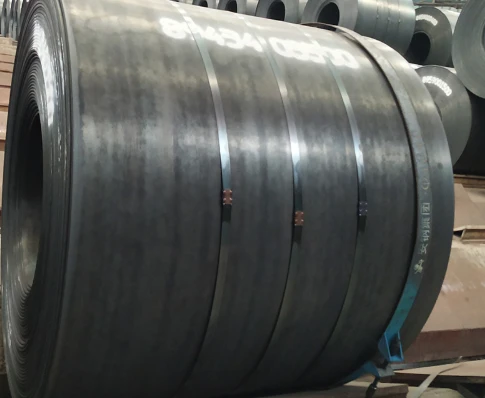
HP345 Hot Rolled Steel Pate Coils for Welded Gas Cylinder
HP345 is a high-pressure grade welded cylinder steel conforming to GB 6653-2008 "Steel Plates and Strips for Welded Gas Cylinders". With a yield strength of ≥345 MPa and a tensile strength of ≥510 MPa as its core indicators, it is specifically designed for medium- and high-pressure gas cylinders with working pressures >3.0 MPa. It achieves grain refinement and strength enhancement through microalloying and controlled rolling and cooling (TMCP) while maintaining excellent formability and weldability, achieving the engineering goal of "high strength without sacrificing safety".
Products Description
| Item | Standard Requirement | Typical Value | Core Significance |
|---|---|---|---|
| Yield Strength (σₛ) | ≥345 MPa | 360–400 MPa | Resists plastic deformation and determines minimum wall thickness |
| Tensile Strength (σᵦ) | ≥510 MPa | 530–600 MPa | Provides burst safety margin |
| Elongation (δ₅) | ≥20% | 22–26% | Ensures deep drawing and rolling formability |
| 180° Cold Bending | d=2a | No cracks | Verifies formability and toughness |
| Impact Energy (Akv) | ≥27 J | 35–45 J | Ensures safety under low temperature and dynamic load |
| Yield Ratio | ≤0.80 | 0.72–0.76 | Balances strength and ductility to prevent brittle fracture |
How to Achieve "High Strength + High Toughness"?
1. Chemical Composition Design (Mass Fraction, %)
An optimized system of low-carbon manganese-based + trace vanadium and titanium is adopted to strictly control impurities while ensuring strength:
|
Element |
C |
Si |
Mn |
P |
S |
Als |
V |
Ti |
|---|---|---|---|---|---|---|---|---|
|
Standard Upper Limit |
≤0.20 |
≤0.35 |
≤1.50 |
≤0.035 |
≤0.035 |
≥0.015 |
≤0.025 |
≤0.025 |
|
Typical Control |
0.14–0.18 |
0.20–0.30 |
1.30–1.45 |
≤0.018 |
≤0.003 |
0.030–0.040 |
0.010–0.020 |
0.005–0.015 |
Low-Carbon Design: C≤0.20% significantly reduces the tendency of cold cracks and ensures welding reliability.
Manganese and Microalloy: Mn improves strength; V and Ti refine grains and achieve dispersion strengthening while maintaining good plasticity.
Ultra-Low Impurities: Strictly control P and S to the industry's low level, improving purity and low-temperature toughness.
Advanced Process Control (TMCP)
Performance leap is achieved through clean steel smelting + controlled rolling and controlled cooling:
- Smelting: KR desulfurization → converter smelting → LF/RH refining to achieve ultra-low inclusions and gas content.
- Rolling: Uniform high-temperature heating → high-pressure water descaling → coordinated deformation of rough and finish rolling → post-stage cooling to reduce the yield ratio to below 0.76.
- Structure: Obtain a uniform ferrite + pearlite structure with grains refined to grade 7–9, achieving the best matching of strength and toughness.
Key Performance Guarantees Under Extreme Pressure
Strength and Safety Margin
Qualified Yield Strength: ≥345 MPa, which can reduce the wall thickness under the same safety factor, realizing the lightweight and cost optimization of gas cylinders.
High Tensile Strength: ≥510 MPa, combined with a water pressure test pressure of ≥1.5 times (e.g., 4.5 MPa), providing sufficient burst safety margin.
Low Yield Ratio: Controlled at 0.72–0.76, avoiding sudden brittle fracture under high pressure and ensuring a safe mode of "deformation before fracture".
Formability and Weldability
Excellent Formability: Elongation ≥22%, no cracks in cold bending with d=2a, suitable for complex processes such as deep drawing, rolling and necking, reducing the scrap rate.
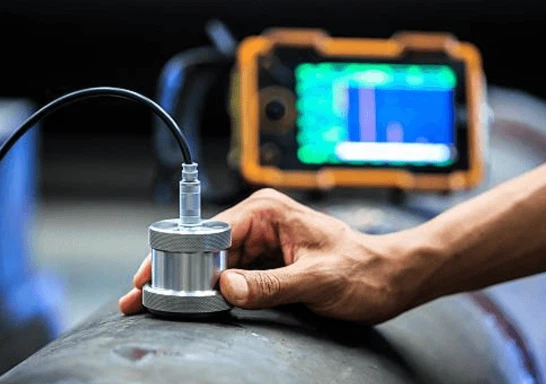
Reliable Weldability: Low-carbon and low-impurity design, suitable for manual arc welding, submerged arc welding and gas metal arc welding. The heat-affected zone (HAZ) has good toughness, meeting the requirements of weld non-destructive testing (such as X-ray flaw detection).
Environmental Adaptability
Wide Temperature Range Use: Under the working condition of -40℃ to 60℃, the impact energy is ≥27 J, avoiding low-temperature brittle failure.
Medium Corrosion Resistance: Improve the corrosion resistance to media such as liquid ammonia, liquefied petroleum gas (LPG) and heptafluoropropane through composition and process control.

HP345 Gas Cylinder Steel
Typical Application Scenarios
HP345 is widely used in fields with extremely high requirements for pressure and safety:
- Industrial Gas Cylinders: Medium-high pressure welded gas cylinders for liquid ammonia (working pressure 2.5–3.0 MPa), oxygen, nitrogen, carbon dioxide, etc.
- Fire-Fighting and Special Cylinders: Heptafluoropropane fire-fighting cylinders (working pressure 4.2 MPa), vehicle-mounted natural gas (CNG) cylinders (20–30 MPa).
- Chemical Industry and Energy: High-pressure gas containers in petrochemical industry and new energy storage and transportation, requiring long-term stability and high safety.

Comparative Selection with Other Welded Cylinder Steels
|
Grade |
Yield Strength (MPa) |
Tensile Strength (MPa) |
Typical Application |
Core Difference |
|---|---|---|---|---|
|
HP265 |
≥265 |
≥410 |
Household LPG cylinders, low-pressure acetylene cylinders |
Cost-effective, preferred for low-pressure scenarios |
|
HP295 |
≥295 |
≥440 |
Medium-pressure, small and medium-capacity gas cylinders |
Balanced cost-performance, general medium-pressure choice |
|
HP345 |
≥345 |
≥510 |
Medium-high pressure, large-capacity, high-safety requirement gas cylinders |
High strength + high toughness, preferred for extreme pressure |
|
HP365 |
≥365 |
≥540 |
Ultra-high pressure, special gas cylinders |
Ultimate strength, dedicated to extreme working conditions |
Ready to elevate your production quality? Contact GNEE today for a personalized quote and technical consultation! Our team of experts is standing by to provide the high-performance HP345 Cylinder Steelyour project deserves.
Summary
With the composition design oflow-carbon manganese-based + microalloying and the advanced process of controlled rolling and controlled cooling, HP345 has achieved comprehensive performance of "high strength, high toughness, easy processing and high reliability". It accurately matches the extreme pressure requirements of medium-high pressure gas cylinders, realizes lightweight and cost optimization while ensuring safety redundancy, and is an ideal material choice for coping with extreme pressure in the field of gas storage and transportation.
What is the post-weld heat treatment temperature for HP345?
The post-weld stress-relieving annealing temperature is generally 600–645℃, with the specific temperature determined based on the welding procedure qualification.
What is the holding time for post-weld heat treatment of HP345?
The holding time is generally 5–10 minutes (adjusted according to thickness). The holding time should be appropriately extended for thicker thicknesses.
How should HP345 be cooled after post-weld heat treatment?
It must be slowly cooled to room temperature in the furnace. Air cooling or water cooling after removal from the furnace is strictly prohibited, as this will generate new thermal stress.
What are the consequences of excessively high post-weld heat treatment temperature?
Temperatures exceeding the upper limit (>650℃) may cause coarse grains, reduced strength, and even overheated structures.
What are the consequences of insufficient post-weld heat treatment time?
Insufficient holding time will lead to inadequate elimination of residual welding stress, posing a risk of delayed cracking


